


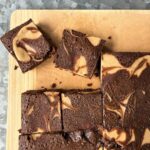

The holiday season celebrates many foods, one of which are chestnuts. They are mentioned in song and seen in grocery stores but seldom does anyone share a good way to remove their skin and woody layers underneath. Some suggest boiling while other say to steam. There's even a method to microwave them. I've always been into roasting chestnuts but even so, it's not a sure bet and can frustrate, given that the nuts can be pricey. Surely you can buy pre-peeled chestnuts for dishes like a dressing but to truly savor their buttery, almost roast chicken flavor, you should peel them yourself.
This year, after one so-so experience, I tried a new method and landed on a pretty easy way to peel chestnuts. I've tried it three times to figure out potential pitfalls and made a how-to video to show you its relative ease. Below you'll find some general tips on sourcing and storing chestnuts, plus a how-to video.
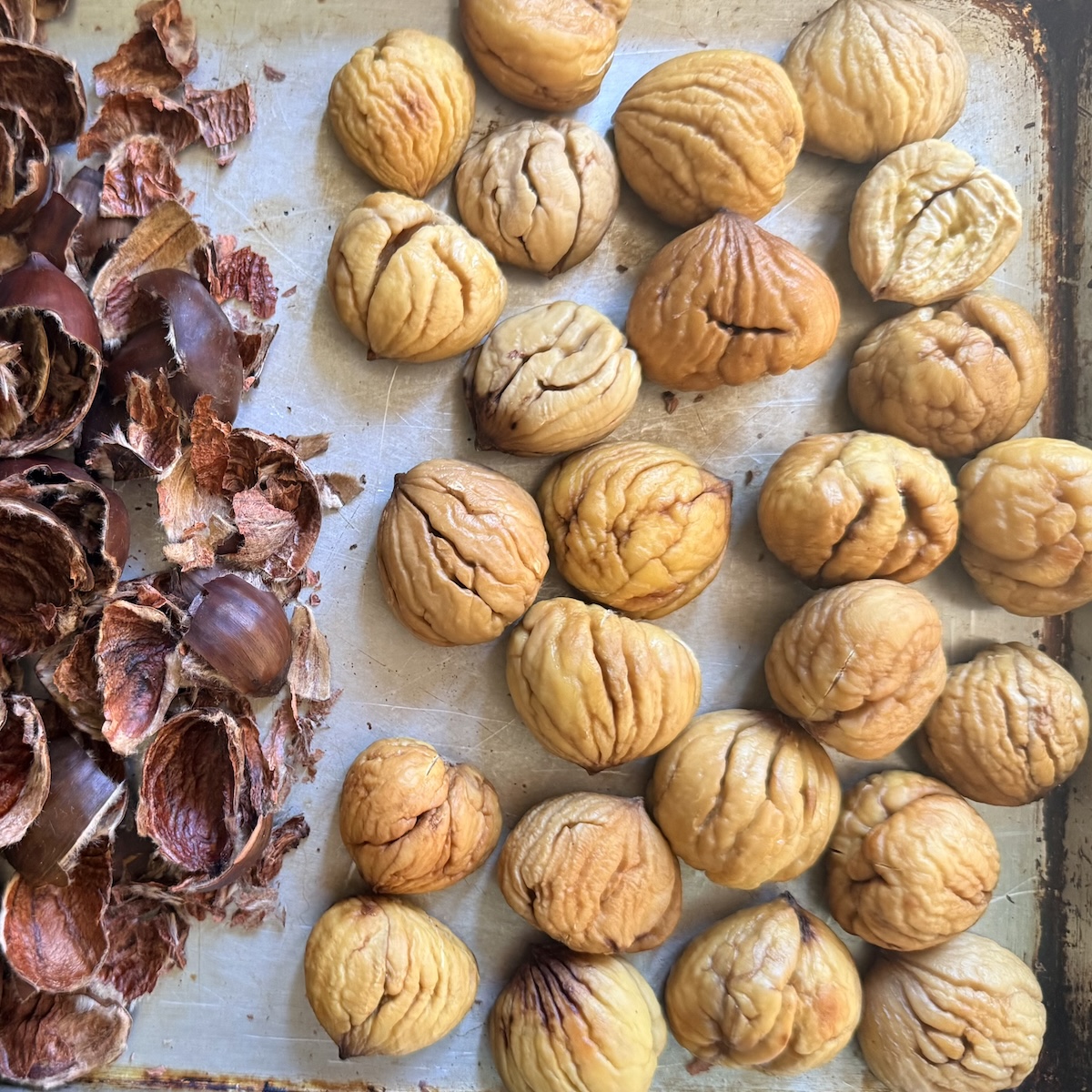
Sourcing and storing chestnuts
In the United States, you'll come across fresh chestnuts starting in early November. Look at grocery stores and you'll spot fresh, unshelled chestnuts that were grown in Italy, China, or America. China is one of the world's biggest chestnut exporters and the nuts have been cultivated and prized there for millennia. Chestnuts grown in the United States are often the a Chinese variety, which tends to be bigger than the American chestnut. Italian and other European chestnuts tend to be on the biggish size.
- What is a big chestnut? It's one that's about 1 ½ inch (3.75cm) wide. Because shelling chestnut are a small project, select ones that are at least 1 ¼ inch (3cm) wide. You'll put in the same amount of work on a big one as a small one.
- Shop for chestnuts where you can select each one. Chestnuts sold pre-bagged is suspect.
- Select chestnuts of even size. They should feel firm and heavy, and certainly not be cracked in any way.
- Store unshelled chestnuts in a thick paper bag in the fridge for a good week. If you are going to shell them within a day or so, keep them out at room temperature.
Tools and equipment for shelling chestnuts
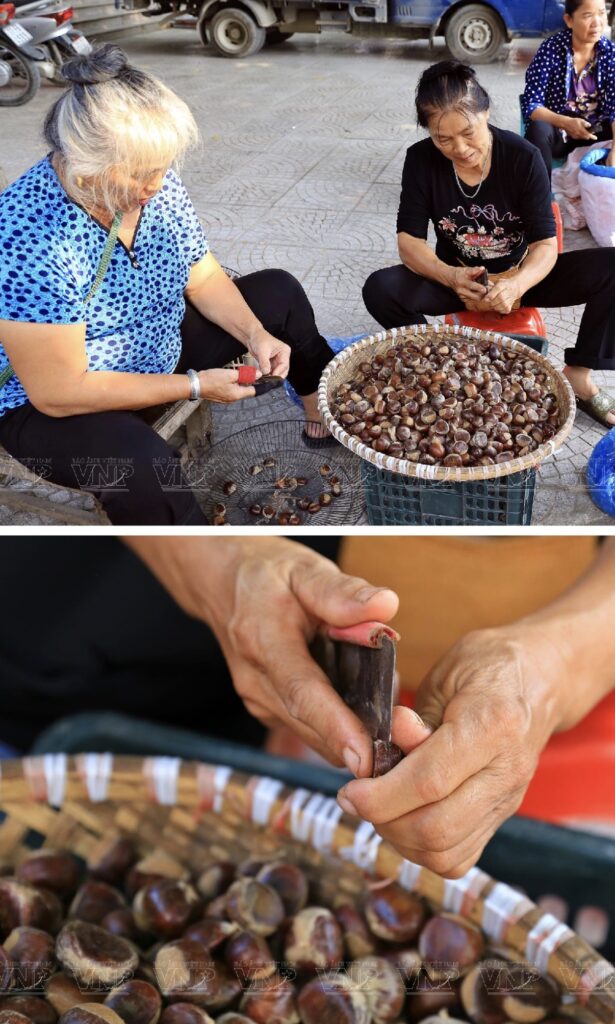
Scoring chestnuts in Vietnam
This is not for beginners. Source: Vietnam.vnanet.vn
A serrated knife is safer
My set up at home.
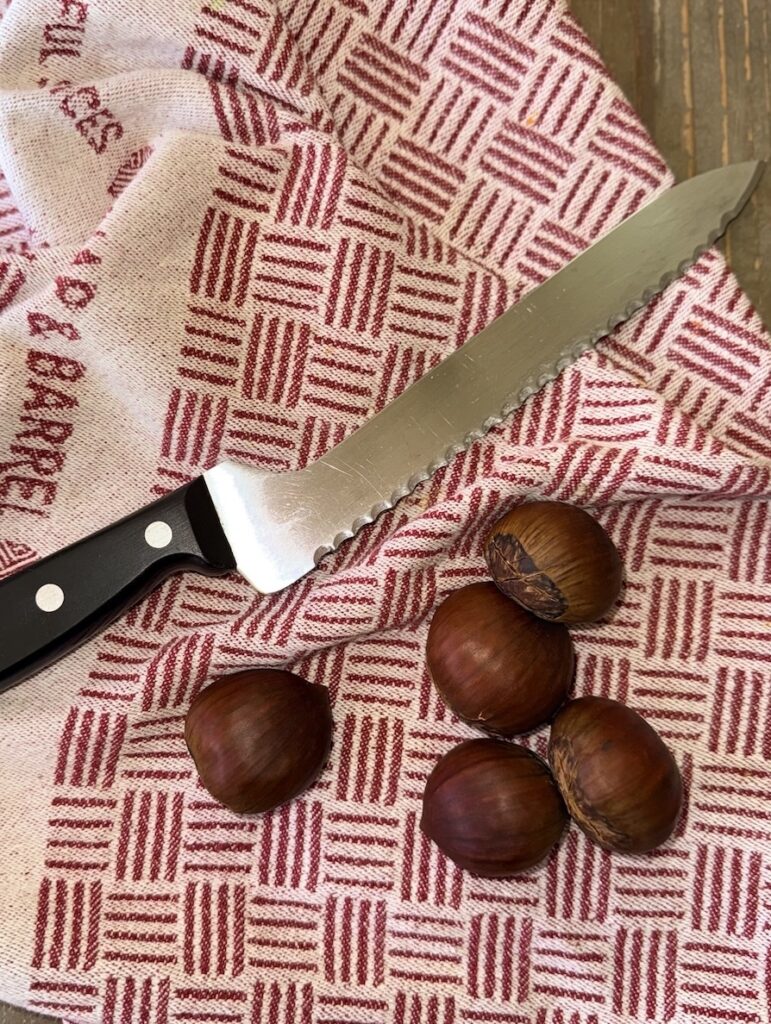
You don't need much but a serrated (bread) knife is very useful. Mine is an offset bread knife that's shaped like a bayonet; it's been with me for prepping banh mi and now chestnuts! It acts like a saw to cut through the shell during prep. A paring knife or curved bird's beak paring knife will help you get at niggly bits stuck in the crevices of the chestnut flesh. I roast the chestnuts in an oven, though if you have a toaster oven, you can use it instead, especially for small batches. My oven heat is more even than that in the toaster oven. For steaming the chestnuts after roasting, double fold a hand towel and line a bowl with it. Baking sheets are very handy for roasting and containing all the shell and skin bits.
How to easily peel chestnuts video tips
To encourage your fresh chestnut journey here's a video full of tips to guide you along.
If you missed some bits in the crevices, you can always get them out later on! No need to be perfect the first time out. Shelled chestnuts keep well in an airtight container in the refrigerator for a good week, if not two weeks. To store shell chestnuts for longer, freeze them! They ought to last for a year. Thaw fully before using.
Chestnut health benefits and recipes
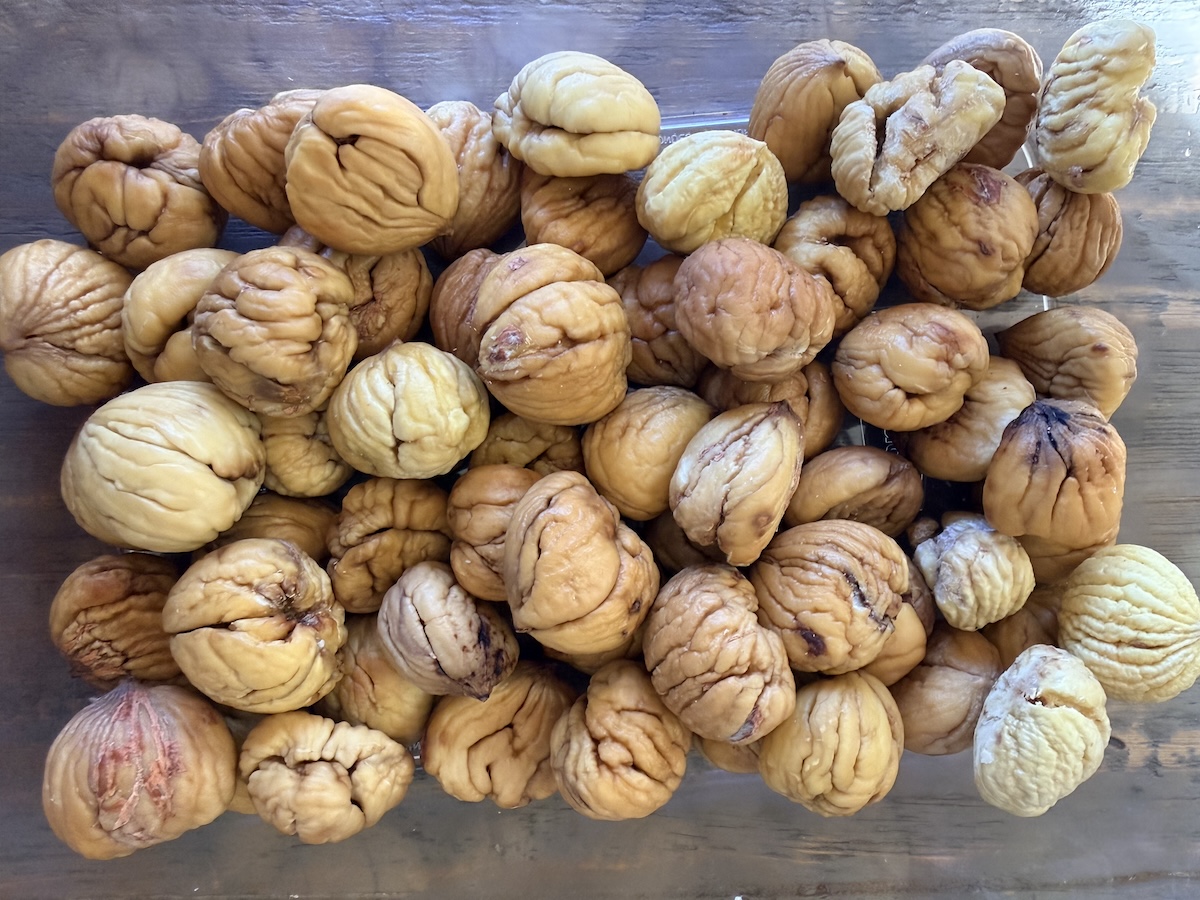
These unusual nuts are a wonder food. They have vitamin C like a fruit and lots of complex carbohydrates like whole grains. They're not fatty like most nuts are (you don't see chestnut oil on the market for a reason!). Yet the flavor of chestnuts is rich and distinctively sweet and buttery. I enjoy them as is but better yet, is cooking chestnuts. The nuts soften and fully express their texture and flavors.


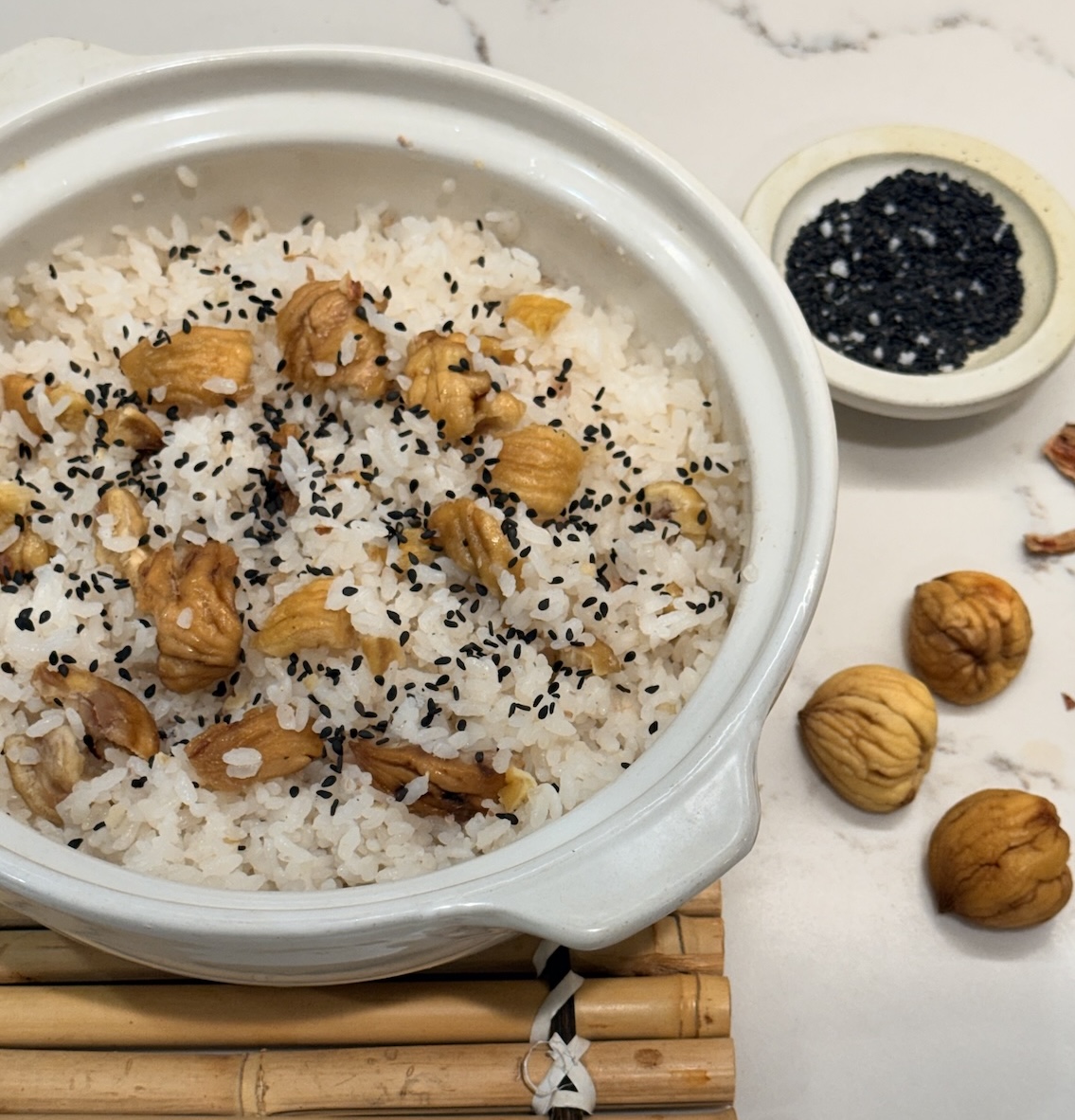
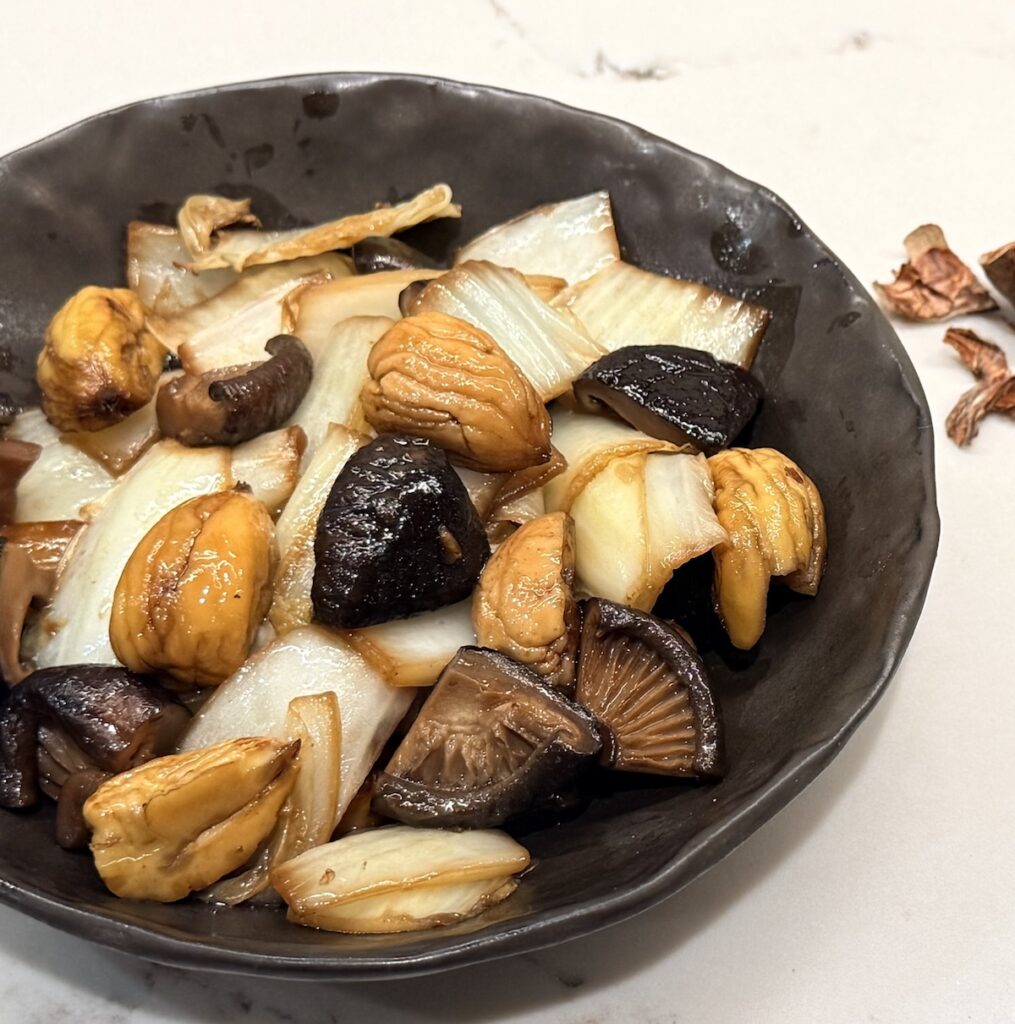
Chestnuts are prized in East Asia so whether fresh or thawed, try your hand at cooking them in dishes like my family's easy buttery chestnuts with cilantro, Vietnamese sticky rice dressing with chestnuts and mushroom, Japanese chestnut rice (kuri gohan), and Chinese napa cabbage, chestnuts, and shiitake. What are your favorite way sto eat chestnuts?


Marion says
This is a game changer!!! Thank you Andrea! I oven roasted about 2 lbs yesterday and what I did was (dangerously) laid chestnut on flat side and put an x on the round side. Soaked them in water for about 15 min then roasted in oven. Wrapped in towel for about 15 minnand peeled them (not very successful). They were ok but it’s too much trouble and very unsafe cutting the round side with a paring knife. I am going to buy more chestnuts tomorrow and use your much safer and more efficient method
Andrea Nguyen says
Hope all worked out for you Marion. Chestnuts are a dangerous nut to crack and peel. Hopefully, this technique will help you out going forward.