





Nonstick coated skillets and woks are low-maintenance but they carry so much baggage. The coating isn't good for the environment, you can't heat them up super hot, and they eventually get scratched and wear out. Ceramic skillets is one option but they seldom brown well. Carbon steel is great and much lighter than cast iron, which means we will still be able to lift a carbon steel pan as we age! The main problem with most carbon steel skillets is that they are not super wide. They have tall walls so you can toss things around in the pan well but if you're looking for surface area to fry lots of stuff, most carbon steel skillets will frustrate you. Get a big one and it is a hefty skillet to keep around.
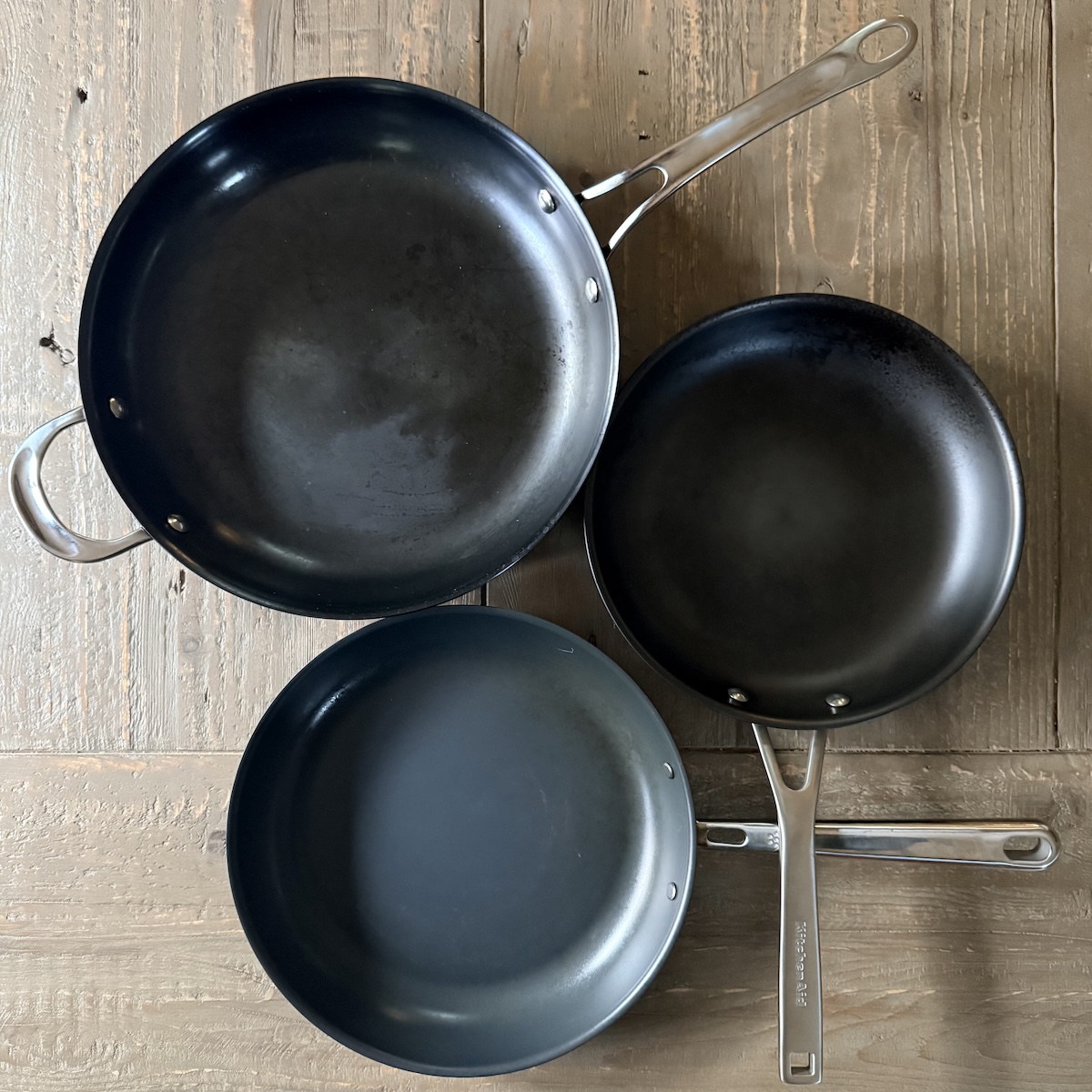
Wanting a lighter weight carbon steel skillet that's wide and has great nonstick capabilities, I recently acquired three nitrided skillets plus a wok (4 pans total!). I have used them for three months and have thoughts on their pros and cons for your consideration.
What is nitrided carbon steel cookware
Compared to regular carbon steel cookware, nitrided carbon steel pans have undergone a metallurgical heating process that increases the surface hardness of the carbon steel. The carbon steel is heated in a very hot furnace (about 1472F | 800C). While in the furnace, carbon and nitrogen atoms both carbon and nitrogen atoms diffuse into the surface of the steel to create a strong slip (smoother surface). When the manufacturer deems that enough of the surface has been nitrided, the metal is quickly cooled. Among the chief aims of carbonitriding is to create smoother longer-lasting metal objects. I have described the process in rudimentary terms and there's more involved, as detailed here and elsewhere.
Carbonitriding has been mostly applied to things like machinery like hydraulic piston rods, automotive clutch plates, various tools and dies. Nitrided carbon steel cookware seems like a relatively new application for carbonitriding. The pans promise many things, including:
- A very nonstick surface made without chemical coatings
- Extra durability because there no coating is involved (you can use metal utensils like spatulas without fear)
- Better corrosion (rusting) resistance than regular carbon steel of cast iron (after using for awhile, mildly acidic food should be fine in the pan)
- Lighter weight than regular carbon steel and cast iron pan
- No seasoning required before use (the carbon and nitrogen atoms that got into the surface during carbonnitriding did the work for you!)
How nonstick are carbon nitrided skillets
I tested three brands of carbon nitrided skillets: Misen, KitchenAid and Anolon. Meyer makes both Kitchenaid and Anolon, as well as other brands including Rachael Rae and Hestan so the company knows how to produce cookware for a broad range of cooks. Misen designs and produces cookware through Kickstarter campaigns and the like; they have an online, geeky cheffy, profile. Both manufacturers are solid and there are nuanced differences.
In the past, seasoning a new carbon steel pan took a good hour. Nitrided ones were a breeze. I simply did a quick washing and drying and then started using them. I've fried up crispy tofu using my trusty prep method, stir-fried, and cooked up some noodles too. Initially there were some issues with food sticking but that's to be expected with all new carbon steel pans. The pans washed up fine. But, I had a learning curve.
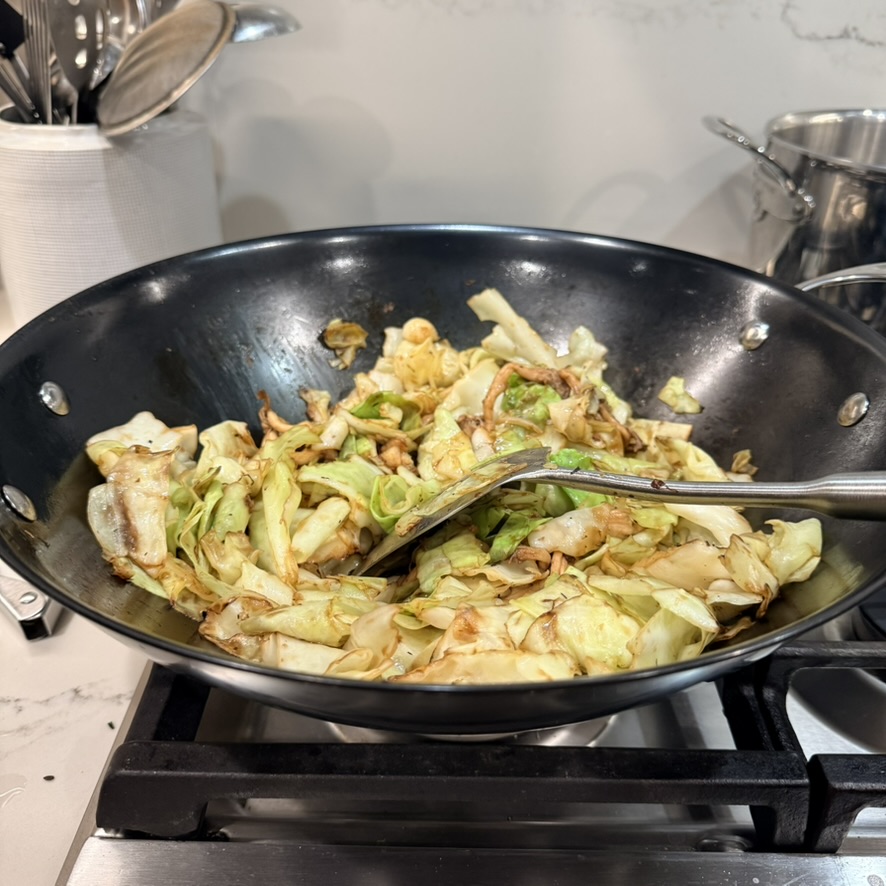
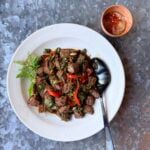
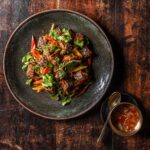
The wok easily cooked 1.5 lbs of cabbage without pooping out
EverLast N2 14-inch wok
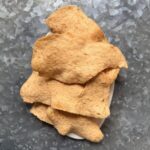
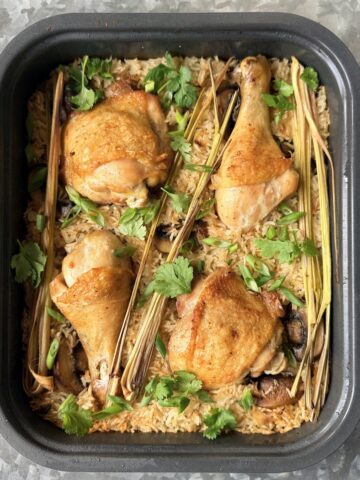
Excellent browning on chicken
KitchenAid NITRO
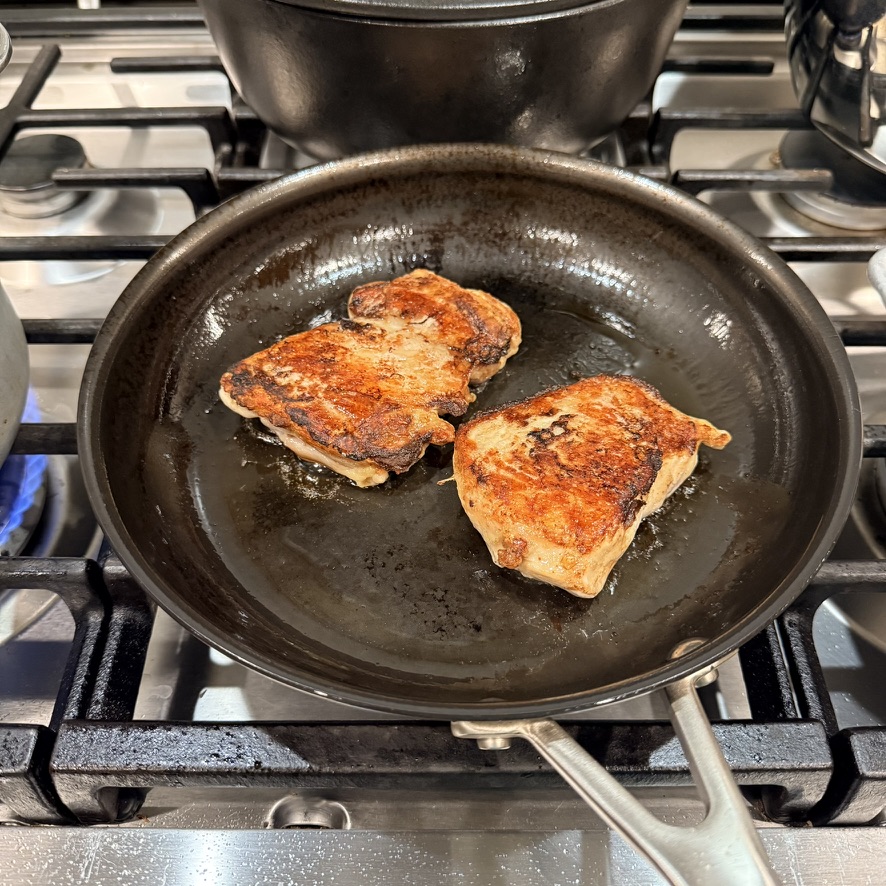
Nitrided carbon steel skillet learning curve
In general, nitrided carbon steel pans require a certain level of rethinking what nonstick is. We primarily think of nonstick pans in terms of coated cookware. Nitrided carbon steel is still carbon steel. It just has a smoother surface than traditional carbon steel pans, which means you get a head start on food releasing easily from the pan; on a regular carbon steel pan, you build up that release over months. Nitrided carbon steel is not a coating so it will not function exactly the same way as with a teflon or ceramic coated skillet. Things will grip and stick at the front end. In fact, for the first 2 to 3 weeks, I didn't like the pans because food stuck. But I kept using the pan to see what would happen and realized my mistakes.
- My sticking problem: Not heating the pan long enough over medium-low to medium heat. Not making sure the food was not cold.
- Remedy: Ensure whatever that's being cooked is at room temperature, or close to it. Set the pan over moderate heat -- with no oil -- and literally walk away. Don't add oil until the pan is sufficiently hot. Watch the video below for a pointer to test for pan readiness.
- Oil usage: You don't need a ton of oil, just enough to film the bottom. Once the oil is added, it should soon glide around the surface to coat well. Then add your food. Over all, the pan does not seem to require as much oil as regular carbon steel.
- Heat for cooking food: In general, let the food cook on medium heat. Be patient. Walk away or do something else nearby. The food is gently cooking but as you see in the video below, there's good browning and crispiness that happens.
Other nitrided carbon steel pan perks:
- Cleaning and maintenance: Cleaning the pans is pretty easy. I've let water soak in the pans for about an hour and they've been fine. You can use dish soap and scrub a little to ensure the food bits are gone. During the first couple of months, I coated the pan with a smidgen of oil to facilitate more seasoning. If (when) the pans get build up and lose too much smoothness, I plan on scouring it with coarse salt and a steel wool scouring pad, then I'll re-season. After washing, I use a dishtowel to wipe off excess moisture and then let them finish air drying. No more heating up the pan to dry as is done with regular carbon steel and cast iron.
- Weight: Nitrided carbon steel skillets weigh more than most nonstick coated pans. However, they are lighter than regular carbon steel pans of their same size.
- Shape: All the skillets I tried are wider than most carbon steel pans so you have lots of surface area to cook on. But, because the pan walls are lowish, more oil bits land on your cooktop. I found myself wiping more stuff than usual. But I'd have to wipe up my stove anyway so the low walls are not a deal breaker.
Nitrided carbon steel video tips
The first times I tried to fry an egg in the pan, I had not preheated the pan long enough. The eggs stuck horribly. But I figured out how to do it and now enjoy the skillets. Here's the pan in action . . . (This impromptu video has real cooking sounds so please excuse the audio when the egg is frying!)
3 nitrided carbon steel skillet round-up
Priced between $100 and $150, these are not cheap frying pans. But they are built to last a lifetime and perhaps even longer because that's what good carbon steel is about. I've used plenty of cheap teflon coated skillets in college and at Airbnb rentals to know that they have a short lifespan. I test drove three brands of nitrided carbon steel pans and they each had personalities built into their design and performance.
- Tough and ready: The KitchenAid NITRO carbon steel skillet feels hefty and works great, as you see in the video. Out of the box, the pan did not release food as easily as the other two pans. However, over time, it functions well. It's oven safe to 750F, if you want to use it that hot! The pan does not seem as silky smooth as the Anolon EverLast N2, which is made by the same company. Maybe the nitriding is not as deep? I'm not sure but KitchenAid NITRO is less expensive than then Anolon EverLast N2. Nitro availability: Amazon | Target (10-inch wok only) I would purchase the medium 10 or large 12-inch skillet because they are generally more useful.
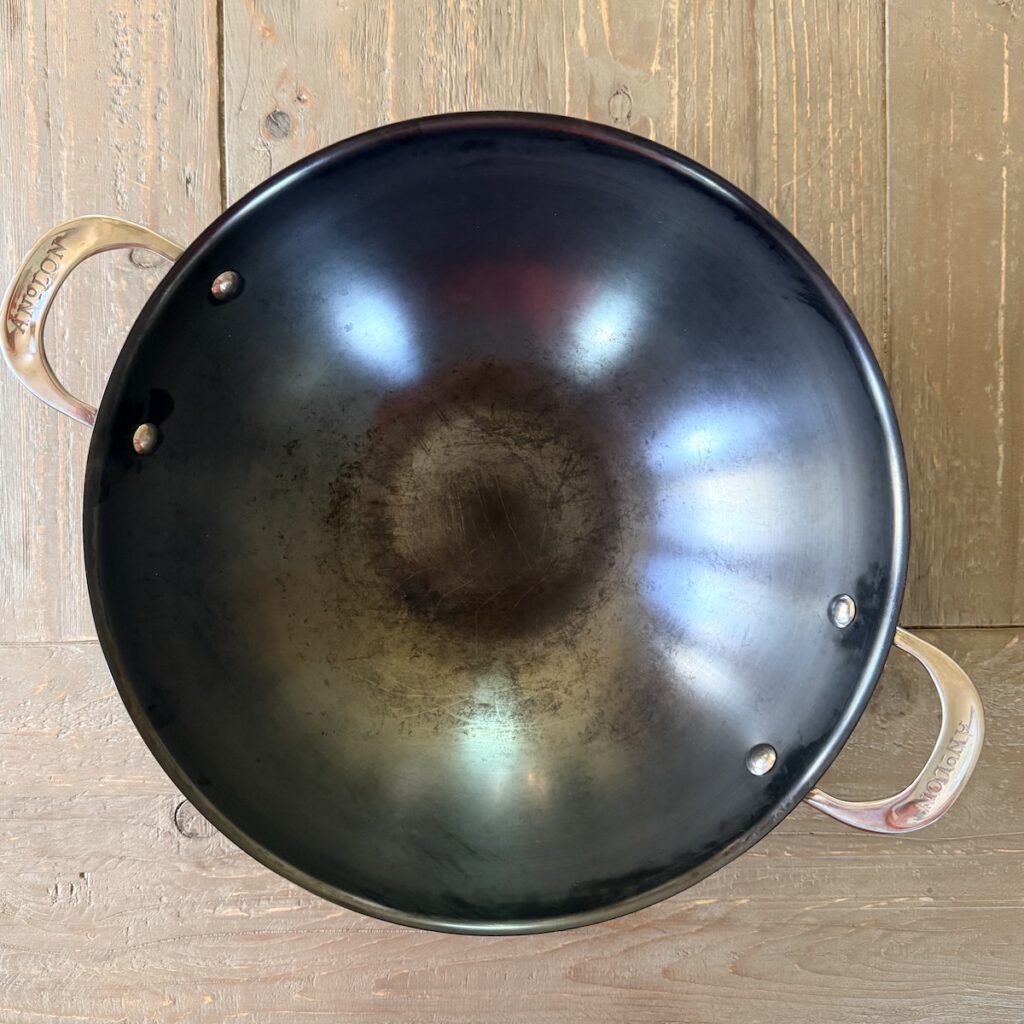
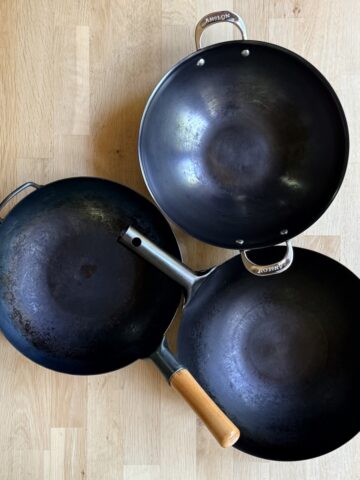
- Smooth operators: The NITRO's relative, also made by Meyer, is branded under Anolon's EverLast N2. It is touch more expensive but the surface is a bit smoother. The handle is more elegant, too. On the initial uses, I had an easier time getting food to release from the EverLast N2 than the NITRO. I also test drove the EverLast N2 wok, which is generously sized with handles that mostly stay cool too; the wok bottom is narrow so it's more for a gas cooktop than an induction (if you have an electric or induction stove, consider this carbon steel wok). Overall, after 3 months of usage and comparison, it seems like the Everlast N2 washes up easier than the NITRO. Sticky bits of food and residue can be scrubbed off the walls easier than on the NITRO. EverLast N2 availability: Amazon | Anolon
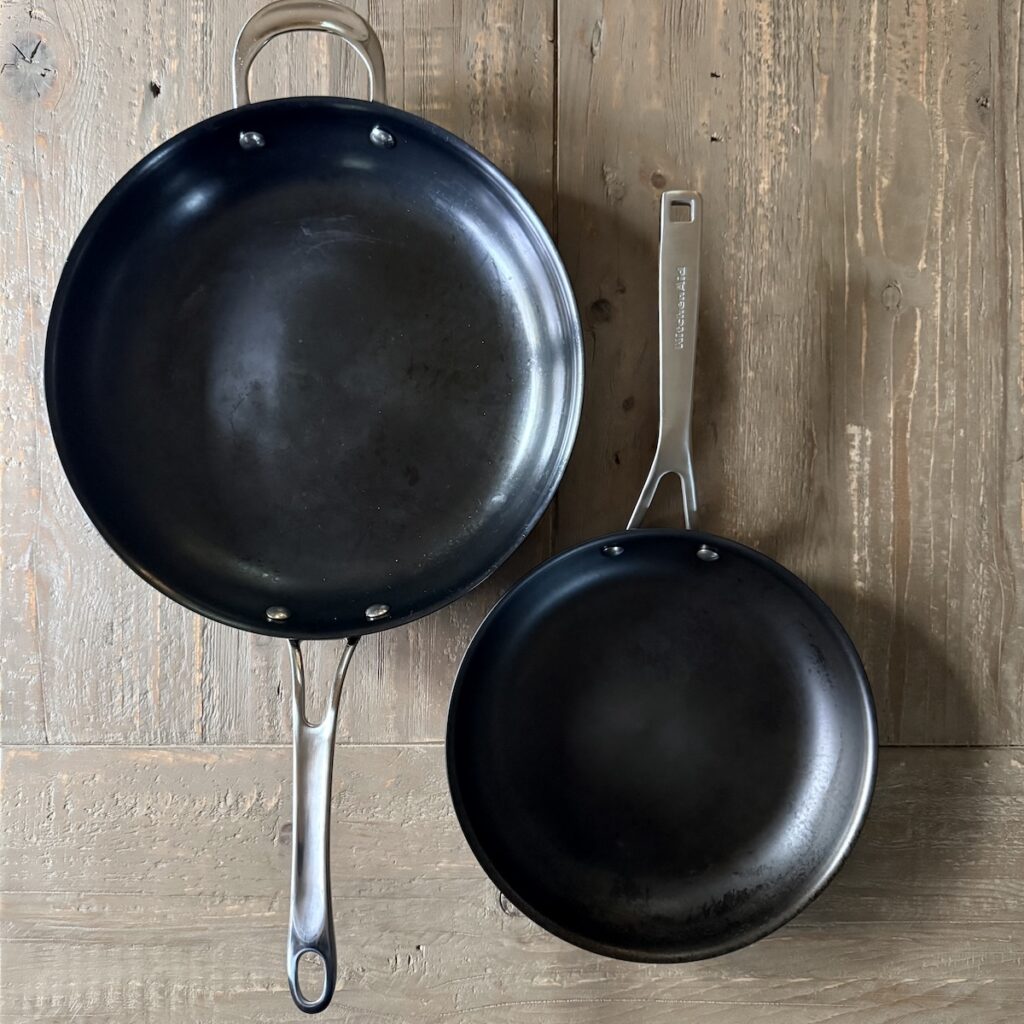
- Light and reliable: Misen's Carbon Nonstick has an aluminum core sandwiched between the nitrided carbon steel so it is lighter than the NITRO and EverLast N2. It performed beautifully out of the box a hair better than the other two. What I did not like was the flat handle, which didn't feel as ergonomic as the other pans, which have slightly curved handles. The Misen pan feels and looks most like a regular coated nonstick pan but it is wonderfully not. Carbon Nonstick availability: Amazon | Misen
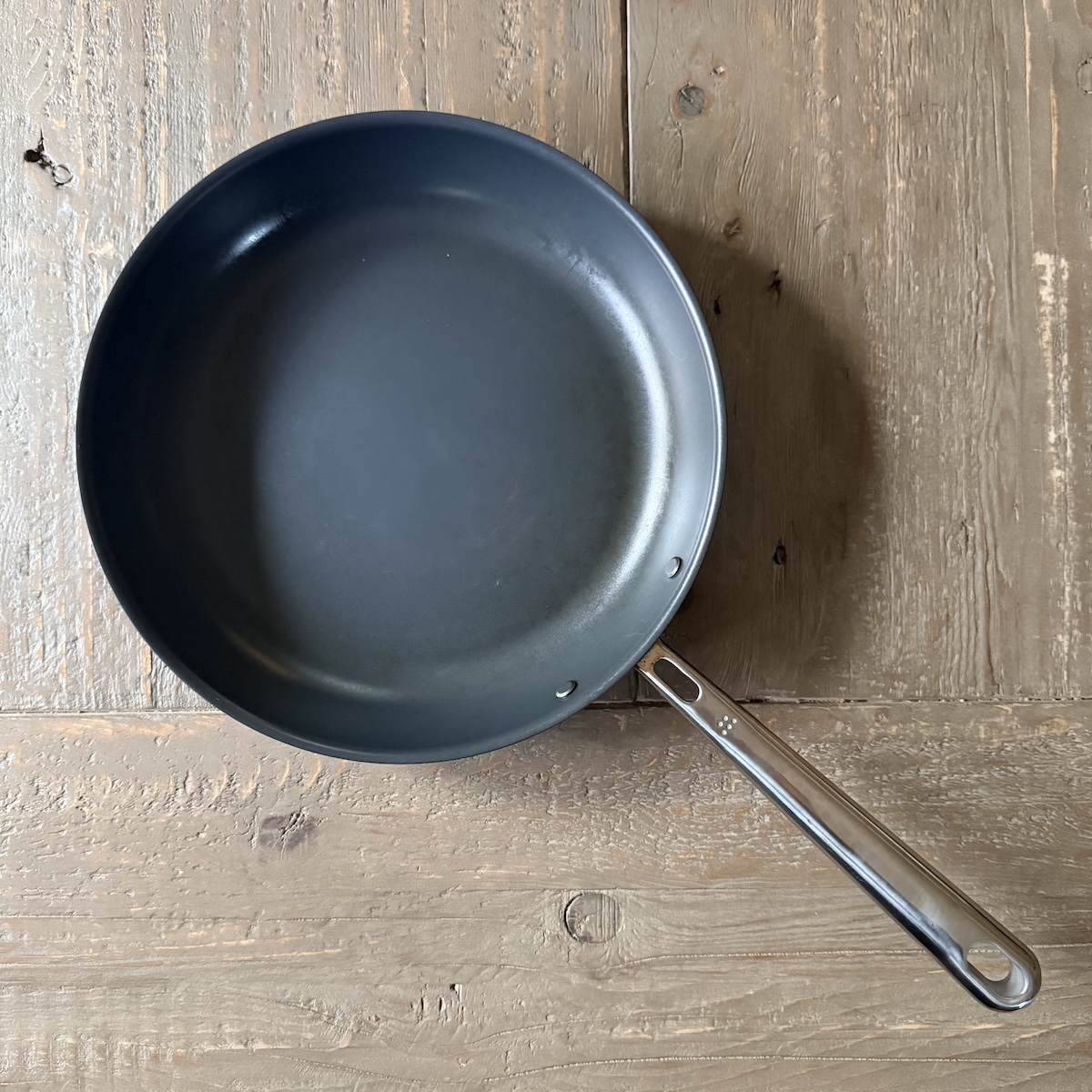
If you're looking for a relatively easy to use and maintain nonstick skillet or wok that will last for decades, nitrided carbon steel are worth looking into and owning.

Anna says
Hi there,
couldn’t get the video to run, but just wanted to say thanks for the information.
Andrea Nguyen says
Hi Anna! Thanks for being here to check out the nitrided skillets. If you have an ad blocker on then the video won't show. There's usually a way to disable the ad blocker for a single website, I think. Hope that helps and you can access the video. I still love the skillets!