


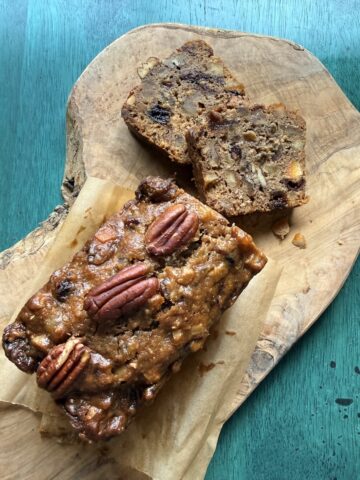
Fruitcake likely started in ancient Rome but has traveled the world with colonization and trade. It is an international holiday sweet for those who enjoy it. For instance, people in places like Kerala and Kokata, India, have bake Christmas cakes (Plum Cakes) with candied papaya. My family like it because it reminds us of moon cakes (banh Trung Thu), so I make up an annual batch of Vietnamese-American fruitcake.
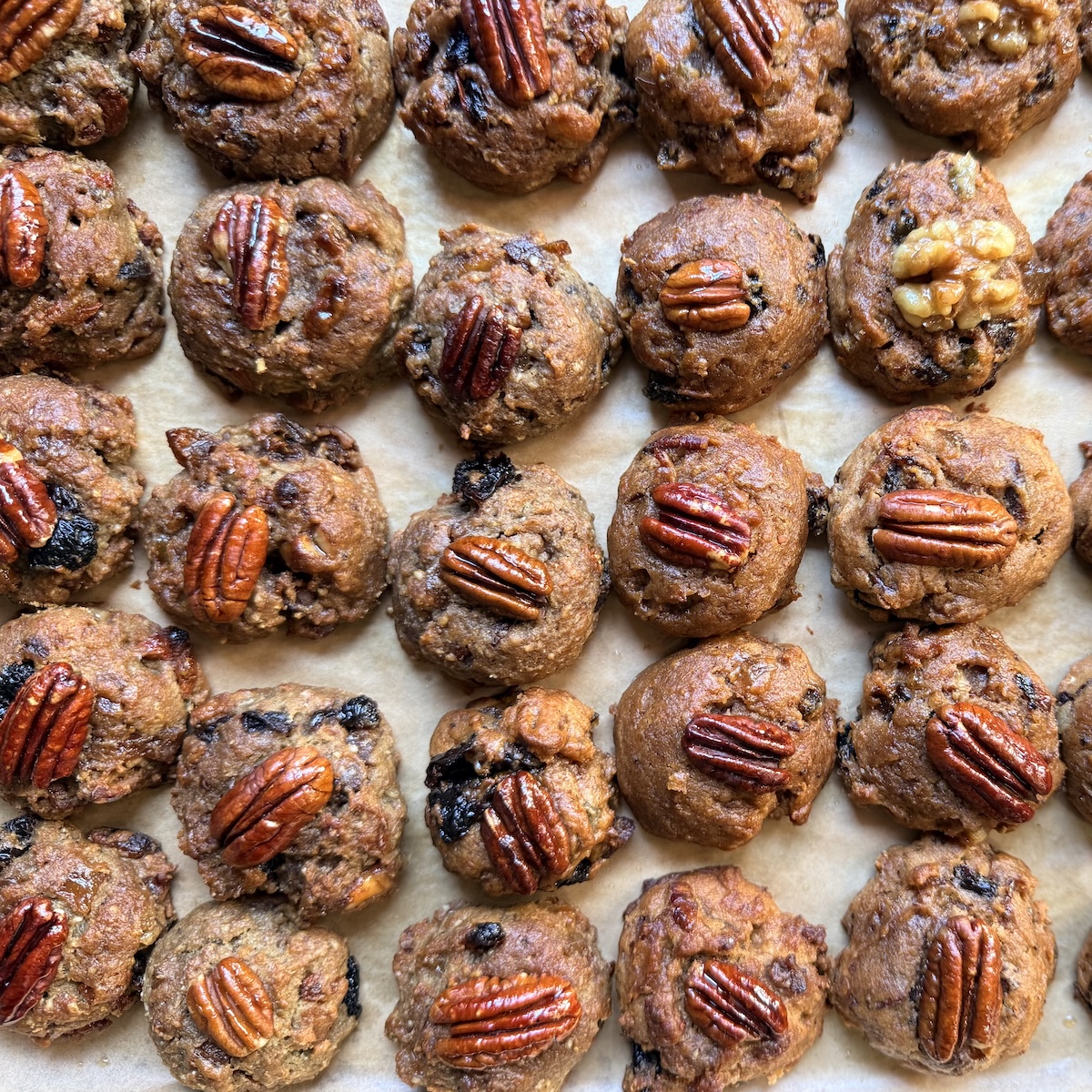
But if you don't have the time to bake and cure conventional fruitcake, you can use this recipe to make boozy fruitcake cookies that don't require days, weeks or months of aging. Many fruitcake cookies don't fully capture the cakey, boozy, coziness of fruitcake. I've seen drop cookies, slice-and-bake cookies, plus shortbread cookies. This recipe yields a cakey cookie to capture all the marvels of fruitcake -- the fruit, nuts, liquor, and warm spices. The key in the recipe is an unusual cookie ingredient: sweet potato.
Why use sweet potato for a cookie?
I had a hunch that sweet potato (Ipomoea batatas) would help achieve two goals - adding (1) starch to yield a cake-like texture and (2) natural sugars to lend complexity and lower the amount of refined sugar needed. The dried fruit, candied sweetmeats, honey and liquor have sugar and sweet potato would go well with those ingredients.
The sweet potato worked amazingly well but I wanted an expert take on my usage. My good friend, Mary-Frances (MF) Heck, the former food editor of Food & Wine magazine and author of The Sweet Potato Cookbook, offered many insights. "Moisture! Fiber!," MF texted. "And most of all, deeper flavor that you can manipulate to host others-like warming spices-or make central by either promoting caramelization for richness, or lightening to expose the sweet, almost floral aroma of sweet potatoes." Of course! Sweet potatoes are more than for roasting.
What kind of sweet potato to use? MF pointed out that sweet potatoes differ in moisture levels and sugar content so you can't do a 1:1 swap. For consistency, I use orange-flesh sweet potato (Garnet or Beauregard). If you use another kind, the texture may be off.
How to cook sweet potato for fruitcake cookies?
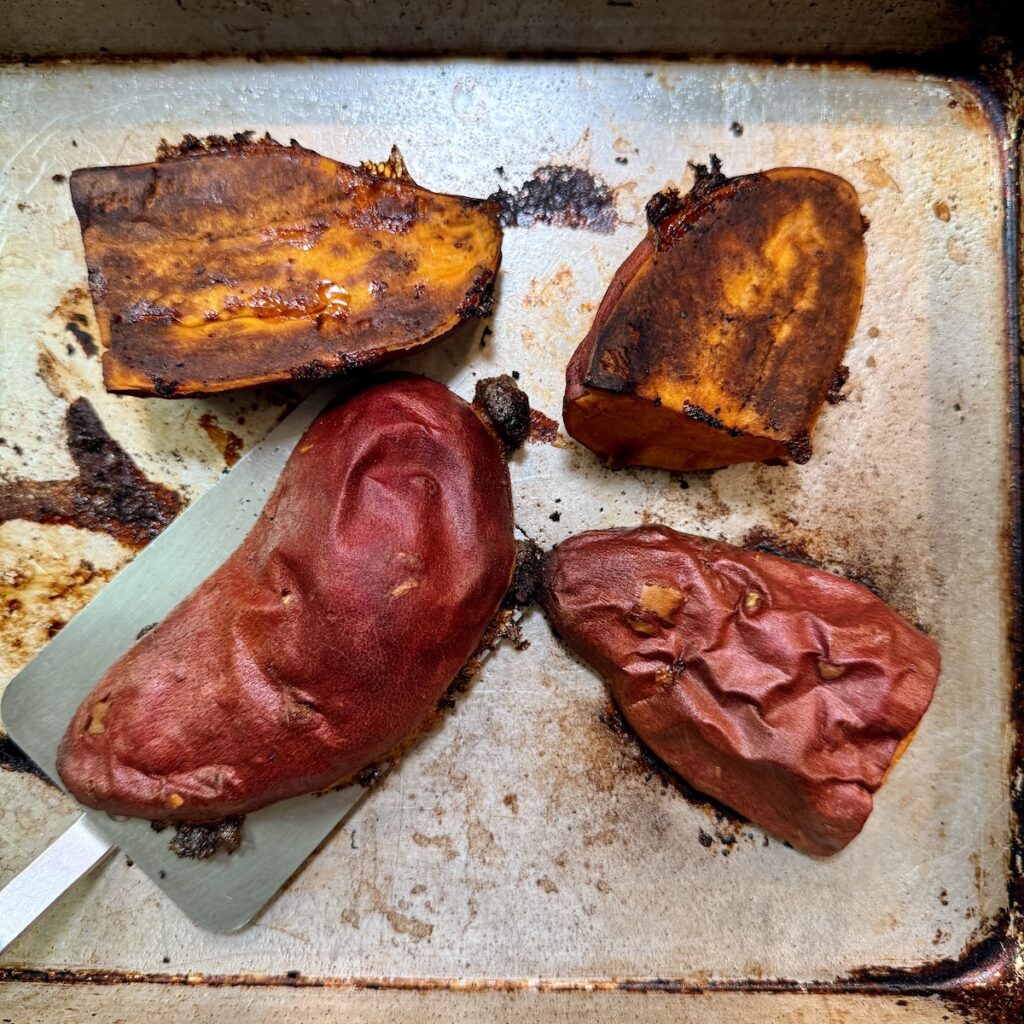
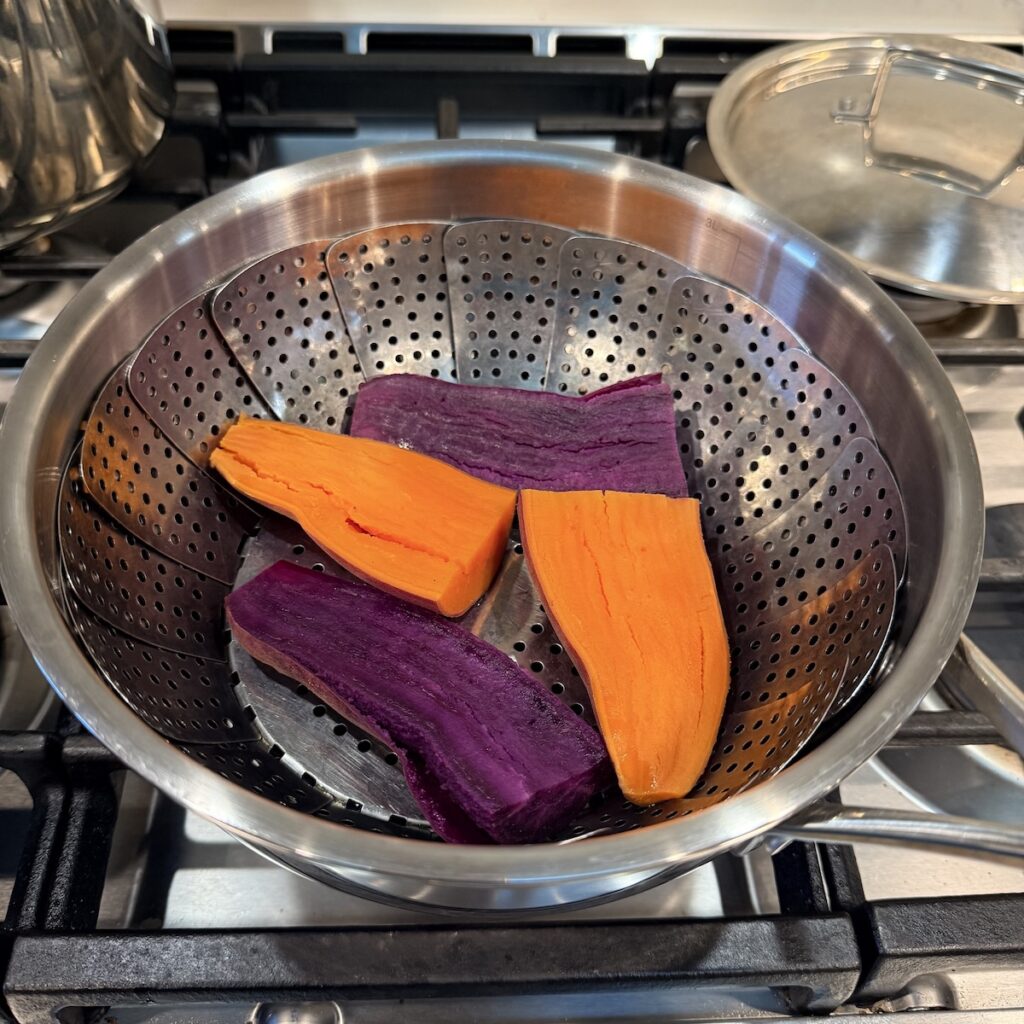
Boiling the sweet potato would invite too much water into the tuber. Your best bet is to roast or steam the sweet potato. Roasting is best because the flavor is deeper. Use leftover roasted sweet potato for the cookies, if it was simply seasoned. Steaming is fine if you don't want to turn the oven on.
Mashed Roasted or Steamed Sweet Potato
Ingredients
- One 210 to 300g | 7 to 10 oz orange sweet potato
Instructions
- Cut the sweet potato: Halve the potato crosswise then halve each piece lengthwise to yield 4 pieces.
- To roast sweet potato: Preheat the oven to 400F (205C) with rack in the center. Rub a little oil all over the cut sweet potato pieces then place cut side down on a parchment paper -ined baking sheet (or not, if you want to scrub). Bake for 35 to 50 minutes, until soft (a metal cake tester or toothpick inserted should meet no resistance). Remove from the oven and let cool completely.
- To steam sweet potato: Use a collapsible metal steamer basket or a Chinese steamer. Put about 1 inch of water in the pot and set the steamer basket or Chinese steam on top. Bring to a rolling boil, then slighlty lower to heat to steady the cooking. Add the sweet potato, skin side down. Cover and steam until tender when poked with a cake tester or knife tip, about 20 minutes. Remove from the steamer and let cool completely, uncovered, then store.
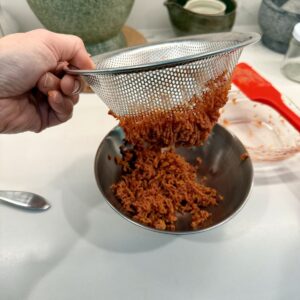
- Mash the sweet potato: Discard the skin and if there are burnt parts from roasting, trim them off. Put the flesh in a bowl and mash with a fork to a fine texture. If the cooked flesh is stringy, pass it through a coarse strainer, pressing with a silicone spatula. Measure out ½ cup (130g) for the fruitcake cookie recipe so snack on the leftovers.
Notes
Bonus pointers before diving in
To take the fruitcake recipe in different directions, consider the following:
- For non-dairy or vegan fruitcake cookies, use a plant-based butter. Miyoko's and Violife brand of plant-based butters are supposed to brown. Swap the egg for an equal amount of plant-based egg or something like Bob Red Mill's egg replacer; you're looking for something to bind the ingredients together and to add viscosity so a replacer should be ok.
- If you would like non-alcoholic cookies, replace the liquor with orange or tangerine juice or something similar.
- To prep ahead, refrigerate the raw dough for up to 2 days; return it to room temperature before baking. It can likely be frozen too, though I have not tested it. Baked cookies will keep for days at room temperature or frozen for months.
- The boozy glaze fades as the cookies age over time. If you like, refresh their boozy flavor and aroma by re-brushing with glaze, letting the cookies sit for about 1 hour to absorb. Don't brush with too much or the cookies will become gummy.
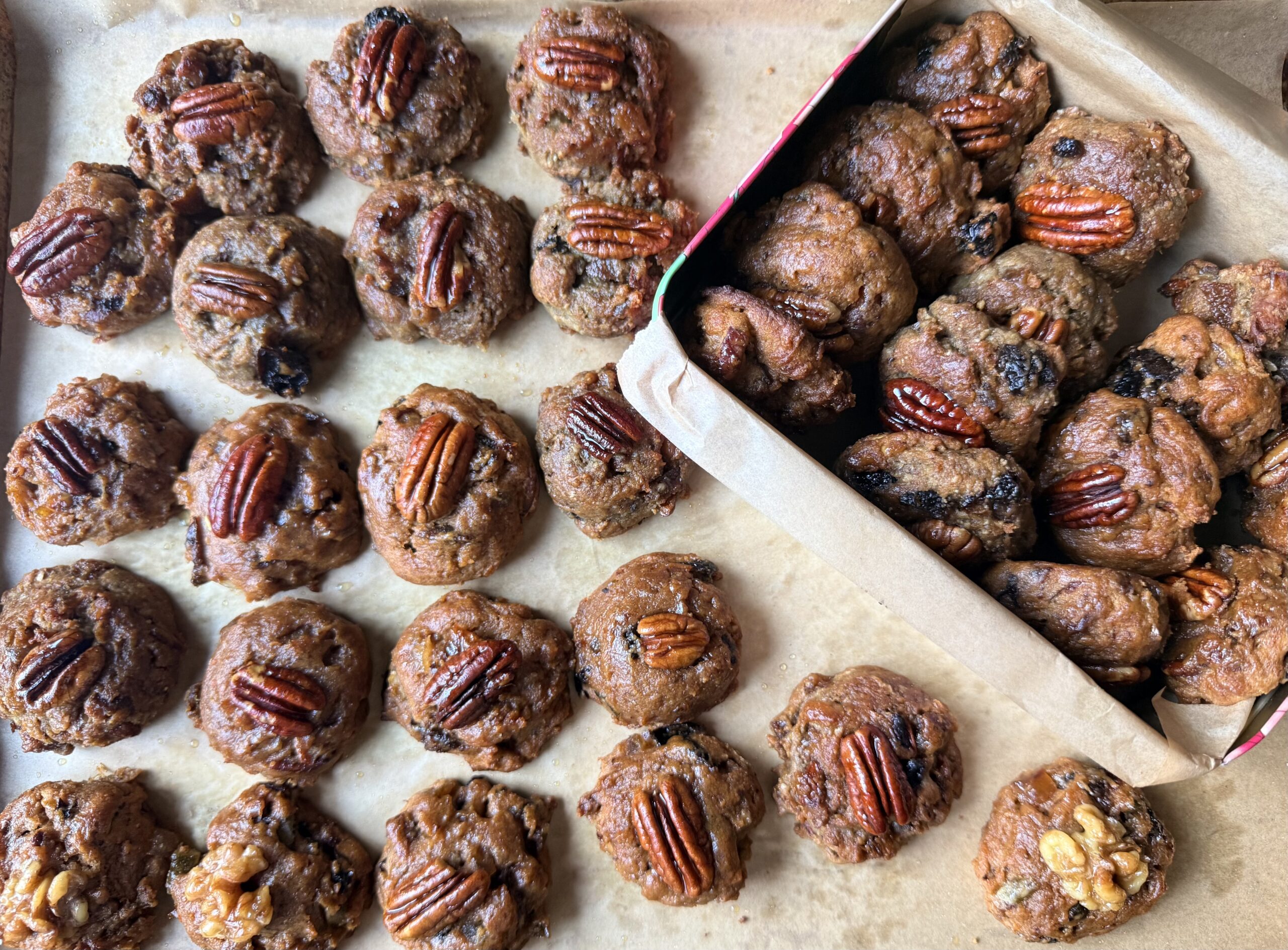
- Freestyle bake your fruitcake cookies. Use different kind of dried fruit, candied sweetmeats, and nuts. I like pecans and walnuts because they are tender but hazelnuts may work well too. Blend your own spices depending on what kinds of warm spices you have on hand. When I tried using more than three spices, there wasn't enough of one for the flavor to pop so don't go overboard. This cookie is good for using up lingering liquor and gifting because they're sturdy and get better as they sit.
Let me know your thoughts and creative tweaks to this keeper recipe!
Fruitcake Cookies
Ingredients
Fruit and nut mix
- 150 g | 5 oz mixed dried fruit, such as raisins or dried cranberries, cherries, apricots
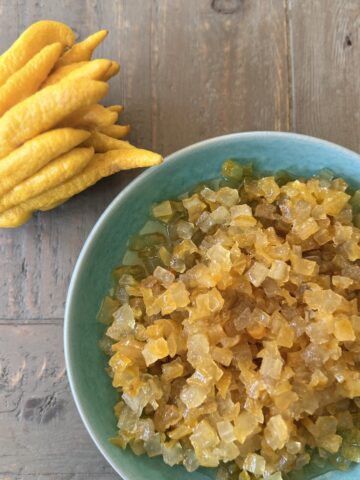
- 90 g | 3 oz sweetmeats, such as candied ginger, citron and orange peels
- 120 g | 4 oz coarsely chopped roasted pecans or walnuts
- 1 tablespoon honey
- 1 tablespoon fresh lime or lemon juice
- Grated zest of 1 lime or lemon
- 4 to 6 tablespoon rum, brandy, or whiskey
- Fine sea salt
Dough
- 130 g | ½ cup mashed roasted or steamed sweet potato (recipe above)
- 113 g | ½ cup (1 stick) salted or unsalted butter
- 67 g | ⅓ cup granulated sugar
- 67 g | ⅓ cup packed light or dark brown sugar
- 1 teaspoon vanilla
- 2 teaspoon ground warm spice blend, such as ground cinnamon, cloves, ginger, and nutmeg
- 1 large egg, at room temperature
- 215 g | 1 ½ cups all-purpose flour or 1-to-1 blend of all-purpose and whole wheat pastry flour
- 1 teaspoon baking soda
For baking
- Roasted pecan or walnut halves
- Glaze: 2 tablespoon rum brandy, or whiskey mixed with 2 tablespoon honey
Instructions
- Soak the fruit and nuts: If the dried fruit or sweetmeats are big, snip or cut them into pieces no larger than ⅓ (1cm) inch. In a medium bowl, combine all the dried fruit, sweetmeats, nuts, and 2 pinches of salt. Mix in the 1 tablespoon honey and the citrus juice and zest. Add 4 to 6 tablespoon liquor, so there's a nice boozy spike. Cover and let sit overnight (or up to 3 days) at room temperature to plump up.
- Brown the butter: Put the mashed sweet potato in a large heatproof bowl. Set near the stove. In a small saucepan over medium heat, melt the butter. Once foamy, slightly lower the heat to steady cooking. Let swiftly bubble, stir often with a spatula to avoid burnt milk solids, until patches of golden brown appear and the butter is very aromatic, 2 to 3 minutes.
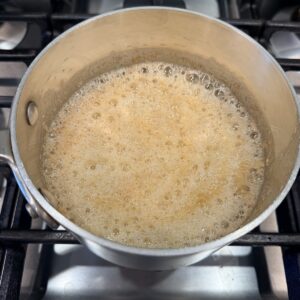
- Slide the pan to a cool burner, wait for the bubbling to subside, then pour and scrape the butter onto the sweet potato. Stir to combine well the let briefly cool about 5 minutes.
- Make the dough: Stir in the white and brown sugar (weigh them into the bowl for less clean up!). Add the vanilla extract then season with the spices and salt. Taste and adjust to ensure a very tasty mixture that's highly spiced (add by the ⅛ tsp) and medium sweet (stir in sugar by 1 Tbsp).
- Stir in the egg and combine well. Add the flour and baking soda, stir and fold to combine halfway. Add all the macerated fruit and nuts plus any liquid in the bowl. Mix just until traces of flour are no longer visible.
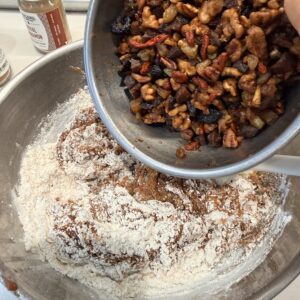
- Shape and bake: Preheat the oven to 350F (175C) and set a rack in the middle position. Line 2 baking sheets with parchment paper. Use two spoons or a scooper to spoon out heaping tablespoons (roughly 1 ½ Tbsp) of cookie dough, placing them onto the prepared baking sheets, spaced about 2 inches (5cm) apart. Moisten fingers to gently neaten up jagged edges on the dough blobs. Press a pecan or walnut half on top of each. Bake one baking sheet at a time until puffy and lightly brown at the edges, 14 to 16 minutes. Let the cookies cool 3 to 5 minutes before brushing with half (2 Tbsp) of the the glaze (re-brush if needed). Repeat to bake and glaze the other cookies.
- Let the cookies completely cool on the baking sheet. The cookies are good a few hours after baking but they will taste better if left to age overnight in an airtight container.
Leave a Reply