


Thick, tender-chewy Chinese Islamic sesame-scallion bread (called zhīma dà bǐng in Mandarin) is something I've loved for decades but making it at home to get results like what you'd see at a Chinese Islamic restaurant is challenging. The dough is either too tough or the layers of scallion not well distributed. Ideally, the bread is focaccia like -- thick, with a green specks of scallion (green onion) scattered throughout and a nutty, slightly crusty exterior, thanks to a coating of sesame seeds. But today, I improved on an old beloved recipe and I'm sharing my new findings with you so you can play with it too! This iteration my best, thus far.
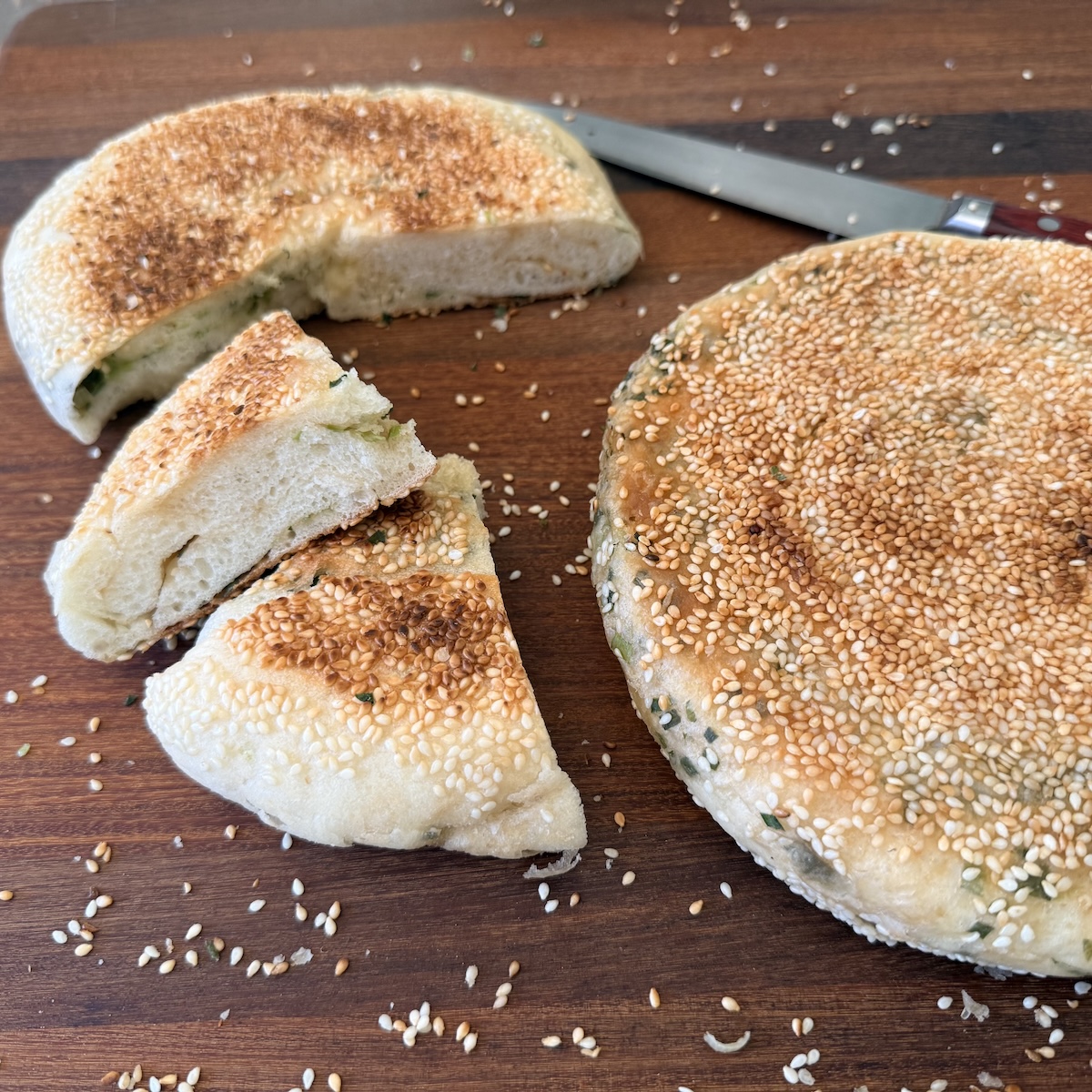
There's a certain level of technique involved but you can do it if you've folded up a business letter, rolled a cigarette, or made a burrito. This bread is best prepared with Korean all-purpose flour (more on that below) but I have a decent supermarket substitute for you. The dough is cooked in a skillet so it's fun to observe the cooking process up close. And, eating the bread with a stir-fry like cumin lamb or a bowl of soup like hot and sour soup is well . . . divine!
Tips for your sesame-scallion bread journey
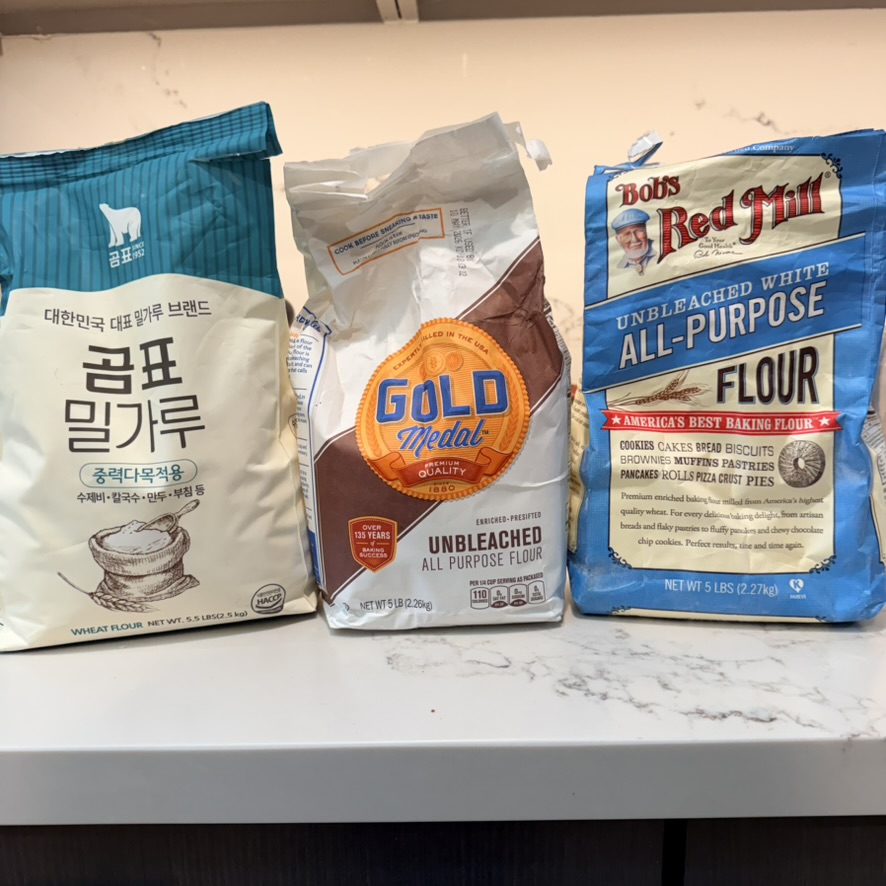
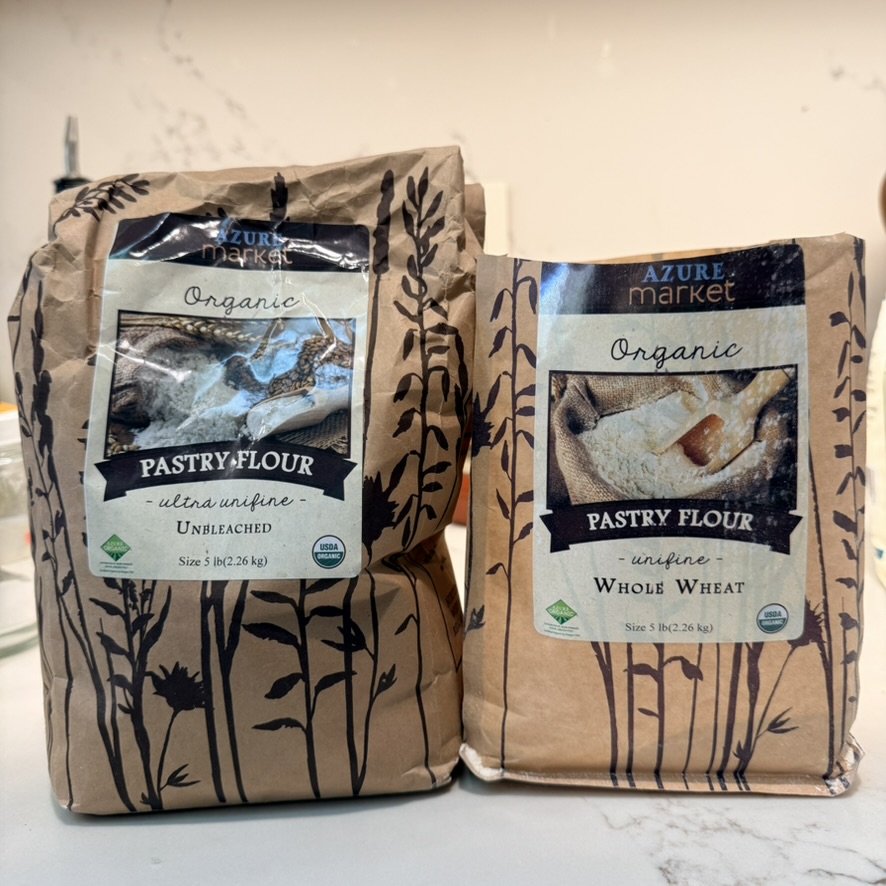
Choose flour wisely. As mentioned, Korean flour sold at Asian markets works best. Ranch 99 and H-Mart carries it for sure, as do other Chinese and Korean markets. It's unbleached and has a low protein (about 10 percent) level, which means it's more tender. Many many swear by it for Asian-style breads, dumplings and the like. If you don't have it, my substitute is below using standard all-purpose flour (such as Gold Medal or Bob's Red Mill) and pastry flour (unbleached or whole wheat, sold at hippie health food markets or online).
Chop the green onions int small pieces. No big chunks to get caught in teeth or not distribute well in the dough. Mix in some Chinese chives (garlic chives) with the scallion. Regardless, make the pieces very small.
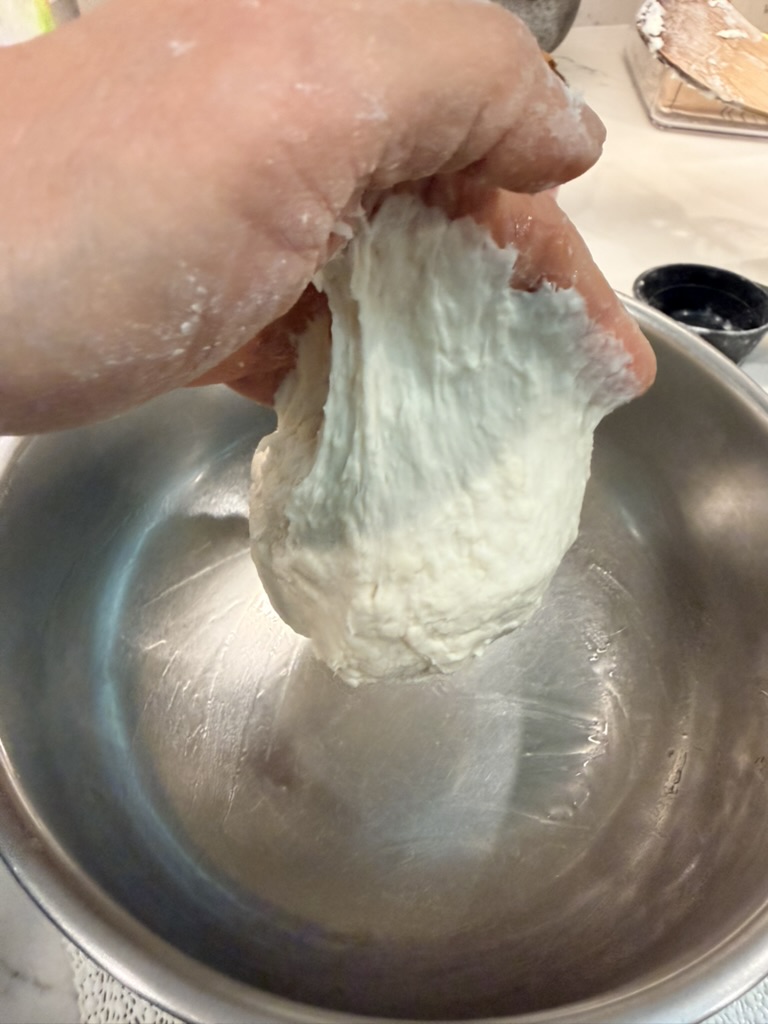
Expect a soft, slightly sticky dough. It will seem like it won't behave but it strangely will. That's my experience. Don't add too much flour to firm up the dough. When you have to roll out the dough to a thin rectangle, it will seem hard to do at first. However, the dough will take to your rolling pin and get to the shape you want -- with little flour required on your board. Amazing! You can even pull on the edges slightly to get it to do what you want.
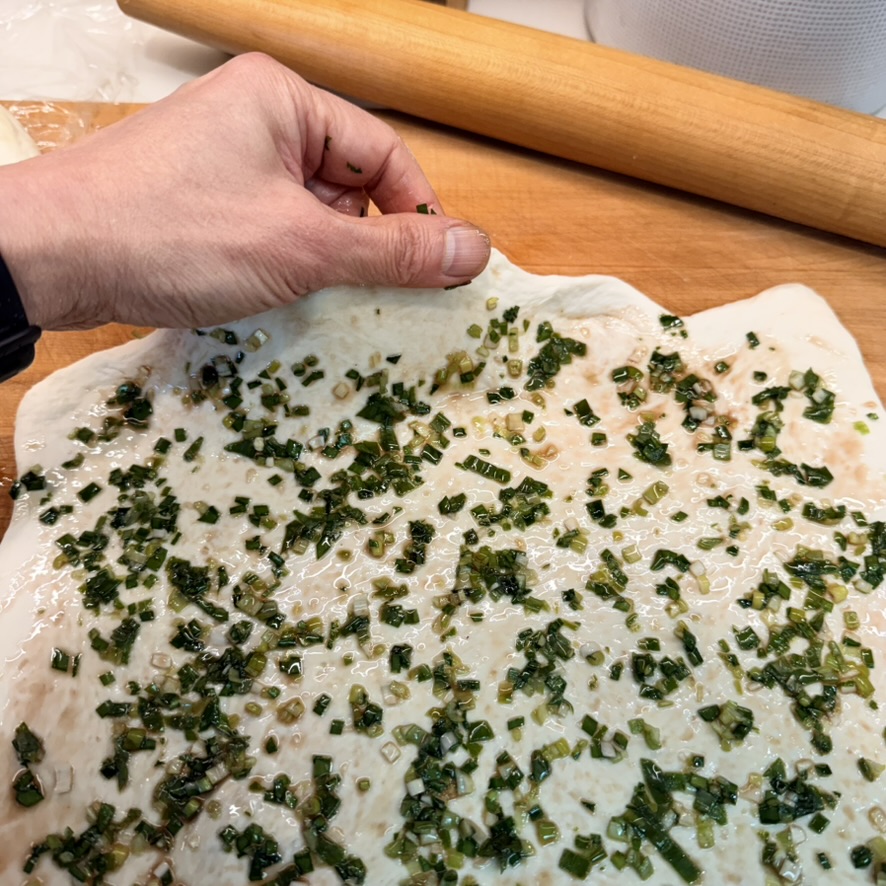
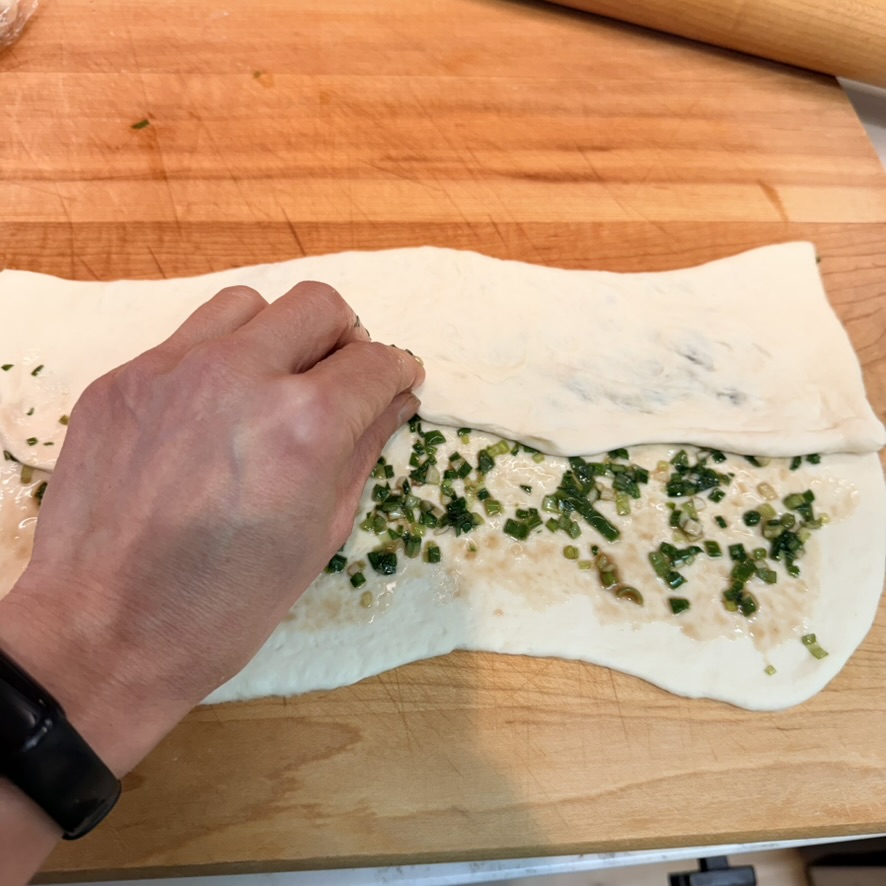
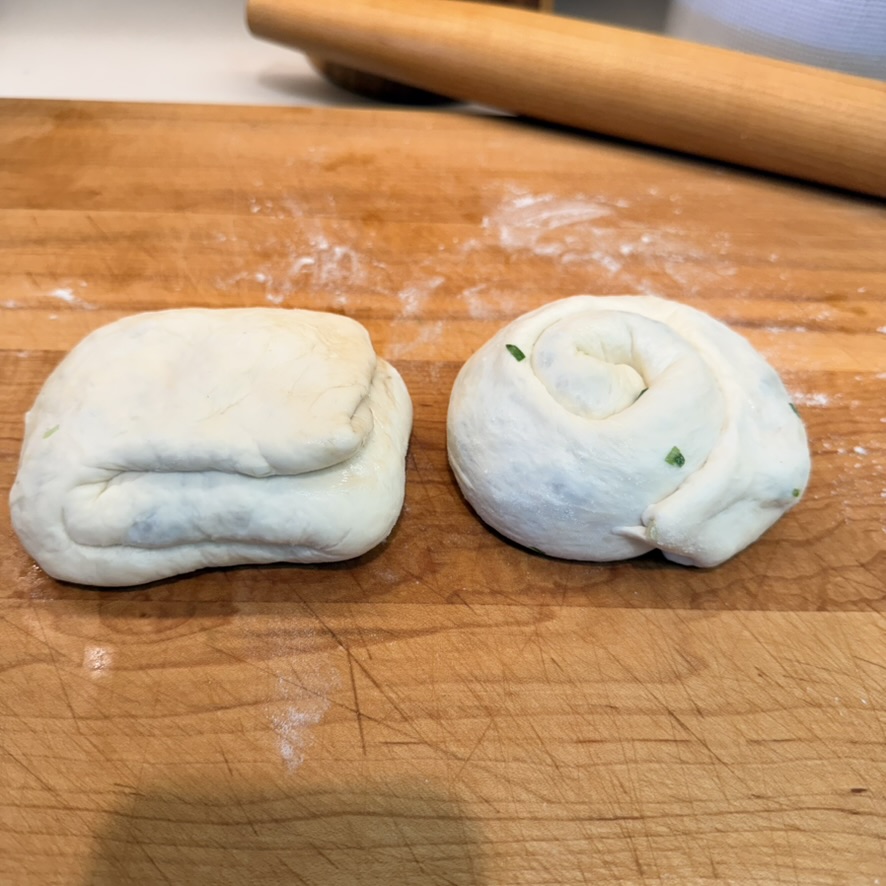
Do a trifold then roll or trifold again. The initial tri-fold helps to more randomly distribute the scallion and sesame oil. Then you can do a jellyroll and coil up the log. Or repeat that trifold to make a square. I like the coil on the far right best delivers a nice distribution of flavor throughout the bread. Check the photo further down of the cut bread; the one on the right is of the coiled dough.
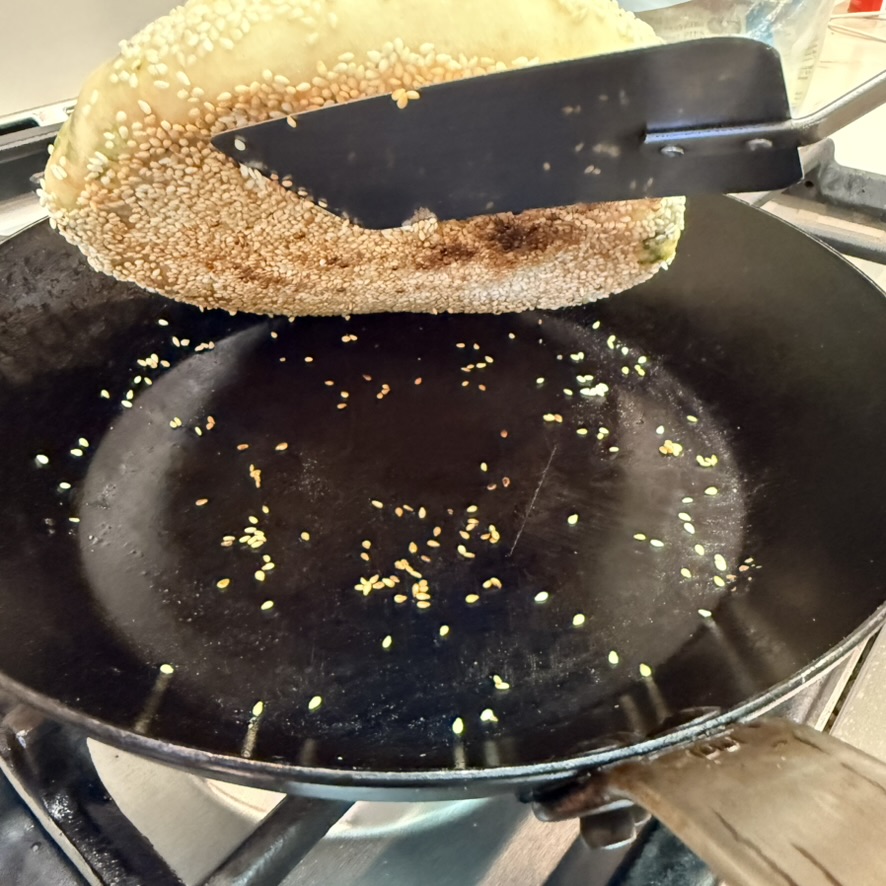
Cook in a heavy skillet. You need to conduct heat well and slowly. I've made these in a carbon steel and cast iron skillet. A heavy stainless steel skill will work too. No thin, lightweight pan here. If the pan maintains heat well, then you can flip and peek and slow and hasten cooking as you want without changing the temperature too much. Also, you need a lid.
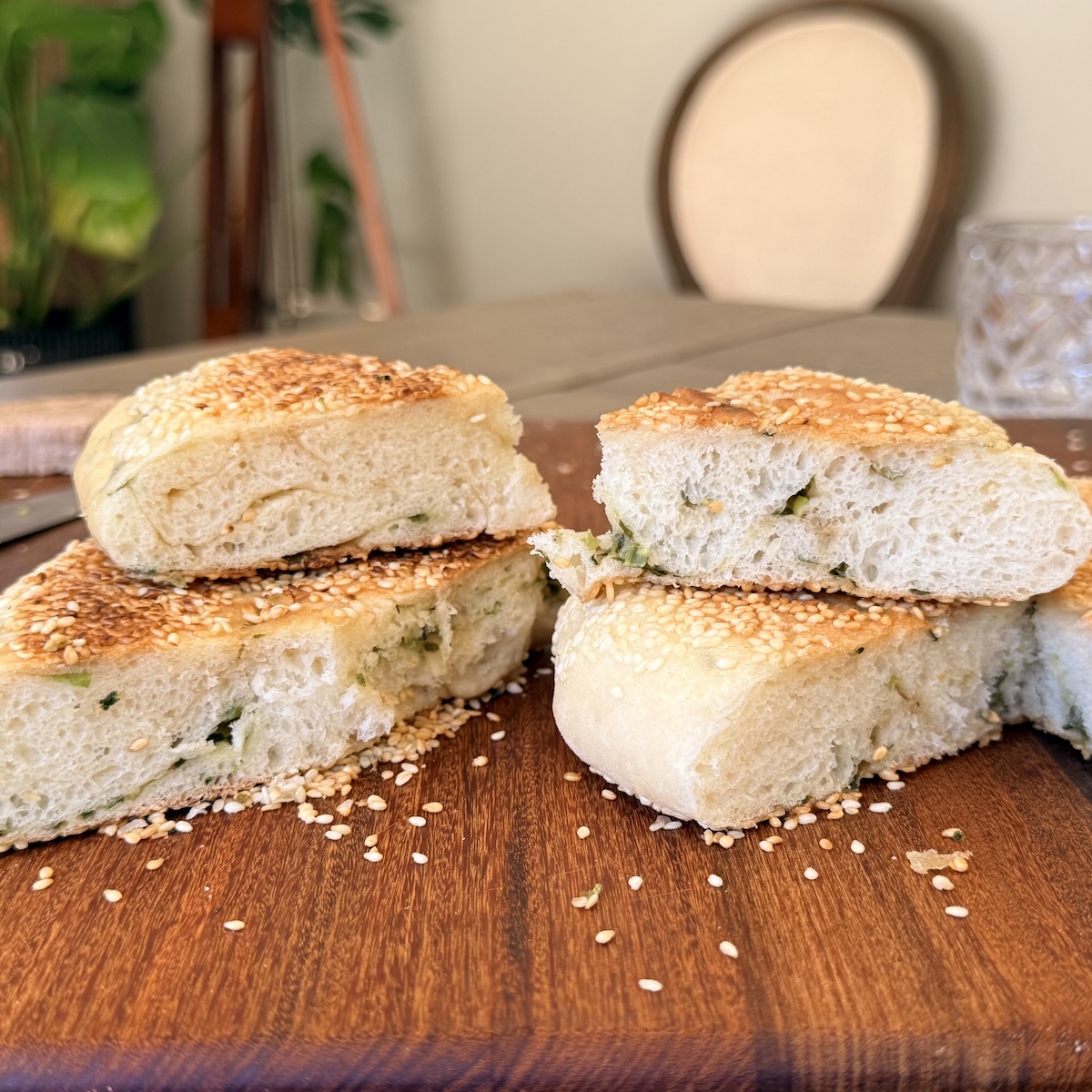
The breads end up being thick and very fun to eat. We enjoyed the first one with soup for lunch. It would be great with the stir-fried cumin lamb with green onions because well... you'll have some green onions in your fridge after making this bread!
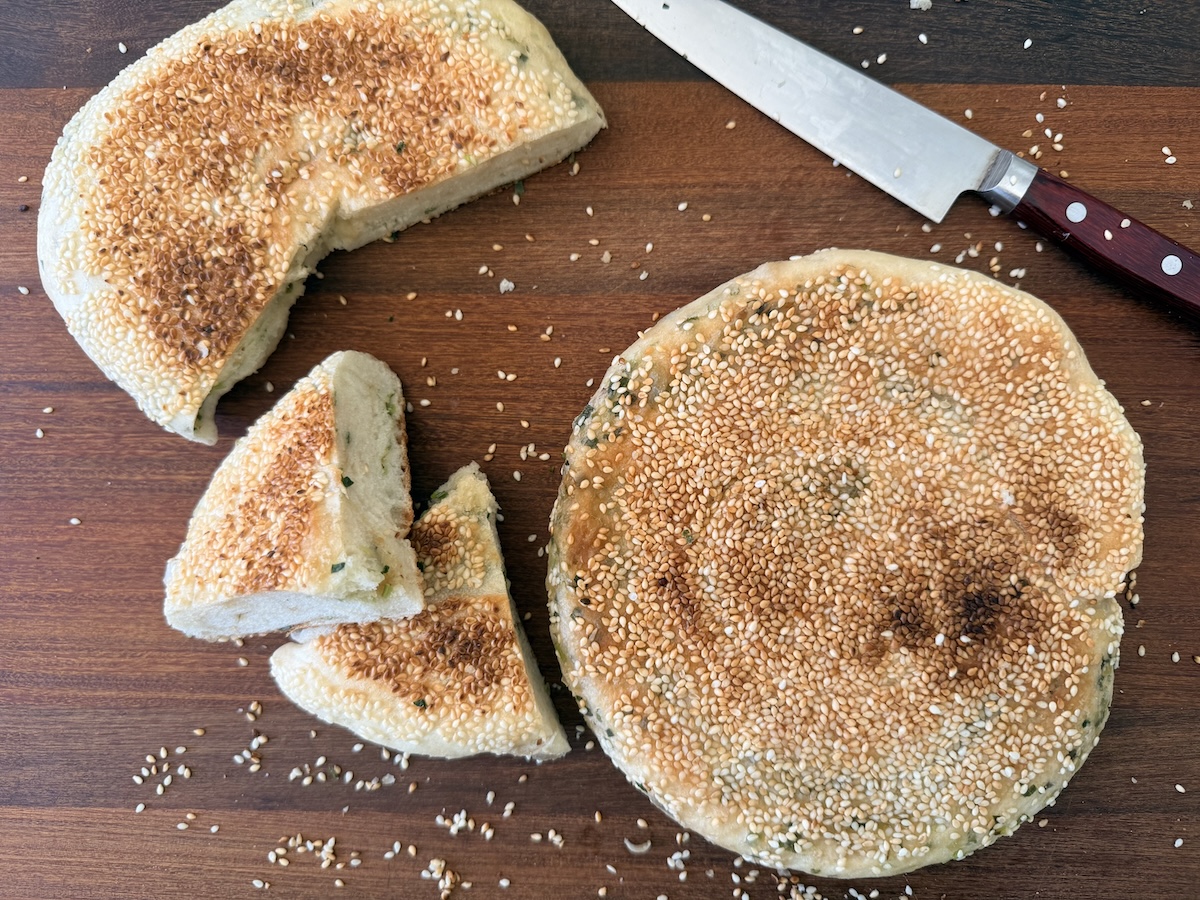
Chinese Islamic Sesame-Scallion Bread
Ingredients
- 180 ml | 186g | ¾ cup warm water
- 1 teaspoon fast-rising dry yeast
- 184 g | 2 cups Korean unbleached all-purpose flour or 190g standard unbleached all-purpose flour plus 94g pastry flour
- 1 teaspoon sugar
- 1 teaspoon baking powder
- ¾ fine sea salt divided
- 35 g | ½ cup very finely chopped green onions white and green parts
- Scant 2 tablespoons toasted sesame oil divided
- About 120ml | ½ cup raw white sesame seeds divided
Instructions
- Make the dough: Place the water in a bowl or measuring cup and sprinkle the yeast on top. Gently mix in the yeast and let sit about 5 minutes to soften and dissolve. Meanwhile, in a medium bowl, combine the flour(s), sugar, baking powder, and ¼ teaspoon of the salt.
- Make a well in the center of the flour mixture, add all the dissolved yeast, then stir to form a very soft, sticky dough. Knead the dough in the bowl to form an earlobe soft ball. Transfer the dough to a clean, lightly oiled bowl (I normally pause to wash, dry and reuse the bowl). Cover with plastic wrap and let rise in a warm spot for 45 to 60 minutes, until doubled.
- Roll and fill the breads: Combine the remaining ½ teaspoon of salt with the green onions. Halve the dough into 2 pieces (about 230g each). Working with one piece of dough at a time, roll it into a 10 x 12-inch (25 x 30cm) rectangular-ish shape. The dough should slightly stick to the surface but pull off like a Post-it note.
- Brush 1 scant tablespoon of sesame oil on the dough to about ½ inch (1.25cm) of the edge. Distribute the seasoned green onions on top and use your fingers to spread them out as evenly as possible. Bring up the top third of the dough and fold it over, then bring up the bottom third to cover the top portion; the result is a wide folded up business letter. Roll the dough jellyroll-style into a 1-inch-thick log then coil it into a round. (Or, fold the left and right sides over the center to form a square packet.) Repeat with the other piece of dough. Loosely cover the shaped breads and let rest for 10 to 15 minutes.
- Final bread shaping: Put half of the sesame seeds on a rimmed dinner plate or pie plate. Very lightly dust your work surface, then pat and gently roll dough piece into a circle a good 7 inches (17.5cm) wide. Lightly brush the top with water, then pick up the dough circle and carefully flip it onto the sesame seeds; gently press and pat the circle to ensure sesame seeds adhere to the moistened surface.
- Brush water on the top side of the circle then carefully turn the dough circle over to coat the other side with sesame seeds; repeat pressing and patting the dough to ensure lots of sesame seeds adhere. Transfer the bread circle to a heavy skillet (carbon steel, cast iron, or stainless steel). Cover with a lid.
- Repeat with the other piece of dough and place the finished sesame coated circle on a piece of parchment, then loosely cover. Let the sesame seed coated dough circles rest until they have slightly puffed up, 15 to 20 minutes.
- Cook the breads: Set the pan over medium-low heat (I used a 9.5K BTU burner), cover, and slowly cook the bread until the sesame seeds are golden brown on the bottom (use a spatula to lift it to check), 10 to 15 minutes. The bread will puff up to a good 1-inch (2.5cm) thick! Carefully flip the bread over, recover the pan (slightly lower the heat if you think cooking is going too fast); fry the second side until the sesame seeds are golden, 5 to 10 minutes. Cool on a rack (or slide into a warm oven to keep hot) while you cook the other bread.
- Cut the bread into wedges and serve. To reheat, recook lightly on both sides or use the toaster oven. This bread is great hot, warm, or at room temperature.


Leave a Reply