


Someone on Facebook asked about tips for making fried rice. I'm responding with one of my favorite recipes - something I've been making for years. It's an idea borrowed from Ramenya, a noodle shop in West Los Angeles that my husband and I used to frequent when we lived in Santa Monica. We'd order bowls of ramen noodle soup and shared a half order of curry fried rice. Stained yellow, a tiny bit greasy and studded with chopped vegetables, it paved a marvelous path toward carb overload.
When we moved from Los Angeles, I turned to making the Japanese curry fried rice at home. I basically adhered to my fried rice basics, which include these pointers.

Choosing rice and a suitable pan for fried rice
Use leftover rice or cold dryish rice -- short, medium, or long-grain rice will all work. However, dry and crumbly cooked rice works well because the grains separate nicely in the wok. Chewy, fluffy rice doesn't work for fried rice; it just turns mushy and sticks to your wok. Having rice with the right texture is key for good fried rice. It's not fancy rice and at times, may seem super hard, borderline inedible.
If you bring home leftover rice from a Chinese restaurant, use it. You've already paid for it. It's what they use for fried rice! Or, cook a pot of perfect rice and spread it out to dry on a small baking sheet and refrigerate it overnight uncovered. Fried rice shouldn't seem super greasy. It's oily and rich but shouldn't leave you feeling weighted down. The texture and dryness of the rice itself matters.
What to cook fried rice in? A large, well-seasoned wok or nonstick skillet works for cooking fried rice. You want a hot, broad surface to evenly coat the grains with flavor.
Curry fried rice add-ins prep tips
Fried rice is extremely flexible. Leftover cooked bits of protein (meat, seafood) or diced tofu work well. Use egg if you don't want to use tofu. Or add egg to fried rice for richness. Leave egg and meat out for vegan fried rice. Chinese sweet sausage (lop chong) is terrific. Cooked chopped vegetables work too! I think Ramenya used frozen chopped mixed vegetables, can go into fried rice so long as it's not overly wet. I use leftover vegetables from my fridge. When prepping ingredients for fried rice, make sure your ingredients get well distributed throughout. Every mouthful should have a bit of all the ingredients. Chop things up smallish - imagine the size of a large pea.
Smartly season Japanese curry fried rice perfection
Flavor this Japanese curry fried rice with a minimal amount of wet seasonings or it'll get mushy and lose its wonderful texture. Employ salt and soy sauce or fish sauce. For this recipe, I opted for curry powder to match Ramenya's fried rice. Whatever the seasoning, know its potency and flavor profile. You don't have to use Japanese curry powder for fabulous Japanese curry fried rice!
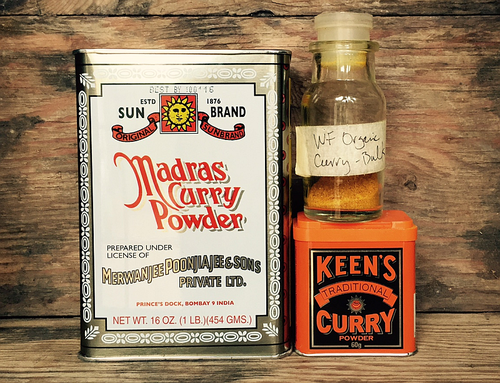
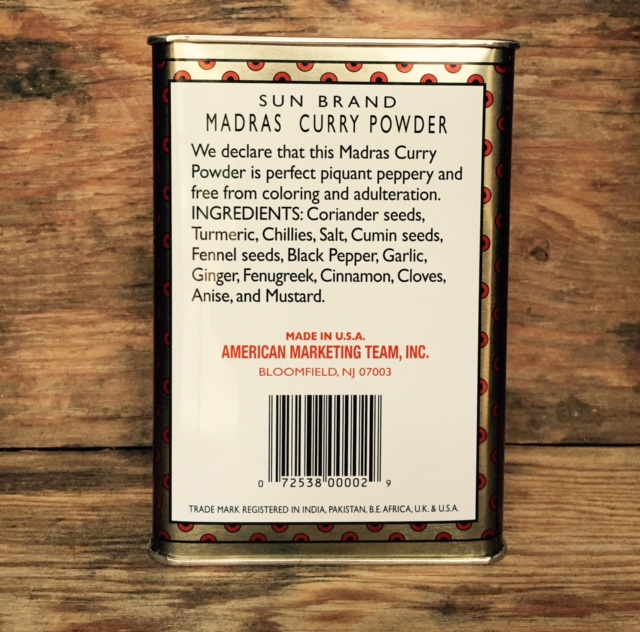
For example, my favorite commercial curry powder is Sun Brand, which has a delicate sweetness from the coriander seeds listed as the first ingredient. Viet curry powders tend to be too hot, with little nuance. There's salt in Sun Brand curry powder (now sold at markets like Safeway) so look at the label before you cook. Keen's is from Australia and the jar contains Whole Foods brand purchased from the bulk spice area; both are unsalted. You can use Japanese curry blends too. I also use homemade Vietnamese-style Madras curry powder.
For extra bite, mix in some shredded Japanese red ginger or serve a pickle on the side. It's sold at Uapanese markets. Use a Viet pickle if you like, like the daikon and carrot pickle typically used for banh mi. The bright tang of the green tomato or cherry tomato pickle would be swell with this rice. Regardless, the pickle brighten things up.
Fried rice can be easily tweaked. For example, chopped green onion can be cooked along with the garlic. Experiment your way to fried rice heaven.
What is your favorite fried rice? Care to share a recipe or your tips? I'd love to know them!
Japanese Curry Fried Rice
Ingredients
- 3 cups | 720 ml dry cooked rice, at room temperature
- 2 tablespoons plus 1 tablespoon canola or other neutral oil
- 2 large eggs, lightly beaten with a shot of fish sauce
- 1 garlic clove, minced
- ½ cup chopped extra-firm tofu or leftover cooked chicken, turkey, pork, or beef
- 1 cup leftover cooked vegetables, cut into bite-size pieces
- Curry powder
- Salt
- 1 tablespoon Japanese red pickled ginger (kizami shoga), optional
Instructions
- Crumble up the rice to prevent lumps. Set aside.
- Heat a wok or large nonstick skillet over medium-high heat. Add 2 tablespoons of the oil, then half of the egg, swirling to make a thin omelet about 7 to 8 inches wide. When the edges firm up, about 30 seconds, use a spatula or your fingers to flip it over. Cook for another 15 seconds, until just done, then slide onto your cutting board. Repeat with the remaining egg. Chop the egg up into bite-size pieces.
- Reheat the wok (or skillet) over medium-high heat. Add the remaining tablespoon of oil and the garlic. Stir-fry for about 20 seconds, until fragrant. Add the sausage and vegetables, and cook for 1 to 2 minutes to heat through. Add the egg and stir to combine.
- Sprinkle in about 1 teaspoon of curry powder. Taste to see if there's sufficient flavor. Add more curry powder, if needed.
- Add the rice, and keep stir-frying for 1 to 2 minutes, until it's heated through. Turn off heat, stir in the ginger and season with salt. Transfer to plate or shallow bowl and serve.