










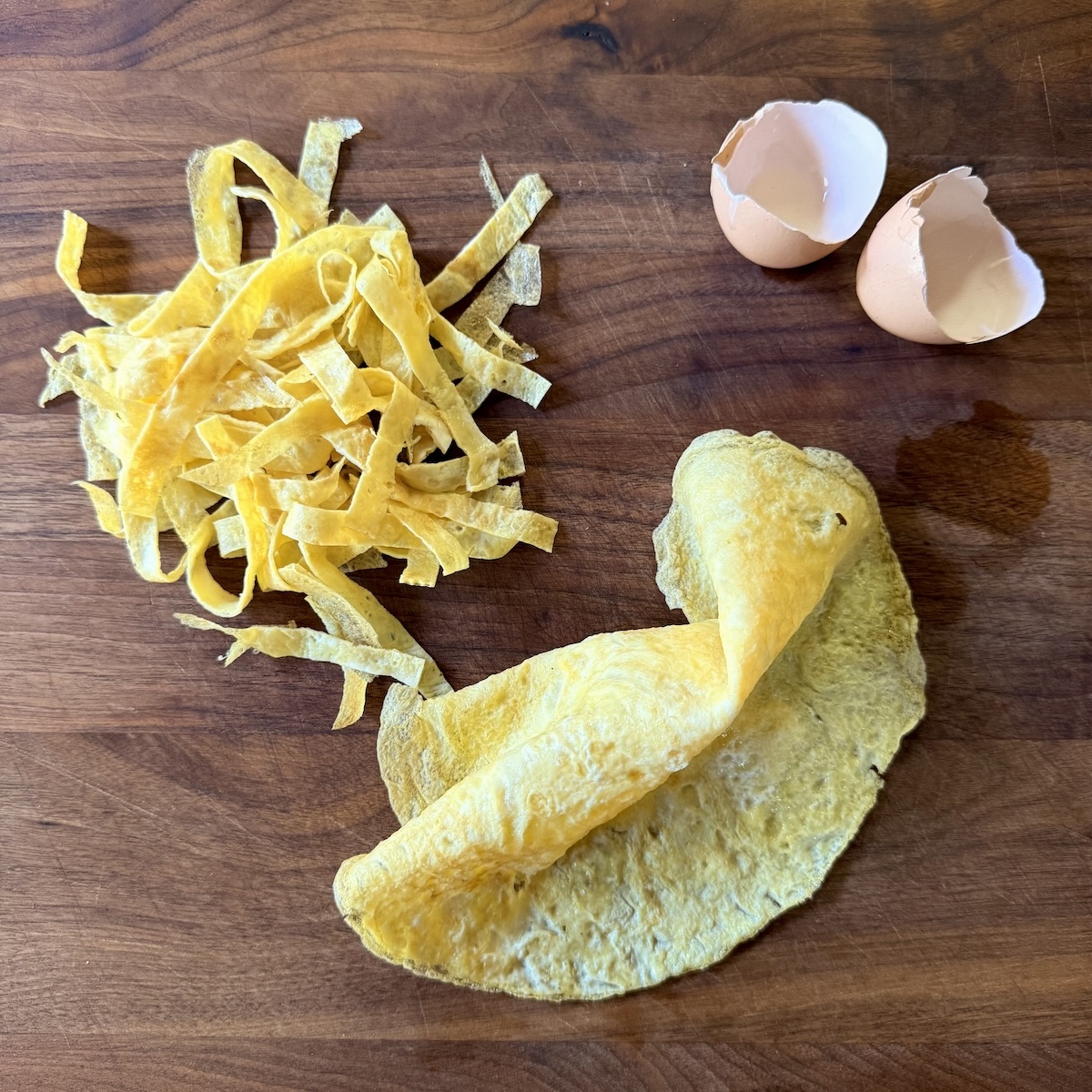
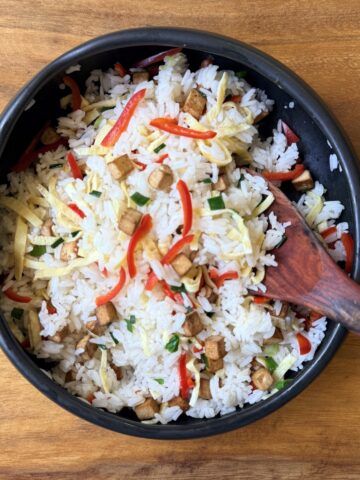
There are certain foods and pantry items that unite East Asian cuisines, and egg sheets are one of them! They are thin and lithe and super versatile. Cut into strips, egg sheets add sumptuous notes and golden splashes of color to foods. When thin and delicate like a crepe, they're perfect for mixing into rice and garnishing noodle soup, noodle salads, and rolls of many kinds. When thick and fluffy, they punctuate boldly flavored foods such as rice paper rolls.
Regardless of thickness or cuisine, egg sheets are made the same way, in a nonstick skillet and flipped over to cook both sides. I've made them for many iconic East Asian dishes.
Jump to:
Egg sheets in East Asian cuisines
Master egg sheets and you'll prepare a wealth of dishes with extra confidence. In Vietnamese, they are known as trứng tráng and grace bún thang rice noodle soup, fried rice, mixed rice (com tron), beef and jicama hand rolls and headcheese. Japanese recipes employ narrow ribbons of kinshi tamago to accent chirashizushi, chilled noodle salads like hiyashi chuka which features ramen noodles.
Called gyeran jidan in Korean Hangul, strips of egg sheets spark up tteokguk rice cake soup and traditional gimbap, the classic rice and vegetable rolls wrapped in seaweed. Chinese cooks make big and small egg sheets for dishes like dan jiao, dumplings encased in a small egg sheet wrapper. For a literal egg roll, ground shrimp filling is spread on a large egg sheet which is then rolled up and steamed and sliced as pinwheels and served as a dim sum.
Egg sheet tips for success
So, it makes sense for you to know how to make these well. Here are my pointers:
- Use a nonstick skillet for easy release.
- At first, make a double batch to practice. My recipe is very basic but some cooks add mirin or Shaoxing rice wine.
- I don't strain the beaten eggs but if you like do it for an even batter.
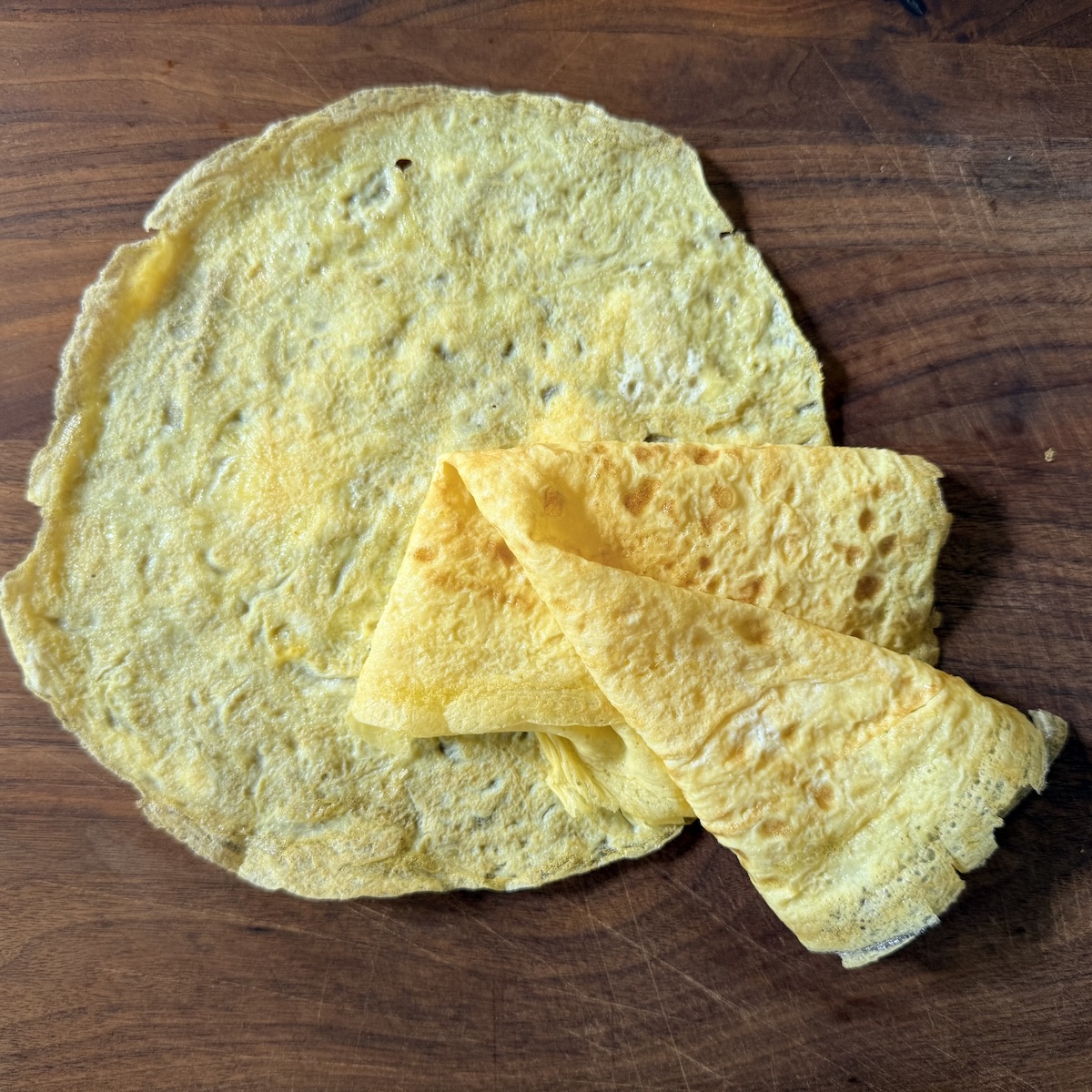
- Heat the pan up until it is hot but not scorching hot. You want the eggs to delicately set, not burn.
- Don't worry about wrinkles. They disappear in dishes.
- Make egg sheets in advance so you don't have to hassle or hustle to do something new in the middle of an unfamiliar recipe.
Watch me make egg sheets
I'm making thin egg sheets in this video. When making a thicker version that's more like a thin fluffy omelet, use more oil and a smaller skillet. See the variation below for extra details. The main recipe contains troubleshooting tips.
How to make thick egg sheets
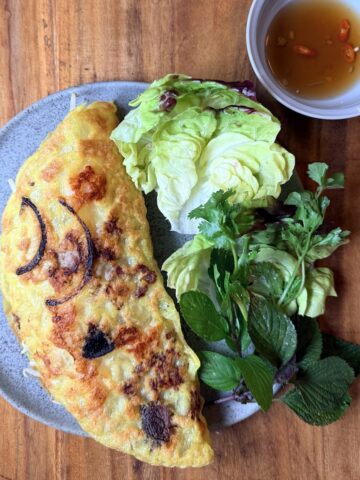
To make a thick egg sheet, use 2 eggs and the salt for the "batter". Increase the oil to 2 teaspoons. You need the extra oil to yield a fluffy, thick texture. Pour the oil into a small or medium skillet, depending on how thick you want the egg sheet. Heat over medium heat until hot. Pour in all the egg, swirling to cover the pan bottom. Wait for the edges to pull away from the skillet before flipping the egg sheet over with a spatula - not your fingers - because there's extra oil and higher heat. Cook the second side for 15 to 20 seconds and it's done.

Egg Sheets
Ingredients
- 2 large eggs
- Fine sea salt
- 1 teaspoon neutral-flavored oil, such as canola, rice bran, or vegetable
Instructions
- Prep the egg batter: Beat the eggs in a small bowl with 2 pinches of salt. If you like, strain the eggs through mess strainer to ensure a fluid batter.
- Make thin egg sheets: For each egg sheet, heat ½ teaspoon of oil in a 10 inch (24cm) nonstick skillet over medium-low heat. When the skillet is hot (flick water in and it should sizzle gently for a few seconds before evaporating), pour in some of the egg, swirling to thinly film the bottom. Swiftly return any excess egg to the bowl.
- When the edges start to separate away from the skillet, use your index fingers and thumbs to pull up the egg sheet and flip it over. (It's not that hot.) Cook for 15 to 20 seconds to dry the other side (or turn off the heat or slide the pan to a cool burner for the egg sheet to finish cooking). Lift and transfer the egg sheet to a plate or cutting board to cool. Repeat with the remaining egg, stacking up the sheets. The total number of egg sheets you make depends on the skillet size and how thin they are.
- Cut the egg sheets: When finished, cut them up to whatever size you need. Save time by preparing egg sheets several hours in advance, keeping them at room temperature covered by plastic wrap. Egg sheets can be store in the fridge for up to 3 days. Bring to room temperature to use.

Leave a Reply