

Apricots originated in China and then spread westward, writes Joyce Goldstein in Jam Session, her new book on fruit preserving. I knew that ginger started out in southern Asia so Joyce's apricot ginger jam recipe is a natural Asian combination of ingredients. Joyce writes with authority, having authored innumerable cookbooks and owning a restaurant in San Francisco. Jam Session: A Fruit Preserving Handbook has practical information as well as history and friendly flavor pairings like this apricot ginger jam recipe.
The book is organized by season and then by fruit within the season since the rule with preserving is you're preserving something at its peak flavor and texture. Summer is apricot season and purchase them from farmer's markets, supermarkets, and glean them from neighbor's trees. When I have too much, I preserve them. I make plum sauce with apricots and baked cakes with them.
Aside from savoring raw apricots, I annually return to this stunningly good jam. I say "stunning" because that's how people react to its flavor. Their eyes widen and the grin at what they're experiencing -- a flavor that's not overly sweet, with a tang and gentle zing of ginger. The tender loft of the fruit's flesh is present, as well. My dad ate it off a spoon because this jam is full nuanced flavors that taste special.
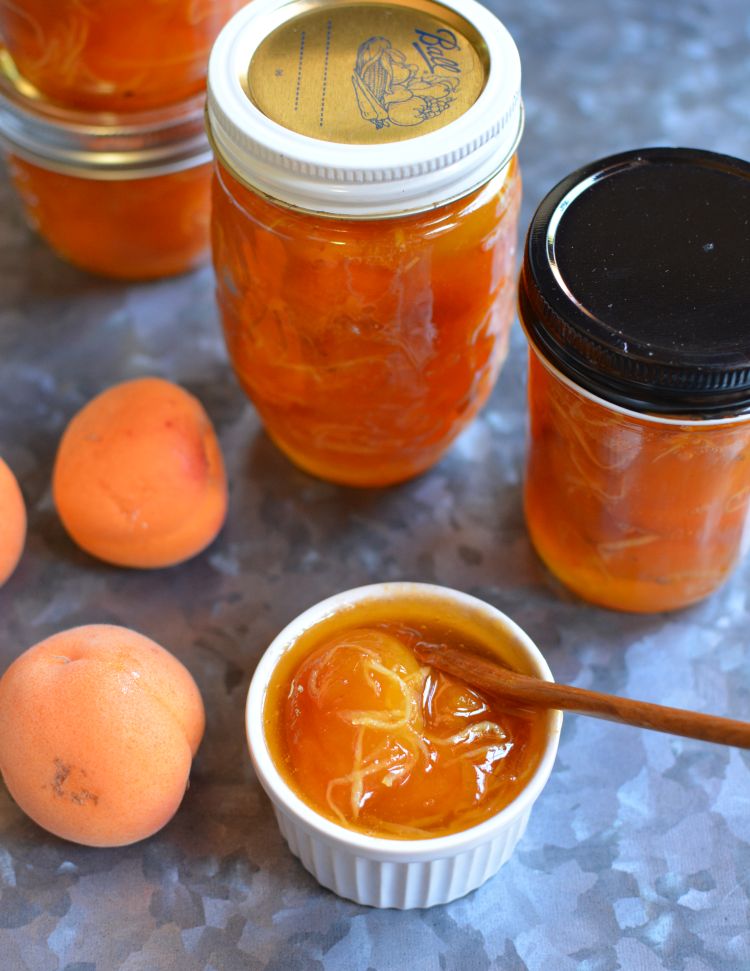
Stretch summer with apricot ginger jam
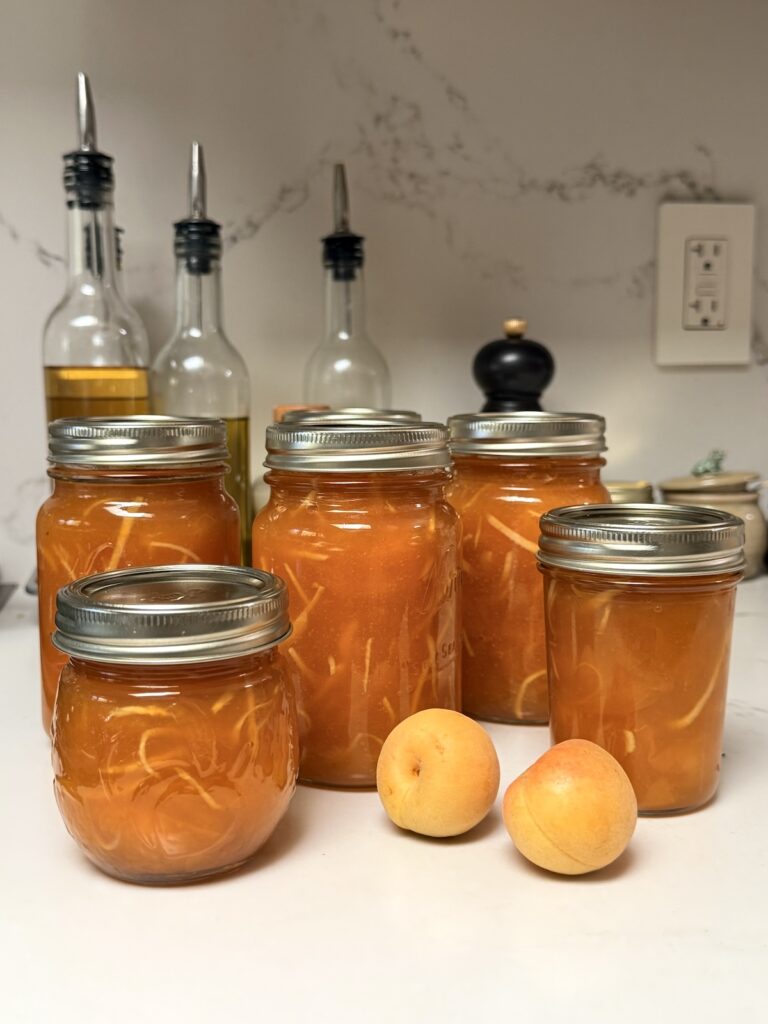
For one batch, all you need is five pounds of fruit, some sugar, plus lots of ginger. I used locally grown Royal Blenheim apricots, which have terrific flavor, but the gingery-sweet boost turned the apricot jam into a stellar expression of the fruit itself. It was synergistic. That's what good jams recipes are about. Ask farmers for jam-quality fruit to save money and get very flavorful fruit. Fancy jams can sell for about $10 a jar but you can make quite a few jars with $10 of good fruit. Plus, you'll get the satisfaction of making the jam yourself. Make this apricot ginger jam while apricots are still around! If they're gone from your locale, keep this recipe for next year!
Maceration is key for this apricot ginger jam
Joyce uses a technique to preserve the fruit's shape -- maceration. Macerating allows the fruit to release liquid which is then cooked down and you get deeper flavor. The maceration is overnight so you're cooking while you're sleeping. Some notes for your consideration:
- Spicy bite: You can use pureed ginger but I cut thin matchsticks because the strands look so beautiful and have a little bite later on in the jam. Check my ginger buying guide for tips on selecting, storing and peeling ginger.
- Tang: For the lemon juice, use a regular lemon (like a Eureka) with decent about of acidity - not fancy Meyer lemons which have lower acidity. In a pinch, use cider vinegar instead of lemon juice. If it's hot, cover and put the pot in the fridge.
- Time: In the pot you intend to cook the jam in, combine the pitted apricots with the ginger and lemon juice and sugar and simply cover and set it on the counter overnight.
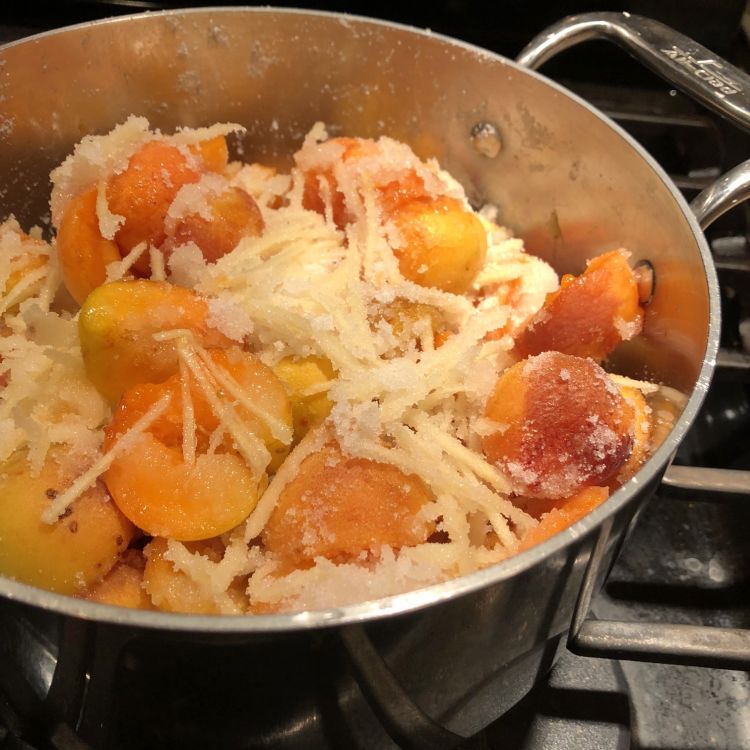
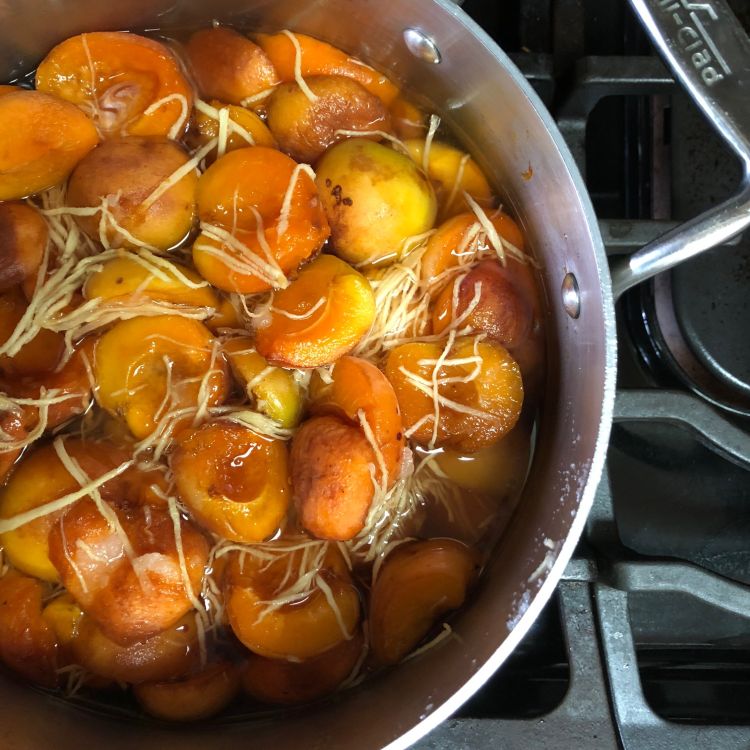
Above, left, the fruit at the beginning of maceration. On right, after the overnight rest in sugar. It's not pretty but it will soon be delicious.
Smart jamming tips from Joyce
Aside from straightforward jam instructions, there are smarty little tips like this: Sterilize your lids in pairs with the opposite sides facing one another so they don't stick! Keep scrolling for more tips.
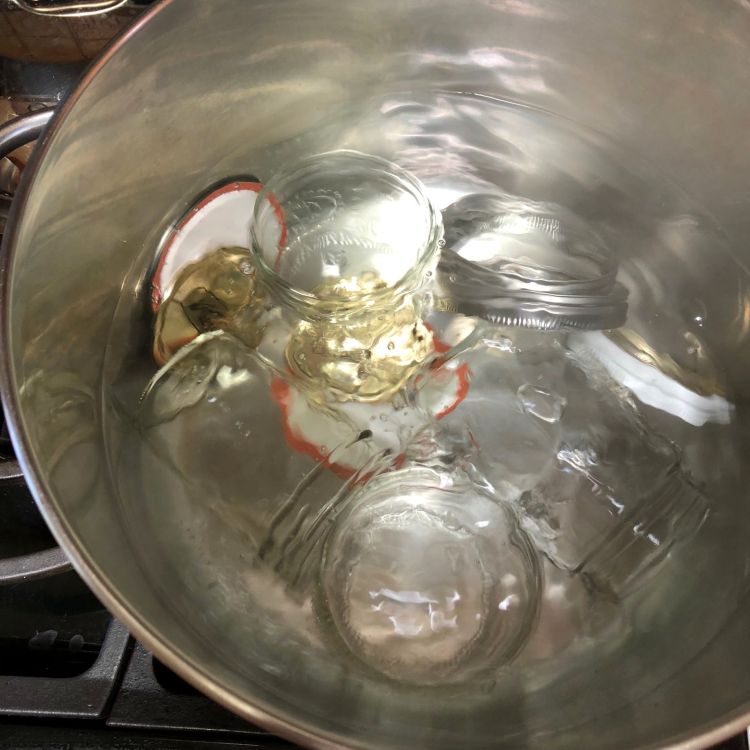
- Make this apricot ginger jam as a full or half batch. I made a half batch of the apricot-ginger jam and cooked it in a medium (3-quart) pot.
- Strain for good jam texture. As Joyce suggests, straining the macerated fruit in a mesh strainer was great for draining the syrup. The strained fruit holds its flavor because it sits aside while the syrup cooks down, thereby the fruit's flesh doesn't fall apart due to the violent nature of bubbling liquid. Most jams are mushy and you don't get a sense of the fruit itself. Joyce's recipe is not only low sugar but it's also high flavor and texture.
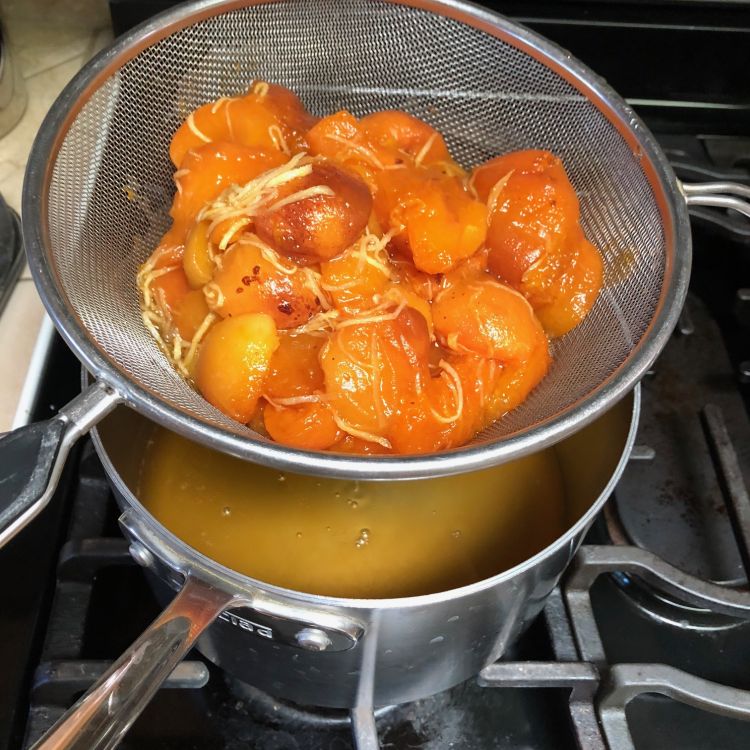
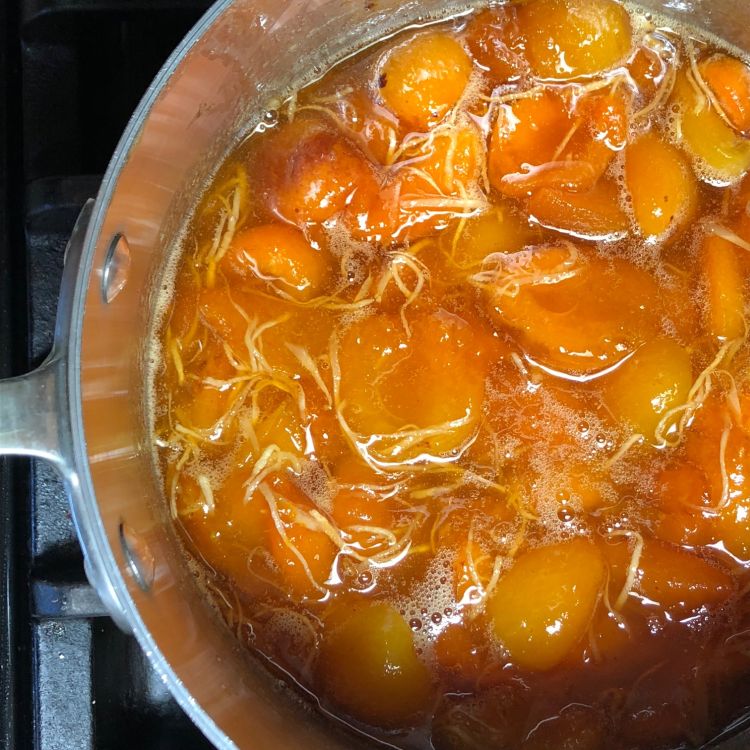
Above left, the fruit sat in strainer set over a bowl while the syrup cooked down. Then I scraped out more syrup to add to the pot before I added back the fruit itself. Below, right, After adding the apricots, I briskly simmered things for 3 to 5 minutes. It's hard to tell but this had nicely thickened, with the ginger suspended in the liquid.
Be patient and brave with testing
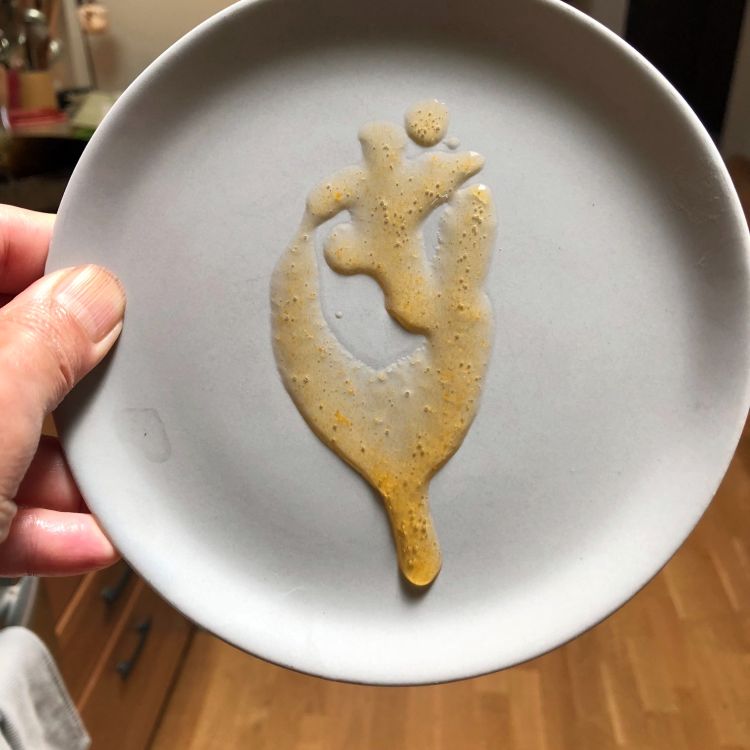
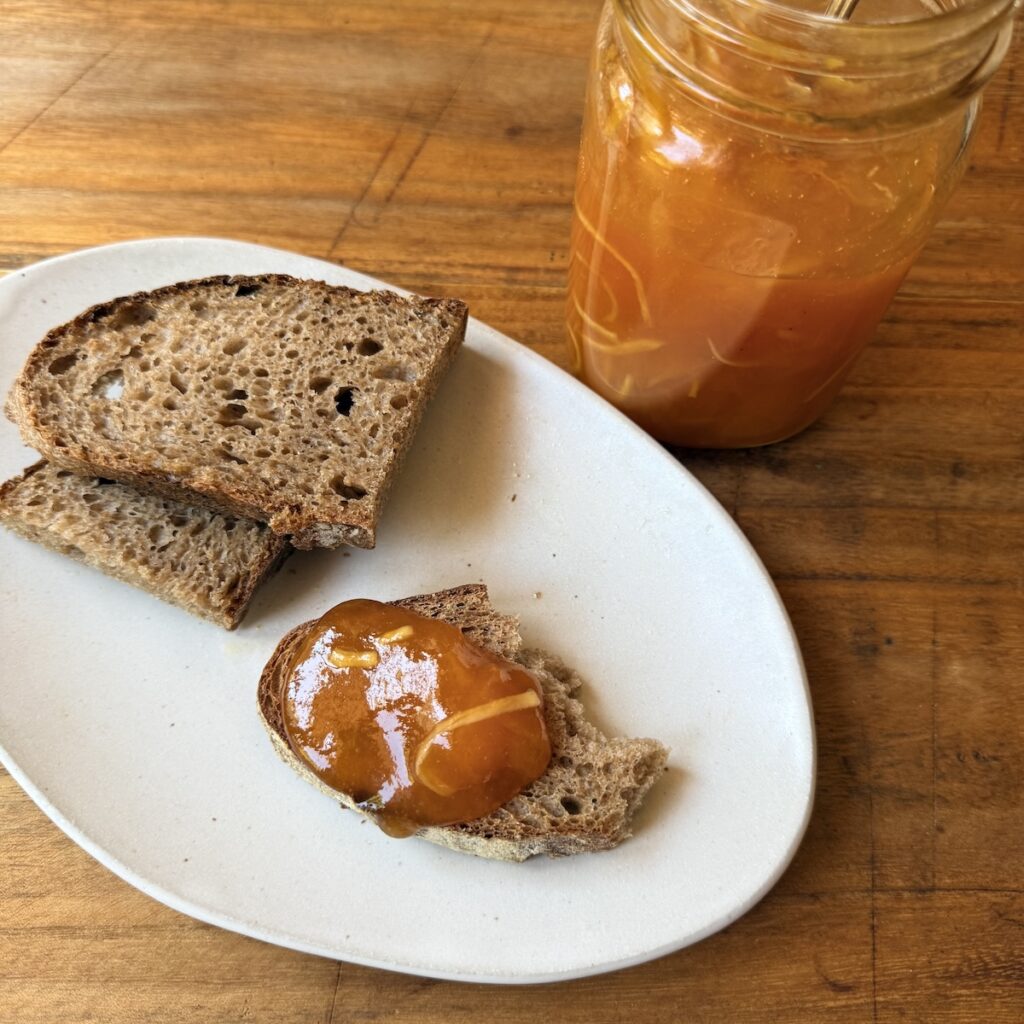
When it comes time for the plate test to determine the jam is cooked down and thick enough, you want to be patient. The first try will likely be premature. Yes, at a certain point, the syrup is thick enough so it runs but stops on the cold plate when you hold the plate vertically - a move that you just gotta do with no fear. Wipe the floor, if you have to.
- Yes, do like Joyce says: put 3 or 4 little snack-size plates in the freezer before you start cooking the jam. Below, left, was plate number 2.
- To get the hot jam neatly into the jars, use a jam funnel.

I hope you find this apricot ginger jam to be as startlingly good as I did. There are many other amazing ideas in Jam Session, which is written with thought and care. There's a great balance of practical, historical, and culinary insight -- a combination that can only come from a veteran author and teacher like Joyce Goldstein. I'm totally keeping this recipe in my repertoire and looking to add others from the book.
Ways to enjoy this apricot ginger jam
Aromatic and just sweet enough, this jam can go savory or sweet. A few suggestions for savoring your creation:
- Simple eating: Enjoy it off a spoon or with your favorite bread or pastry.
- Adorn with it: Plop some atop vanilla or ginger ice cream. Or, an almond cake because apricot and almond are a perfect pairing.
- Glaze with it: Mix a touch of soy sauce into the jam until it has a hint of saltiness, and the use that to glaze roast or grilled pork, or a ham!

Apricot Ginger Jam
Ingredients
- 10 half-pint jars
- 5 pounds | 2.25kg apricots, pitted and halved (8 cups)
- 4 cups | 800g granulated sugar
- 3 tablespoons fresh lemon juice
- 5 to 6 ounces | 150 to 180g fresh ginger, peeled and pureed or cut as thin matchsticks (see Notes)
Instructions
- Place 3 or 4 small plates in the freezer.
- Cut any large apricot halves into quarters.
- In a large preserving pot, gently combine the apricots with the sugar and toss to mix. Add the lemon juice and ginger and gently stir to mix in. Let sit overnight to macerate.
- The next day, bring the apricot mixture to a boil over medium-high heat. Cook for 2 minutes. Remove from the heat and let sit, uncovered, for 1 hour.
- If you want the fruit to retain some of its shape in the finished jam, set a colander over a bowl and, using a slotted spoon, transfer the apricots to the colander.
- Place two baking sheets on the counter near your stove. Heat a kettle of water. Set two stockpots on the stove and fill them with enough water to cover the jars by 1 to 2 inches. Bring the water to a boil over medium-high heat. Sterilize the jars in the water bath for 10 minutes.
- Reduce the apricot syrup, stirring frequently, until thickened. Carefully return the apricots to the jam pot, along with any juices that have collected in the bowl under the colander. Cook the jam briefly until a spoonful of the syrup dropped on one of the frozen plates runs some but also sets softy when the plate is vertically turned (see the photo in the post). Remove the pot from the heat.
- Bring the water bath back to a boil. If the jars have cooled, warm them in the water bath or in a 200°F oven. Simmer the lids in a saucepan of hot water. Place the jars on the baking sheets.
- Ladle the jam into the jars, leaving ¼-inch headspace. Wipe the rims clean and set the lids on the mouths of the jars. Twist on the rings.
- Using a jar lifter, gently lower the jars into the pots. When the water returns to a boil, decrease the heat to an active simmer, and process the jars for 10 minutes. Turn off the heat and leave the jars in the water for 1 to 2 minutes.
- Using the jar lifter, transfer the jars from the pots to the baking sheets and let sit for at least 6 hours, until cool enough to handle. Check to be sure the jars have sealed. Label and store the sealed jam for 6 months to 2 years. Once open, store in the refrigerator for up to 3 months.
Notes
- Weigh the ginger if you want to make sure you have enough of its signature bite. For each pound (450g) of pitted fruit, use a good 1 ounce (30g) of ginger.
- If you make a half batch, use a medium (3-quart) pot to macerate and cook the jam.
- If you don't want to cut the ginger by hand, puree it in a small processor so it will permeate the jam, Joyce says.