



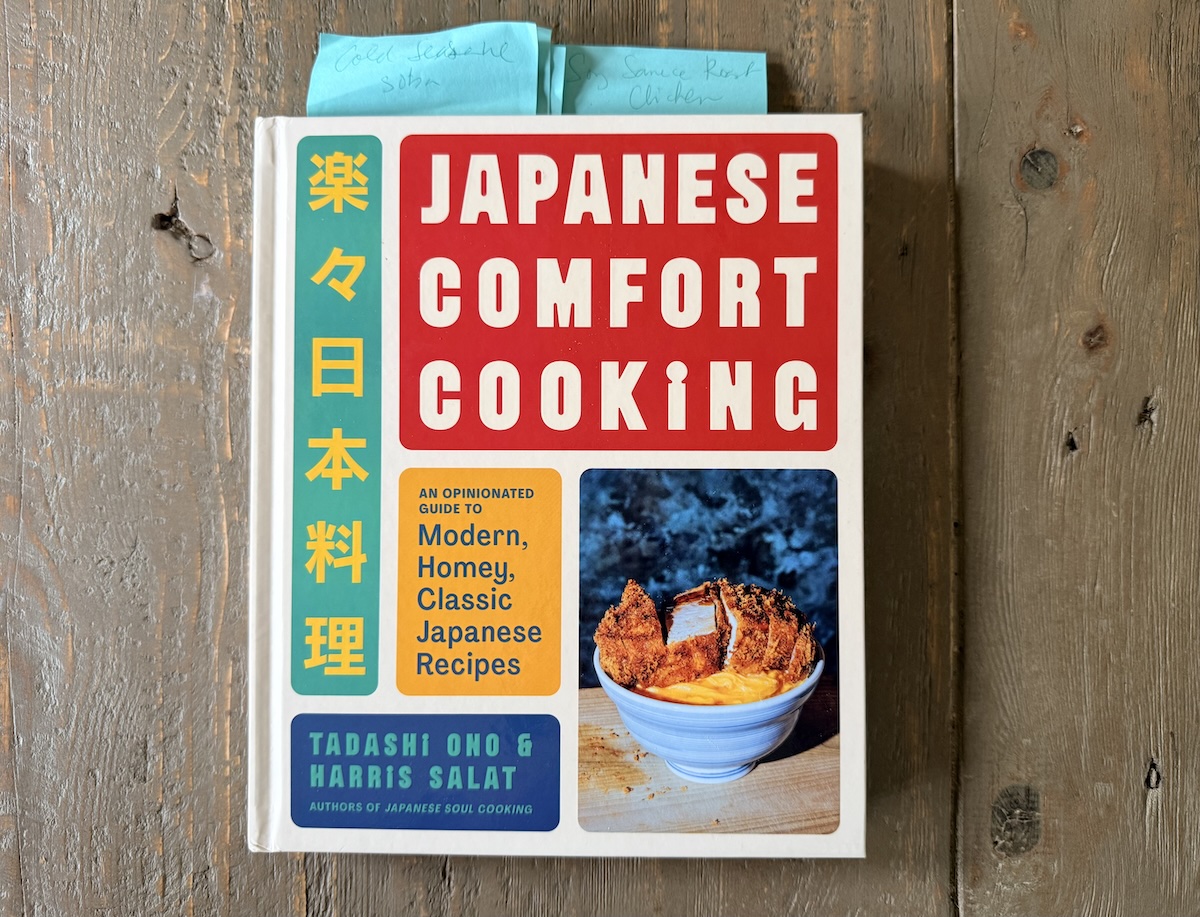
Cooling and refreshing noodles are the Asian antidote for hot days. I have amassed a small collection of recipes for them and am adding this one from Japanese Comfort Cooking, a cookbook by Tadashi Ono and Harris Salat. They are two New Yorkers with good tastes and a realistic, cheffy approach to presenting doable Japanese recipes. I loved their past books, such as Japanese Soul Cooking, because I always learn from their approachable recipes. Moreover, they do not sugarcoat cultural truths.
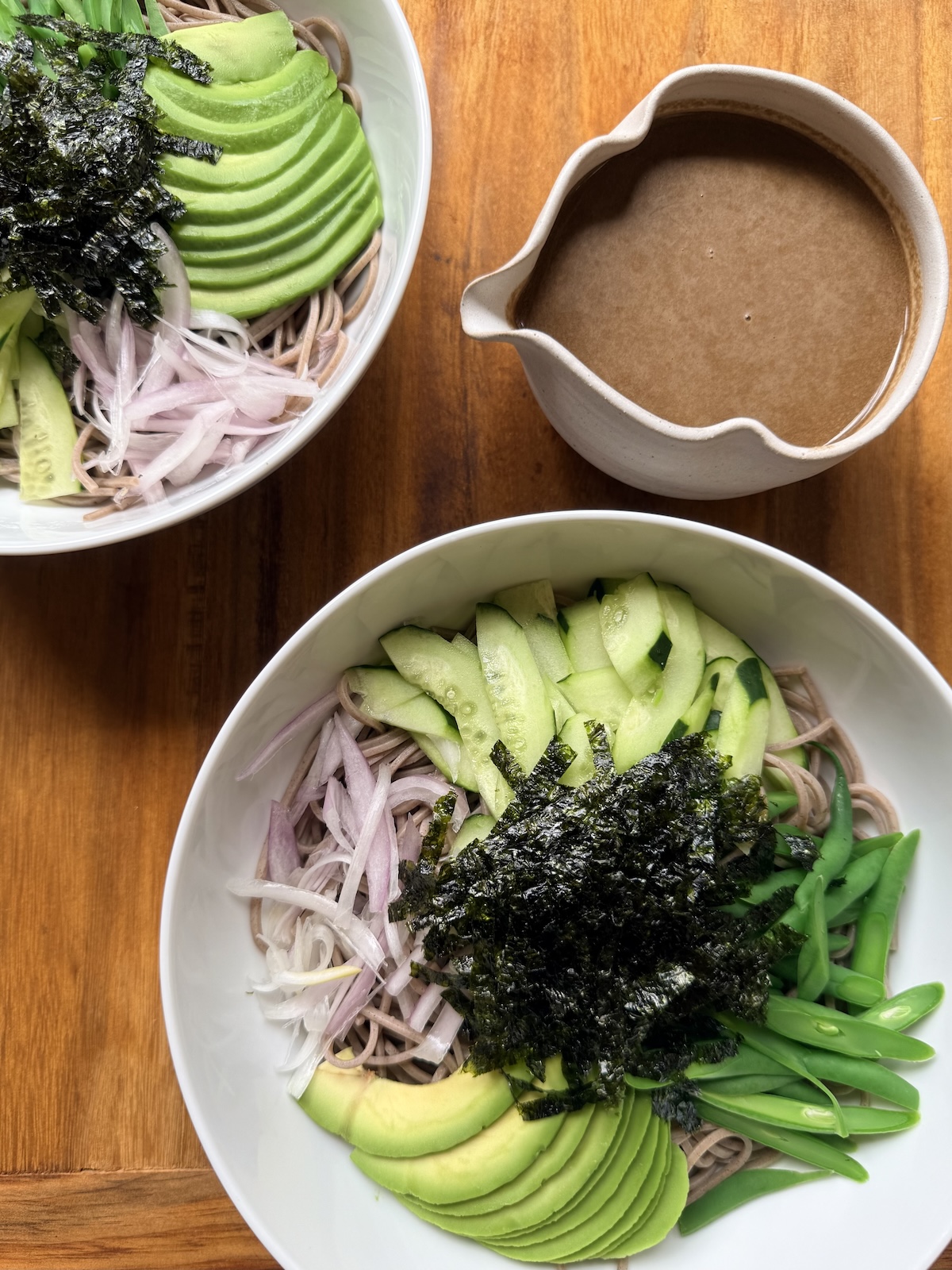
This cold soba dish caught my eye because it's more substantial than the classic cold soba dish -- zaru soba. Whenever I eat zaru soba, I need to make other dishes as sides because the noodles and clear broth are not enough. Goma dare soba is loaded with veggies and seasoned with a protein-rich, salty-sweet broth. The broth is called "goma dare" and you may have had something similar with shabu shabu. Here it's plays a major role to define the flavor and texture of the noodle dish.
Cold sesame soba is easy to put together and delicious when you have homemade dashi in the fridge; make it vegan with shiitake dashi or use regular dashi. You can prep the broth, noodles and cucumber a couple days ahead, and then return them to room temperature and finish dish. Lunch or dinner is made. Below are some pointers for you to be extra successful with this comforting Japanese noodle dish.
Cold sesame soba broth done your way
Ono and Salat's original recipe is wonderful but in preparing the noodles, I made some minor tweaks. First, I halved the broth recipe. The authors say you'll have leftovers but so why over commit, in case you do not like the noodles? You can halve my halved recipe to serve two (or serve 4, if you're not brothy).
The bold broth for this cold noodle acts as a dressing of sorts. Like with many brothy Japanese noodles, you're not expected to drink all the broth. It is purposefully salty. Add as much or as little as you like to flavor your bowl. Any leftover broth will keep for days in the fridge so you can make more cold sesame soba! The adapted recipe below offers a range so you can have guardrails. The broth ingredients below are not exotic. Whenever you're in a pinch, make your own mirin with this recipe, because it will be leagues better than the sugary, bleh stuff at supermarkets.
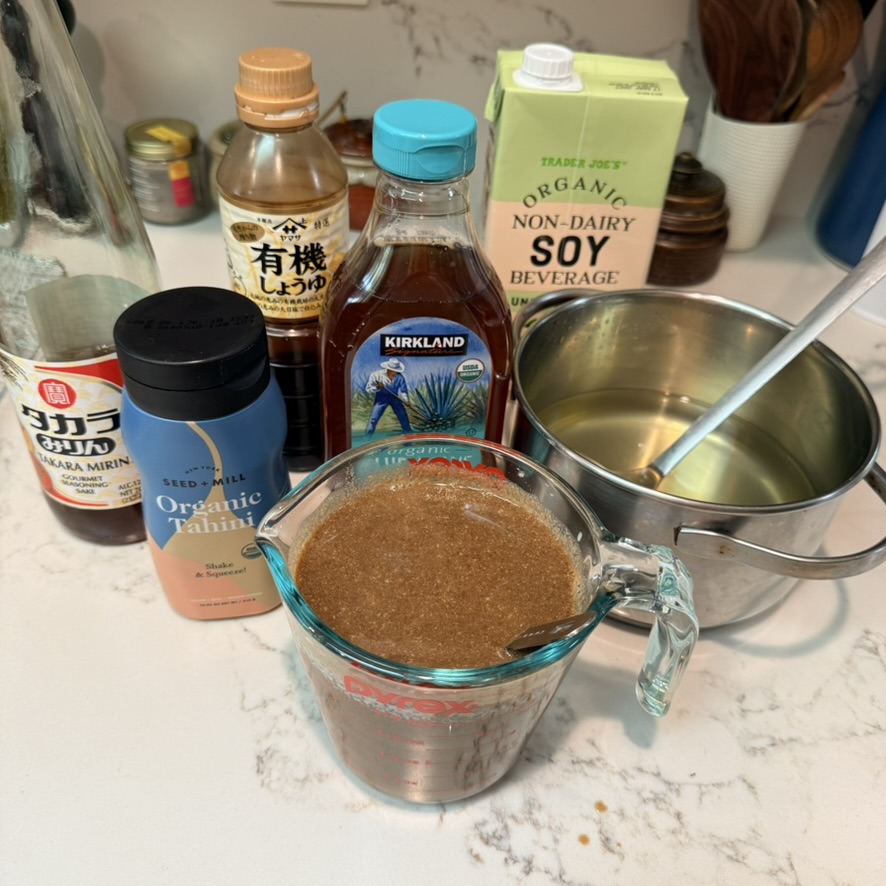
Ono and Salat call for Japanese sesame paste which is not as readily available. Tahini is milder tasting and they permit it as sub. I used tahini and the flavor was very good. I opted for agave syrup for a rounder mouthfeel than sugar. When the vinegar and soy sauce hit the other broth ingredients, the broth curdles and separates a bit . That's the soy milk reacting to the acid and salt. Do not worry! Once the broth hits the soba, the starch in the noodles cancel out the separated soy milk and your noodles become wonderfully cloaked in silkiness. I used my homemade dashi for excellent flavor.
Noodle and veggie swaps
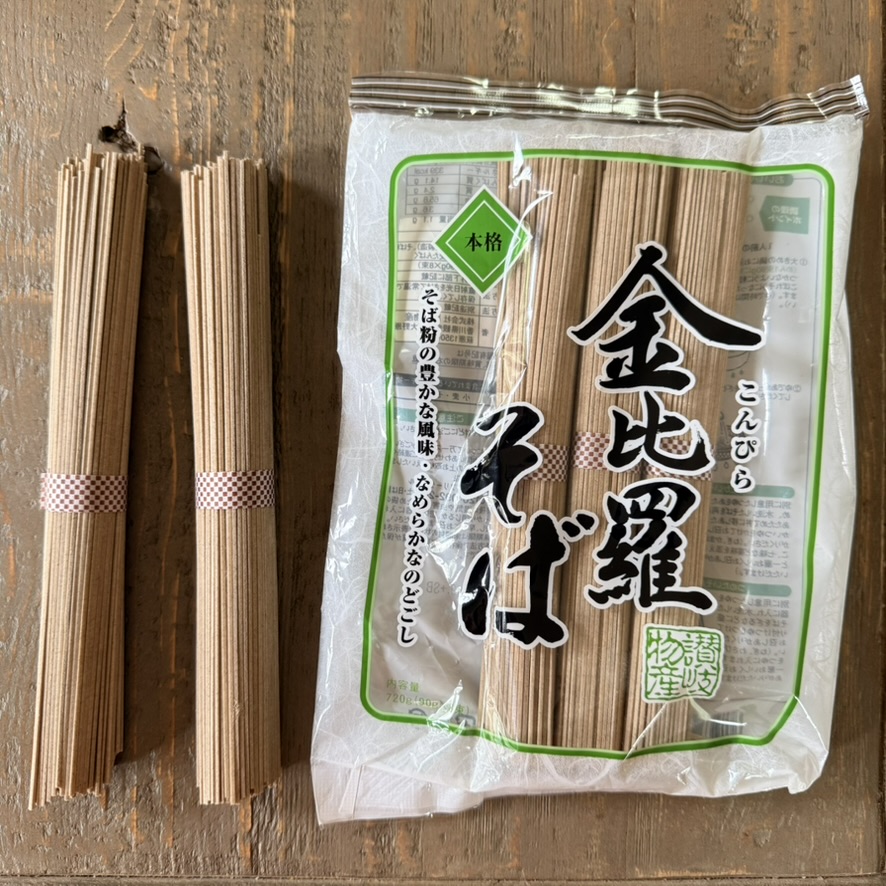
Aside from soba, Ono and Salat suggest featuring substituting ramen, somen, or udon. I imagine if you have capellini pasta, that would work too! The beauty of soba is that they are packaged as pre-portioned 3-ounce quantities. The Japanese are consistent!
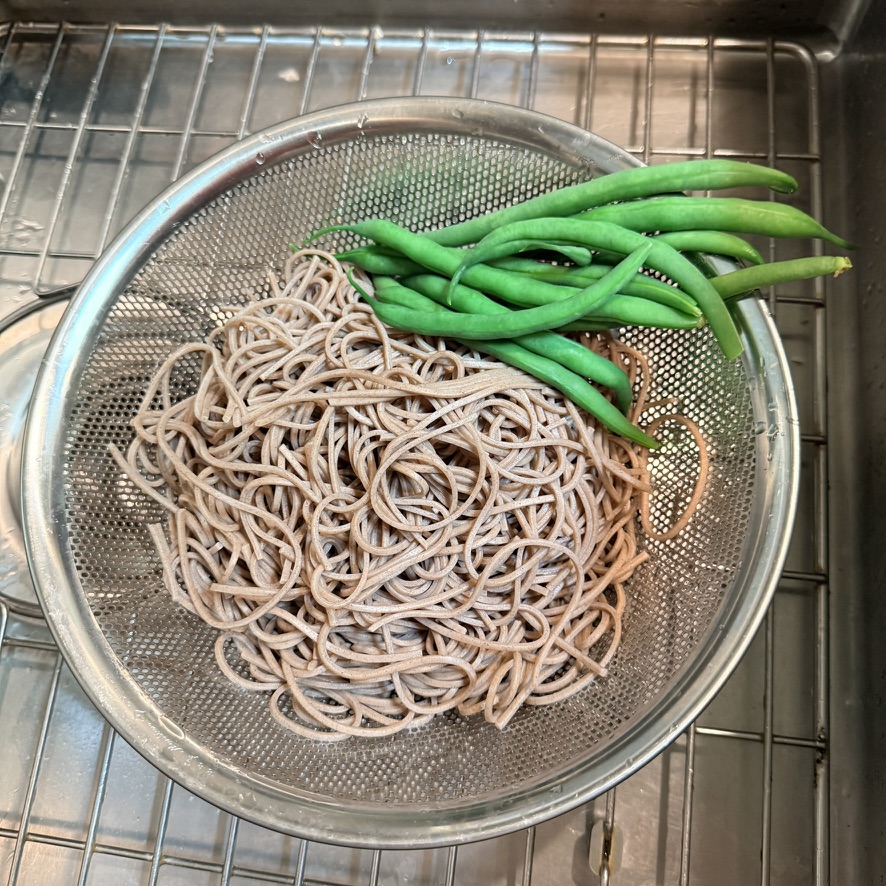
Asparagus season is fleeting so when it's unavailable use green beans, snap peas, or carrots. I cut my green beans on a steep bias so they blend in with the noodles and be chopstickable. Blanch the veggie in the pot of water before cooking the soba. You'll save dishwashing time.
How to thinly slice avocado
The avocado lends richness to these noodles. If you want it to look good and not be mushy or clumpy. Here are my tips:
- Make sure to use a firm-ripe avocado.
- Halve, seed, then peel the avocado.
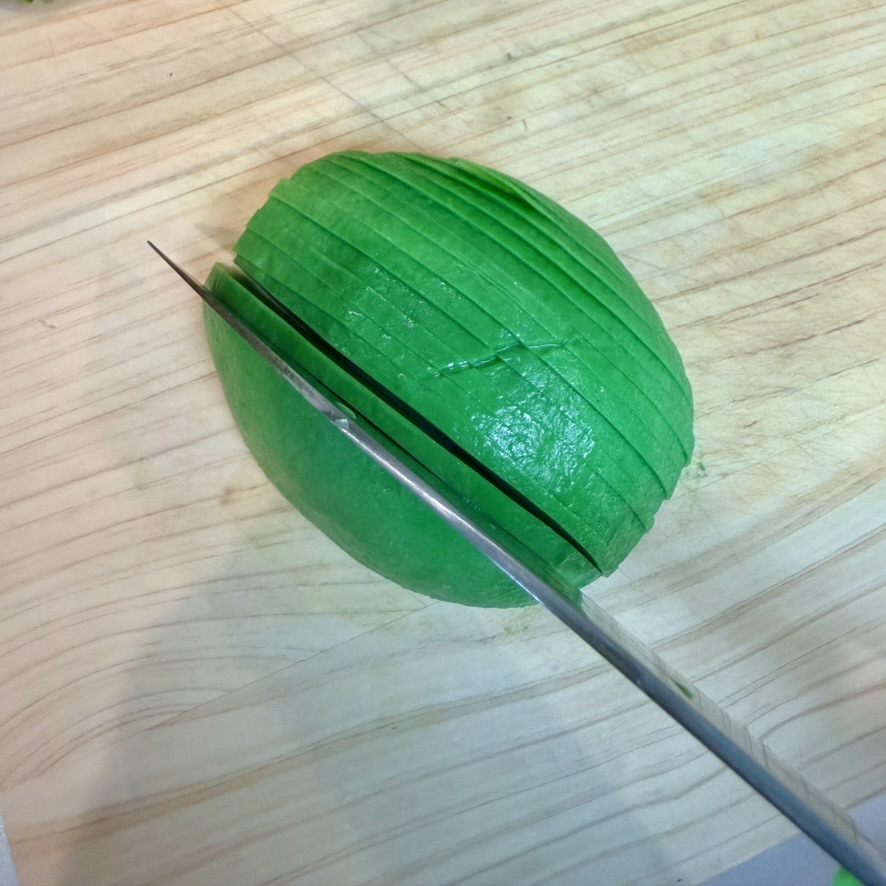
- With the cut side facing down, quickly drag your knife through the avocado, spacing the cuts a good ⅛ inch (3mm) apart.
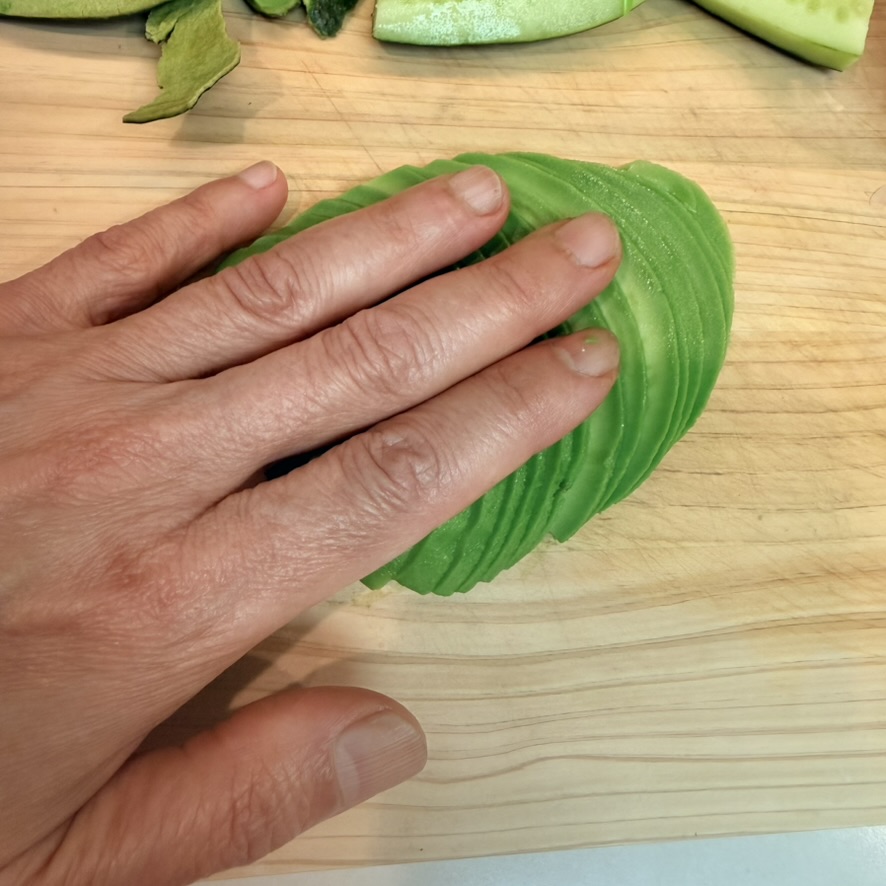
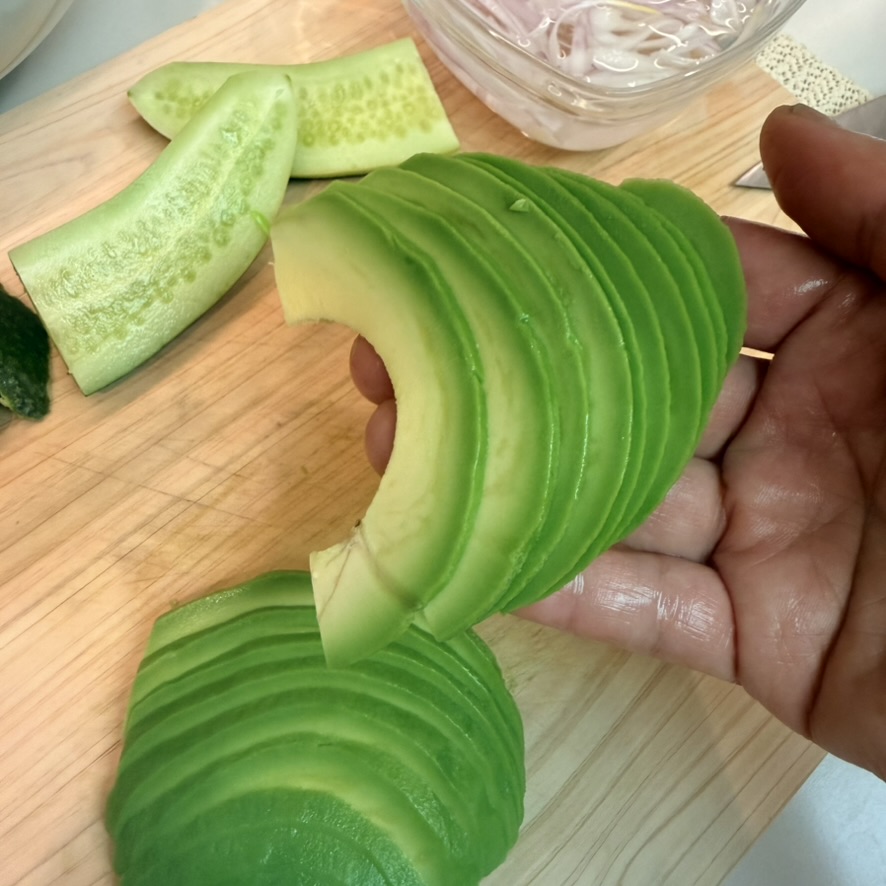
- Use your hand to gently press, tilt and fan out the avocado slices to one side.
- Transfer the slices to the bowls.
- Do the avocado slicing before serving to avoid browned avocado.
I've marked many other recipes to try in Japanese Comfort Cooking. Get yourself a copy and dive in!
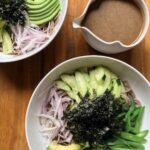
Cold Sesame Soba | Goma Dare Soba
Ingredients
Sesame broth
- ¾ cup plus 2 tablespoon | 210ml Dashi, regular or shiitake (see Notes)
- ¼ cup | 60ml Japanese sesame paste or tahini
- ¼ cup | 60ml unseasoned rice vinegar
- ¼ cup | 60ml mirin (see Notes)
- 1 cup soy sauce
- ¼ cup sugar or agave syrup
- 2 cups unsweetened soy milk
Soba and toppings
- 12 ounces | 360g dried soba noodles (4 portions)
- 2 Persian or 1 small English cucumber, cut into thin strips
- 4 ounces | 120g asparagus or green beans, blanched, cooled, and
- 1 firm-ripe avocado, sliced
- ½ small | 60g red onion, thinly sliced and soaked in cold water for 10 minutes
- 2 teaspoons wasabi
- 1 or 2 full sheets nori, snipped into narrow, short strips (see Note)
Instructions
- Make the sesame broth: In a large bowl, whisk together the dashi, sesame paste, rice vinegar, mirin, soy sauce, sugar, and soy milk until smooth. (Depending on the package, you might need to knead the sesame paste a bit to get it all out.) Keep the broth in the refrigerator until you're ready to serve.
- Cook the soba: To cook the soba, first prepare an ice water bath in a large bowl and set it in the sink. Bring a large pot of water to a boil over high heat. Add the soba and cook for about 3 minutes, or until it is cooked through but still retains some bite. Drain and dunk the noodles in the ice water bath. When the noodles are cool, drain them and set aside.
- Assemble and serve: Divide the soba among four serving bowls. Pour ½ to 1 cup (120ml to 240ml) of the sesame broth over the noodles in each bowl. Top each bowl with equal portions of cucumber, asparagus, avocado, and drained red onion, arranging them in separate mounds. Add a small dab (about ½ teaspoon) of wasabi to each bowl. Sprinkle the nori over the top for garnish.
- Serve immediately, encouraging everyone to mix everything together before diving in. Refrigerate leftover broth for up to a week to use again.
Notes
- For the best flavor, make dashi yourself. Use my recipes for regular or shiitake dashi here.
- No mirin? Use this recipe to make some ASAP!
- Instead of red onion, use a medium shallot.
- Instead of Japanese nori, use Korean gim, toasted seaweed sheets.


Leave a Reply