




Mirin used to only be used for Japanese dishes but nowadays, whenever cooks need a little extra sweetness, they often grab a bottle of mirin. I get it but the typical stuff sold at many markets is basically fructose, glucose and a little alcohol. It's also expensive, given the amount of mirin that many Japanese recipes call for. "Can you make your own mirin?" VWK reader Gina asked.
While I've had to come up with mirin substitutes in a pinch, I'd never thought of making my own. Mirin seemed like such a mystery, kind of sacred. Gina put me to the task so I looked at the glossary of several Japanese cookbooks and the best source of
information came from Hiroko Shimbo's The Japanese Kitchen. Hiroko gave the best low down on mirin and as usual, her insights were illuminating.
A brief history of mirin
As one of the foremost experts on Japanese cooking, Hiroko had plenty to offer.
- What is true mirin like? Real, honest mirin is golden yellow and sweet, with a rich mouthfeel. The alcohol content is roughly 14 percent, and it's made from glutinous rice, distilled alcohol, and koji-cultured rice (koji refers to Aspergillus oryzae, a fungus used to produce liquor, vinegar, and to inoculate soybeans).
- Why was mirin originally made? Mirin was originally used as a sugar substitute in Japan because sugar was scarce and expensive. Mirin came out of the production of rice wine, during which starches are converted to sugars (i.e., glucose and maltose).
- Can you drink mirin? Yes, you can drink well-made mirin. For example, toso is a mirin infused with various Chinese medicinal herbs. It used to be a new year libation.
- What's the history of synthetic mirin? Synthetic mirin is the go-to these days so it's not fit for drinking. The popularity of modern, synthetic mirin dates to the post World War II, when Japan's tax on the authentic, boozy version of mirin rose to 230 percent; it was due to the severe rice shortage. People were forced to rely on the cheaper synthetic stuff and few people looked back.
The flavor of true mirin
I've made and eaten Chinese and Vietnamese fermented rice, so I had a sense of what the flavor of real mirin was like. It's winey, sweet and thick. The difference is that there's a higher alcohol content in mirin, due to the distilled liquor involved. Hiroko suggested a mirin sub in her book: for 1 tablespoon of mirin combined with 1 tablespoon sake and 2 teaspoons sugar.
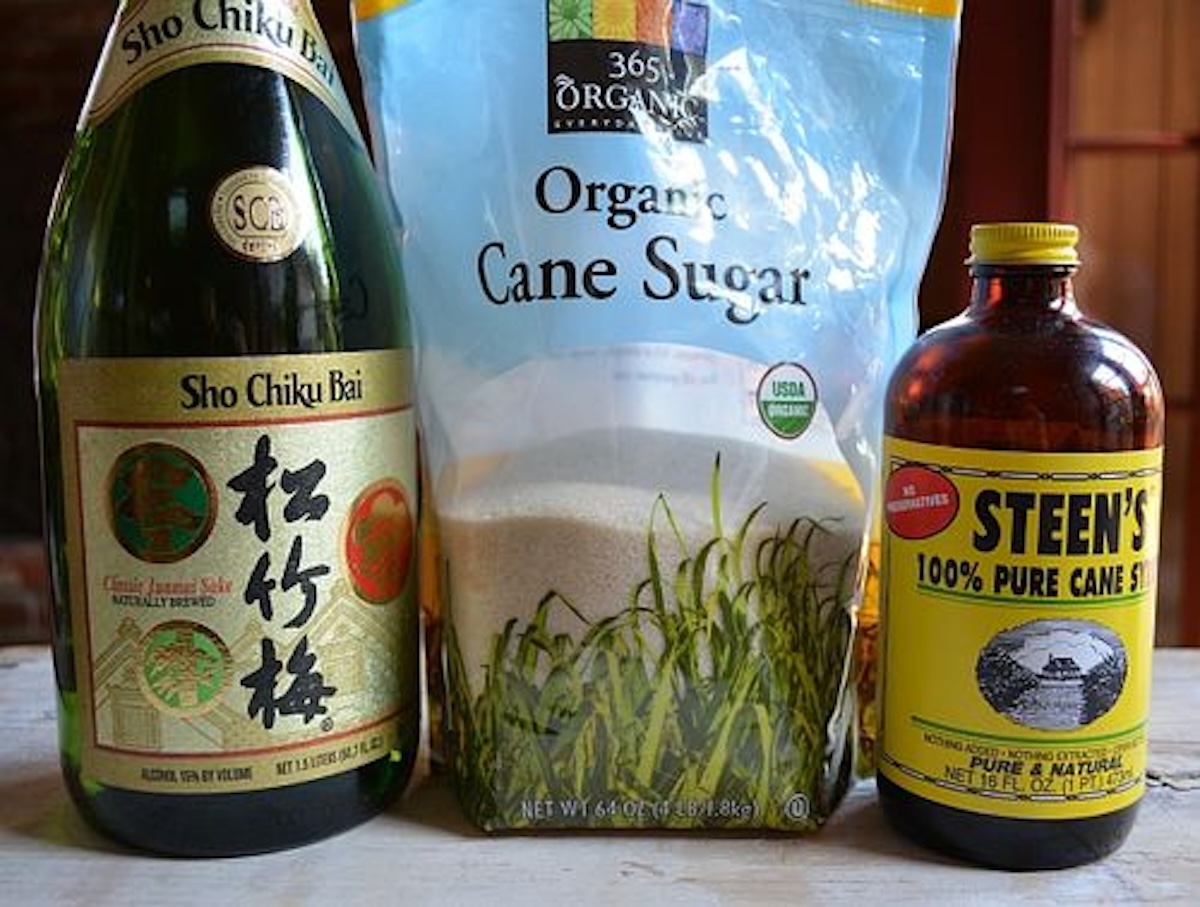
I wanted that rich round flavor so instead of white granulated sugar, I used organic sugar, which has a more complex flavor; organic sugar is a tad more intensely sweet than white sugar and weighs a bit more too. I also cooked the sake and sugar up - sort of like a simple syrup.
To give things a slight roundness, I also tinkered with combining sake with pure cane syrup, an old fashioned sweetener that's popular in the American South. The color was dark but the flavor lovely. To avoid a dark colored mirin, I added a touch of the cane syrup to my blend of organic sugar and sake, which gave the mirin a bit more depth without darkening it too much. You can use agave syrup instead of cane syrup.
Homemade vs storebought mirin
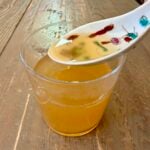
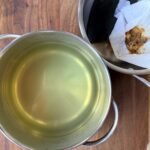
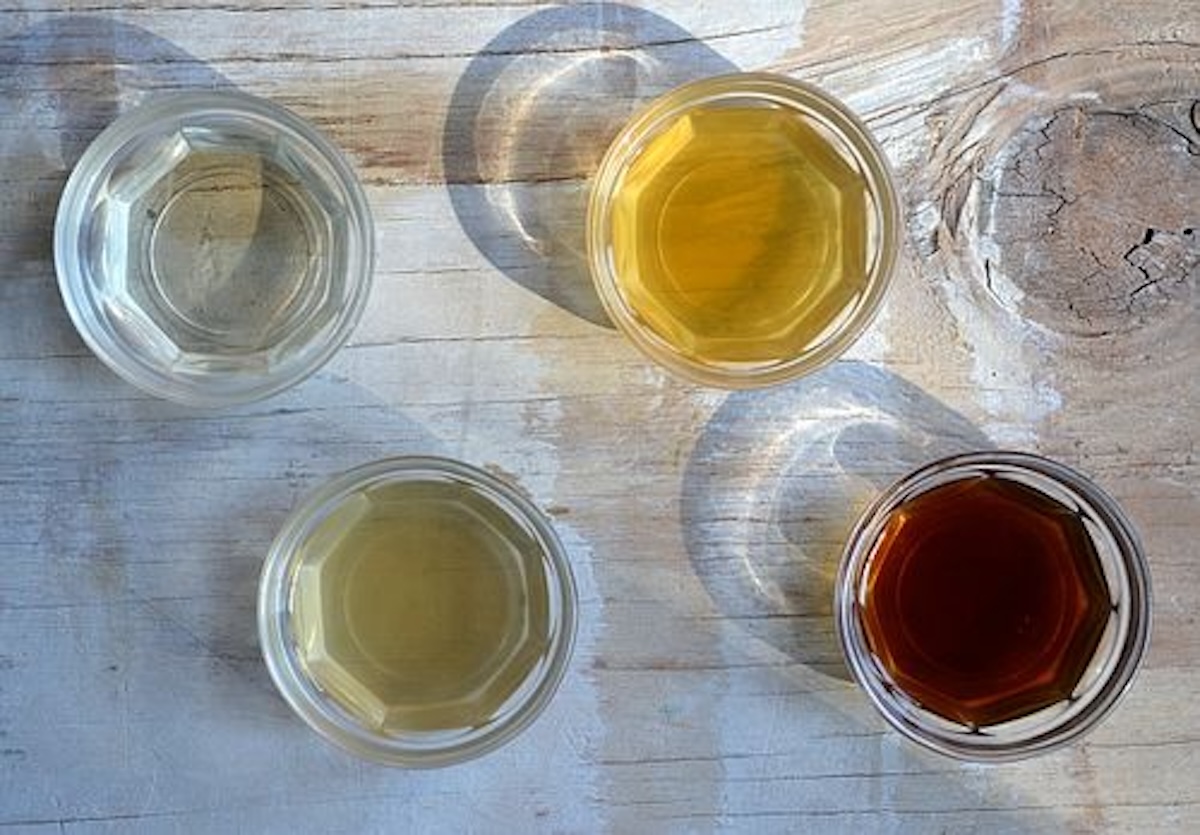
I had to taste all the variations and got a bit light headed with the boozy sweetness. The above photo shows (from top left) storebought synthetic mirin, homemade with touch of cane syrup, (bottom left) sugar and sake, cane syrup and sake. Purchased bottled mirin tasted flat and blah by comparison. While my homemade mirin is not a true, authentic version, it has more character than the synthetic stuff. I'm going to try it out on a batch of True Chicken Teriyaki, Dashi Carnitas Tacos, and also Korean Fried Chicken (sub mirin for the corn syrup or Korean syrup).
Supermarket mirin subsitutes
What can you do? You have these options if you want to use DIY mirin instead of the synthetic stuff:
- Swap out the quantity of mirin called for in a recipe with a mixture of 2:3 sugar and sake. If you use organic sugar like I did, back off the sugar in the rest of the recipe as the mirin will be more intensely sweet than commercially made mirin.
- Make your own and keep the jar in the fridge. Below is a recipe to play with. If you have golden syrup (a light treacle), that would work in lieu of the cane syrup and/or granulated sugar. Try another kind of sugar, like turbinado. Halve the recipe, if you want to mess around with it without wasting ingredients. Do report your findings!
Homemade Mirin
Ingredients
- 10 tablespoons | 130g sugar, preferably organic cane sugar
- 1 cup | 240ml sake
- 1 Tablespoon agave syrup or pure cane syrup, such as Steen's (optional)
Instructions
- Combine the ingredients in a very small saucepan, such as butter warmer. Bring to boil over medium heat, give things a stir, scraping bottom, to ensure the sugar has dissolved.
- Remove from the heat and set aside to cool. Taste and add the agave (or cane syrup) for depth, if you like. Store in a jar and refrigerate for up to 6 months.

Marta R says
Very interesting. I m from Buenos Aires Argentina, and we have just a tiny 3 blocks Chinese Markets. Mirin is very expensive. In quite a few recepies in spanish use Jerez as a subtitue for sake. So I try to do something similar to Mirin using Jerez. What I use is 750gr Jerez, 200 grs sugar, 100 grs real mirin.
I place the Jerez in a cooking pot, also can use a wok, with the sugar,and place it on midum fire and make it boil, reduce the fire to minimum and let the alcohol evaporate but not all. Take the pot out of the fire and add the real mirin. This preparation wil give you arround 1L. The Jerez colour with the sugar will be very similar to the real mirin. Jerez in Argentina is not so expensive.
Andrea Nguyen says
Marta, that is a BRILLIANT solution and workaround. I love to sip a glass of Jerez while cooking dinner so there is always some in the house. In the United States, the price for sherry and sake are roughly the same, though you wouldn't find a bottle of Jerez as big as that bottle of sake I have in the photo.
Maggie says
Thanks, Andrea, will try out some of your suggestions. You're right, with most commercial brands, you're basically paying for HFCS.
@Marta: What a great idea! I love that musty, mushroomy aroma that you get with some types of Jerez, too - I'll be experimenting!
Gina says
Thanks for the recipe! I can't try the variation with sherry because believe it or not the liquor stores around here don't carry real Jerez!
Fortunately, it's fairly easy to get cane sugar and cane syrup in the organic section of the supermarket.
Andrea Nguyen says
Cool, Maggie!
Andrea Nguyen says
Wow, you can get cane syrup where you are? In California where I am, I went to a Louisiana-centric market in South Central Los Angeles for the Steen's. Seriously.
Jacqueline says
Brilliant. I have Hiroko's book here, too. I have Lyle's golden syrup and always some saké around...love this idea.
Tami says
What about Eden's mirin? It's pricey but I find it better than using the typical supermarket brands.
TokyoJoe says
Mitoku Organic Mikawa Mirin just became available on Amazon. And Amazon Prime eligible no less. It's traditionally brewed in Japan and is one of best available here in the US. Once you take shipping costs into consideration, the price on Amazon is not bad at all. Plus, free 2-day shipping.
https://www.amazon.com/Mitoku-Organic-Mikawa-Mirin/dp/B077P31RZC/ref=sr_1_1_a_it?ie=UTF8&qid=1514606243&sr=8-1&keywords=mitoku+organic+mikawa+mirin
Andrea Nguyen says
Thanks for the tip!
Andrea Nguyen says
Heck, why not, eh? Thanks for picking up on it.
Andrea Nguyen says
Eden's is expensive and when you need 1/2 cup for a recipe, that adds up. Try making your own for fun?
Tami says
You're right. $9 a bottle really makes me go ouch. I'll give this a whirl! 🙂
FreeRangeNan says
In addition to being expensive, Eden's has salt added so you have less control over the final seasoning. And I don't think it's a very good mirin to start.
Andrea Nguyen says
Why is the salt there? It's in the synthetic mirin too.
Chris says
Don't know if it's true, but I've heard that mirin sold in N. America must have salt to be sold at grocery stores. If it were more palatable, underage people and winos might buy it, so it would have to be sold through liquor outlets. Don't know about in Japan though.
Andrea Nguyen says
Chris, how interesting. That may explain why salt is in a lot of "cooking" wine -- cooking sherry, for example. It makes sense, though I imagine that if an underage person wants something alcoholic, they'd drink what they can get their hands on.
apearlofagirl says
if dry vermouth is the accepted substitute for white wine (in small quantities) in recipes, could sweet vermouth replace mirin? .. i ask because i bought a bottle of sweet vermouth by mistake a long time ago and would luv to find this use for it .. also, cane syrup is in the international aisle of our Lucky's supermarket, along with cajun/creole seasonings and sauces.
Andrea Nguyen says
Sweet vermouth is a little too sweet and it's too dark. Sorry. It's great on the rock with a lemon twist as an aperitif.
You have a Lucky's near you? I LOVE Lucky's and miss it where I live in Northern California. That market carries fabulous ethnic products. Albertson's used to as well. {sigh}
apearlofagirl says
ok, i'll dilute 2 parts raw sugar (all i use) in 3 parts sake.
sweet vermouth is too sweet for me as an unmixed drink .. i'm sure i can find interesting cocktail recipes using a little of it.
yes, Lucky's is still in the East Bay and Marin .. i miss Albertson's too.
thx, andrea!
Stephanie says
What are your thoughts about Takara Mirin? Not easy to find--Mitsuwa is a good source. This mirin is sold with the sakes, carries the pregnancy warning, does not list salt and is 12% alcohol.
...Also, a little late, but re: your review of Vietnamese Home Cooking, I swear instructions for Roasted Chile Paste do not say when to add the ground bean paste from the ingredient list. I could have missed it since the eyes and the mind are fading. Figured it out, of course, but I am a concrete cook.
You are a wonderful teacher. Thanks.
Andrea Nguyen says
Hi Stephanie -- I need to find Takara mirin. If it had the pregnancy warning, it's likely legit stuff! Good find. I'll check it out next time I'm at Mitsuwa. I'm feeling like Asian ingredients don't make it easy for us cooks. ;-}
Though I have no responsibility for Charles Phan's "Vietnamese Home Cooking," I'm sorry to hear about your experience. How frustrating. Makes you think that you're crazy but you're not. Aargh. Glad that you figured it out and hope it was worth the trouble.
Thank you for the compliment. Really.
Helena says
Yes, I was like you, never questioned mirin! Thank you so much for this revelation. Because mirin is very expensive here in Sweden, there had not been many teriyakis or sushi in this house. Now I'd try this homemade version and get back to you! Fingers crossed.
p.s. I have tried your vegetarian daikon rice cakes some months ago. The flavour was fantastic! But I cheated by not squeezing out all the water (arms protested), played by ear and got the texture a bit gooey. I think I shall use a potato ricer next time to "ease the squeeze". So to speak. Have you tried that before?
Cris says
I can find Cane Syrup in a few stores in Oakland.
As for salting the wine, that's so that it can't be drunk straight. When I used to tend bar, we sometimes had to decant wine for the chefs to use, and the manager talked to us about salting it. Because even a pinch of salt in a carafe of wine will make it unpalatable for drinking purposes.
Glad to see the substitutes, I've often wondered. I tend to just skip recipes that call for mirin because of the cost. And buying a $10 bottle of alcohol to use 1/4 c for one recipe and have the rest of it just sit there seems a bit silly. But sake I always have in the house.
Vlad says
>I’ve made and eaten Chinese and Vietnamese fermented rice
Hello.
Have you reciptes how to ferment rice?
KLINK says
You can use sweet vermouth in a MANHATEN.... Good over ice... and if you need to experiment try it with boubon, canadian, and then brandy... They get a little milder as you go....
Kate says
Thank you so much for the recipe, I really appreciate it. I am on a mission to see if I can, in the American Food Culture, truly eliminate all forms of sugar including honey from my diet without using artificial sweeteners. I have been making my own condiments and I'll use your recipe to see if I can make mirin with sake and Xylitol.
Andrea Nguyen says
Hooray! Glad to be of help.
colleen says
i live in a very small town in texas, so needless to say, finding Asian groceries is an all day adventure into the city! so, I can't find mirin without the corn syrup which is a no-no on my prescription diet. so... I got the brilliant idea (without bothering to check any recipe blogs) to head to the city and get some sake and add sugar to it... didn't know mirin was fermented that way womp womp :/ but, I just brewed up a simple syrup with regular white sugar 1:1 sugar and water (later learned I should have boiled the sake in it once it turned into syrup instead of making a very sticky but tasty jar). and.. it's awesome 🙂 I would only do this with a saki you would like to drink and not a "it's ok for peeling paint" kind. I didn't really bother to measure the sake exactly but I used about half of a 300 ml bottle. I used hakushika junmai ginjo sake. well, in the least it tastes nice on its own in case you don't like the experimental results lol. hope it goes well in my miso ramen tomorrow. *shrug, guess not bad for a white girl in redneck country lol.
Andrea Nguyen says
Not bad for a smart white girl in Redneck country at all! I'm mighty impressed with your pluck. Keep it up. That's what you have to do -- figure out workarounds when you want good food and the exact ingredients aren't readily available. <3 it!
ROBYN says
Such a best ever recipe I tried. Thanks you much for your sharing Nguyen! Hope you will share more and more.
Erika says
I made this today and loved it! I cut down the sugar to about only 2 tablespoons. I used it on shrimp and served it with steamed rice and vegetables. I will be adding this sauce to my list of meals I regularly cook for the family.
Andrea Nguyen says
Excellent! It beats most of the commercial brands out there!
Diya says
Mirin is wonderful in cooking! Just a touch makes a real difference. Thanks for the brand breakdown – I’m rather astonished that Kikkoman doesn’t use koji!
Andrea Nguyen says
You're welcome!
Katy says
Thanks so much for posting this, as i can never find mirin. Not even in specialty Asian stores for some reason! it's the strangest thing. I will be using this in the many Japanese and Asian recipes i have.
Andrea Nguyen says
That is very odd. Maybe that's because of liquor laws where you live? I can only venture that that's the reason. But who cares? You can make your own now!
Steph K says
It’s also expensive, given the amount
of mirin that many Japanese recipes
Andrea Nguyen says
So true, Steph!