
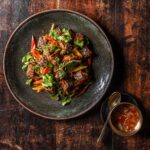

Want to capture the true heart of a Thai person? Make pad gaprao, a street-food stir-fry loaded with gaprao, sultry holy basil. It is fast, savory, and deeply satisfying-the ultimate any-time-of-day dish that locals crave.
I first had the bold, simple stir-fry on New Year's Eve during my first trip to Bangkok in the early 1990s. It was at a restaurant owned by Mechai Viravaidya, a Bangkok-based politician and activist known as the "Condom King" who used his humor and vast network to distribute condoms to combat the HIV/AIDS epidemic. He also owned a popular restaurant quirkily named Cabbages and Condoms. (The Thais know how to get your attention.)
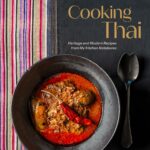
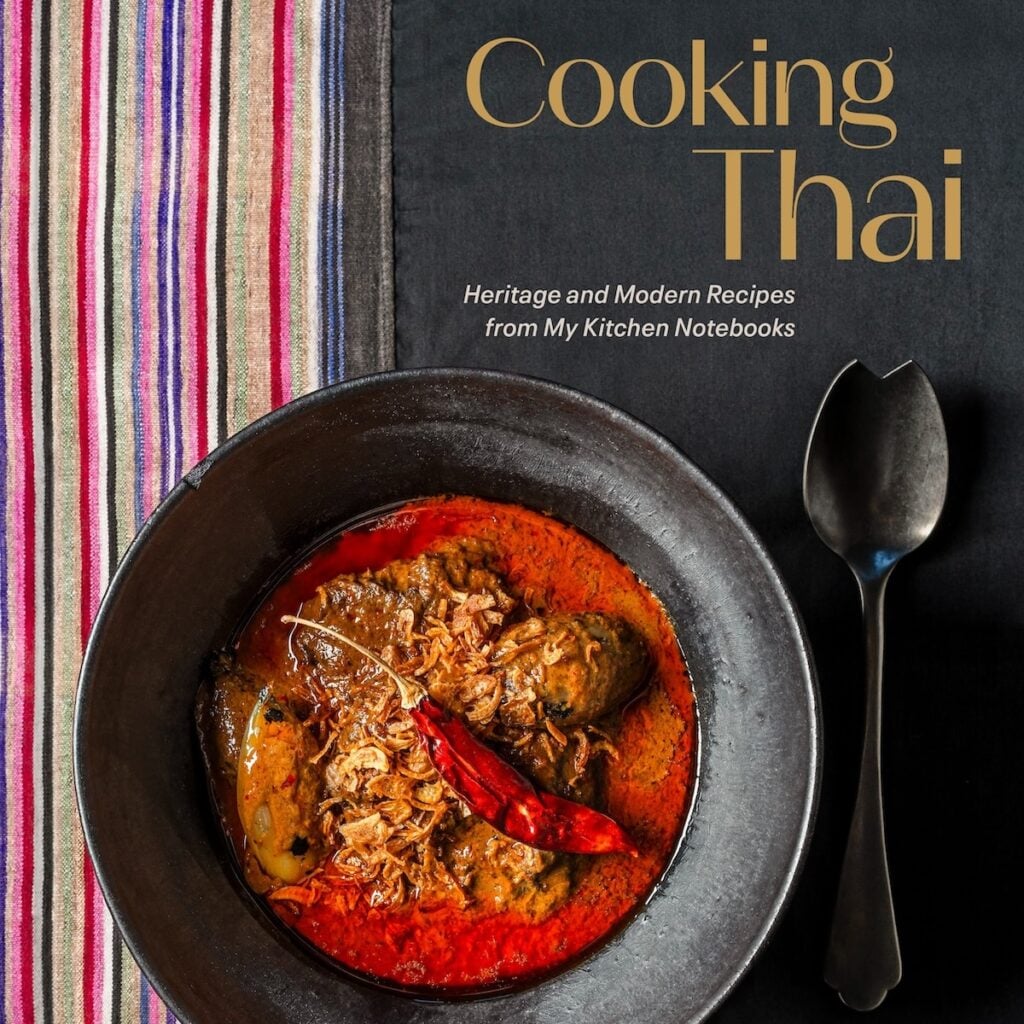
I've chased the same exciting flavors since then and have made Thai-style holy basil stir-fries many times at home. But I didn't know how to get excellent results until my friend, chef Pim Techamuanvivit, showed me how for our book, Cooking Thai: Heritage and Modern Recipes from My Kitchen Notebooks. Pim is a Bangkok native with three Michelin star restaurants in the United States and Thailand. Her outstanding balanced recipe is punched up with basil, garlic, chilies, and savory notes. It perfectly captures the exciting experience I had with my first pad gaprao in Bangkok.
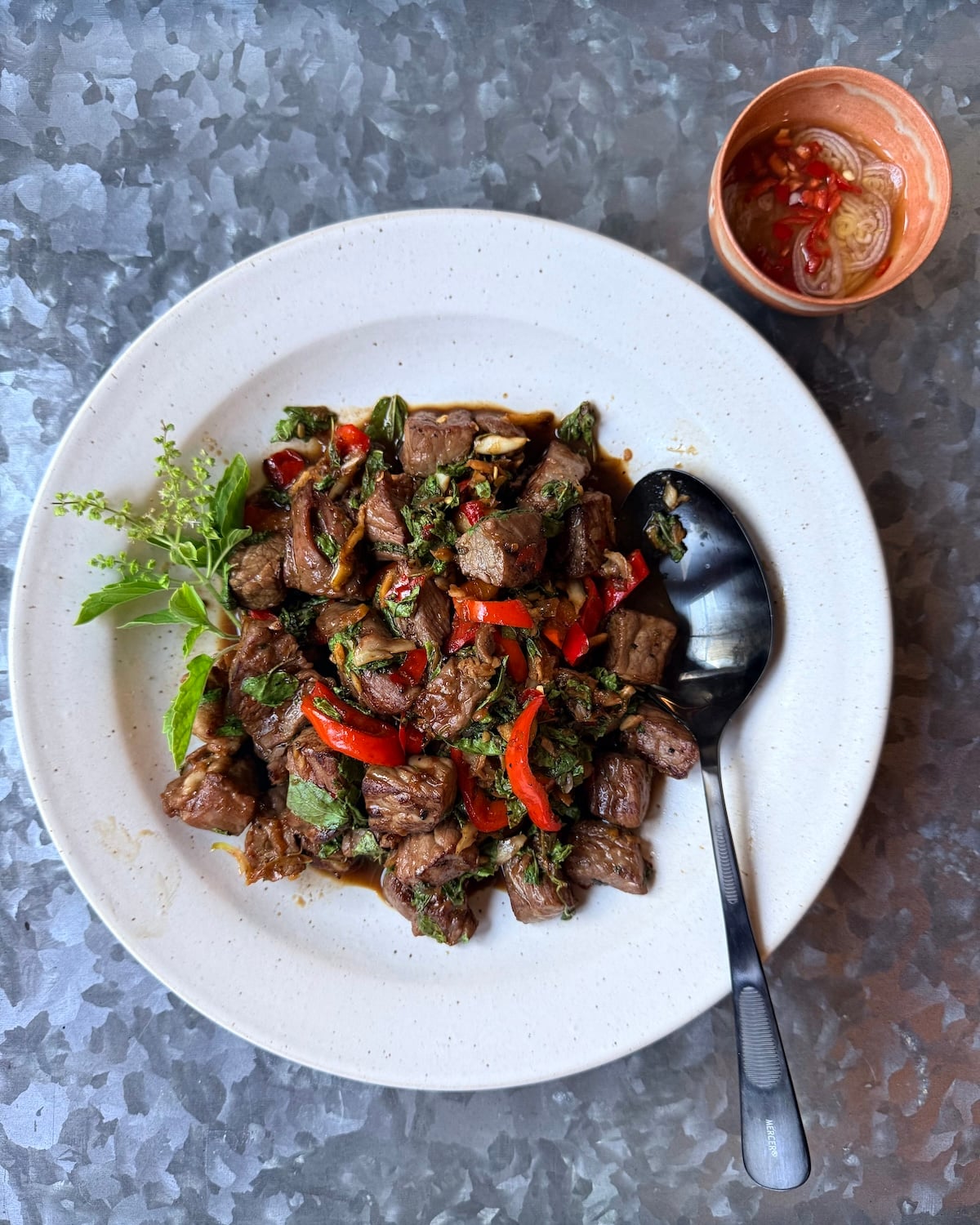
Thailand has changed a lot since my first trip there, and Pim's version of pad gaprao is a premium rendition featuring beef steak. She cheekily named the recipe Bougie Pad Graprao. It is made with beef steak whereas the typical version employs ground meat. In this post, I'll share Pim's Bougie Pad Gaprao recipe from Cooking Thai along with our pro-chef tips for making smart holy basil swaps and buying good beef. If you're unfamiliar with pad gaprao, the explainer below, excerpted from Cooking Thai, fills in the blanks.
What is pad gaprao? How does it compare to pad Thai as Thailand's comfort food?
Cooking Thai presents recipes, memories, and techniques that reflect the traditions and evolution of Thailand's cuisine. Here's and excerpt from "Sacred Wok Magic" which opens the stir-fry recipe chapter:
When you ask a non-Thai person what the quintessential Thai stir-fry dish is, their answer is probably pad Thai. But if you ask a Thai person the same question, their answer would likely be pad gaprao, the spicy, herbaceous, ever-so-adaptable stir-fry dish redolent with citrusy, pungent bai gaprao (holy basil, sacred basil, or tulsi). The stir-fry is commonly enjoyed with rice and is often topped with a crispy fried egg so diners can mix the runny yolk into the rice and stir-fry.
I once read in a Thai newspaper that the average Thai person eats pad gaprao at least once a week. That's believable because you can find pad gaprao set out in large trays at rad khao (over-rice) canteens, ready to be spooned over rice for a quick lunch. Additionally, you can order pad gaprao at any tam-sung (as-requested) shop, the type of neighborhood corner restaurant that will basically cook you anything you want as long as the ingredients are on hand. And, yes, these spots will always have holy basil.
You can pretty much order pad gaprao with any common protein: chicken, pork, beef, and sometimes even seafood. The meat can be minced or cut into larger pieces. The heat level can be adjusted by request, sometimes by specifying the precise number of chilies you want in the wok. Your order of pad gaprao typically arrives with a little bowl of fish sauce with chopped chili (nampla prik). Sometimes the sauce also contains sliced garlic or shallot and a bit of lime juice. Diners add the sauce to pad gaprao to spike flavors as they please.
Personalization is key in how the pad gaprao is prepared, served and enjoyed. Given that, what to do about your herb choices?
Holy basil vs. Thai basil: Making the right swap
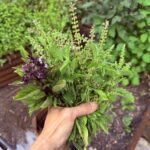
Most likely, you've seen pad gaprao at Thai restaurants but if that restaurant isn't in Thailand, chances are the stir-fry was made with Thai basil. It's actually Pad Horapa, prepared with bai horapa (Thai basil leaves). It works fine for this dish when I prepared it out of season. But when the weather is warm, I have a nice patch of holy basil growing in my garden so I can load up on this stir-fry. Regardless of the basil used, you need a lot. Pat and/or spin the herb dry to ensure their flavor blooms well in the stir-fry. Use the leaves and flowers.
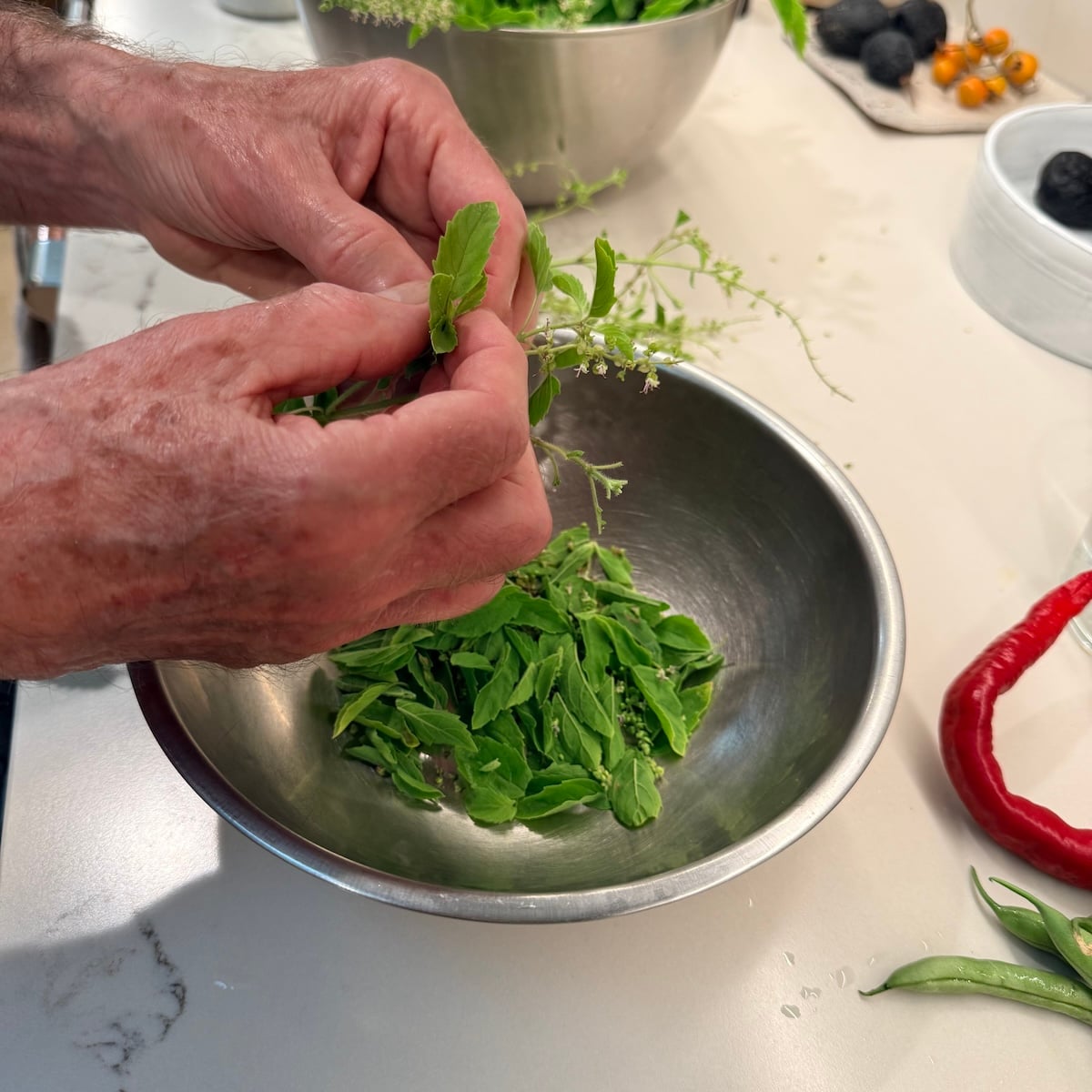
The holy basil vs Thai basil flavor? Holy basil has a deeper earthy flavor that's very special. It's less sweet than anisey Thai basil. I've made this stir-fry with lemon basil too. Learn more about holy, Thai, and lemon basil in my Asian basil guide. So if you choose to use Thai basil, just call the sensational result Pad Horapa!
The "bougie" upgrade: Choosing the best beef steak for pad gaprao
Beef is expensive but you do not need much to feed four people with this stir-fry. Because the beef steak is cut as cubes and cooked very fast like Vietnamese shaking beef, select Wagyu or well-marbled steak for the most tender results. Pim and my choices include New York, top sirloin, and bavette. Note that bavette may be sold as "flap" at markets. Affordable top sirloin cap (also called picanha and coulotte) is also excellent. One pound (450 grams) will go a long way when cut into cubes. The garlicky, fiery seasonings will coat the beef super well to ensure good searing and flavor in each bite. In the recipe, a little baking soda helps the meat caramelize while tenderizing it a bit too.
Bonus tips for a sensational pad gaprao and menu
Some extra pointers that chef Pim and I offer in the book to help you succeed:
- Don't have cilantro root? Just skip it. There's just a small amount needed and if you happen to have stubby roots attached to your cilantro, use it for a bit of extra complexity. Otherwise, there's no need to bother with subbing cilantro stems.
- Use Thai condiments for the best outcomes. Get pointers on basic ones here.
- To add a vegetable side, use the wok to cook it before stir-frying the pad gaprao. Heat the wok over high heat until hot, then add 1 tablespoon oil and swirl the pan to coat with the oil. Add 2 or 3 garlic cloves, smashed, to the oil and heat briefly to infuse the oil, then dump in a bunch of greens, cut into bite-size pieces, and season with 1 or 2 big pinches of fine sea salt as you swiftly stir-fry. Double the serving sauce so there's plenty for the vegetable side and main dish.
- For extra protein, add a fried egg for each person to enjoy with the stir-fry and rice.
- And don't forget the rice, a must-have to enjoy this Thai stir-fry. Here's my perfect Jasmine rice recipe and video tips to guide you.
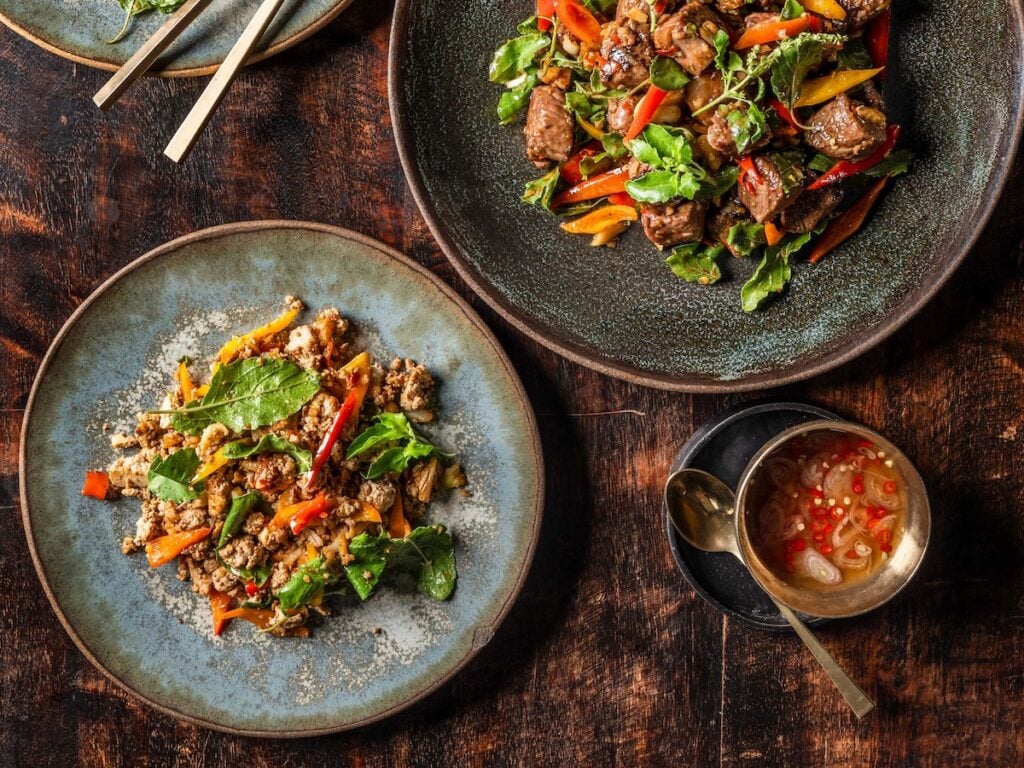
The full-scale master recipe for Pad Gaprao in the book includes three (3!) variations for chicken, any kind of ground meat, and tofu versions. You can take Pim's versatile pad gaprao recipe in many directions to suit a wide variety of moods, menus, and diets. Get a deeper look inside Cooking Thai and start making the best Thai food of your life, beginning with this recipe.
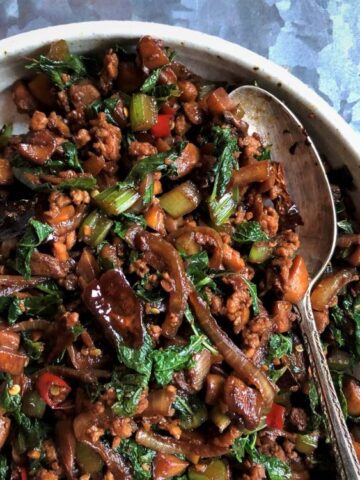
Bougie Pad Gaprao with Beef | Pad Gaprao Neua
Ingredients
- Seasoning sauce made by mixing 2 tablespoons fish sauce 1 tablespoon Thai oyster sauce, 1 ½ teaspoon Thai black soy sauce, and 1 Tablespoon water (see Notes)
- 450 g | 1 pound trimmed bavette New York, or top sirloin steak, cut into 1-inch (2.5cm) chunks (see Notes)
- ¼ teaspoon baking soda
- 1 big pinch of granulated sugar optional
- 20 g | 3 tablespoons thinly sliced shallots
- 10 to 15 g | 6 to 8 fresh Thai chilies to taste
- 2 g | 2 teaspoons coarsely chopped cilantro root optional; see Notes
- 40 g | ¼ cup garlic cloves
- 90 g | 3 mini sweet peppers or other mild pepper
- 30 g | 1 ½ cups fresh holy or Thai basil leaves plus tender tips for garnish
- 2 tablespoons neutral oil such as rice bran, divided
- 1 batch Nampla Prik optional, see Notes below
Instructions
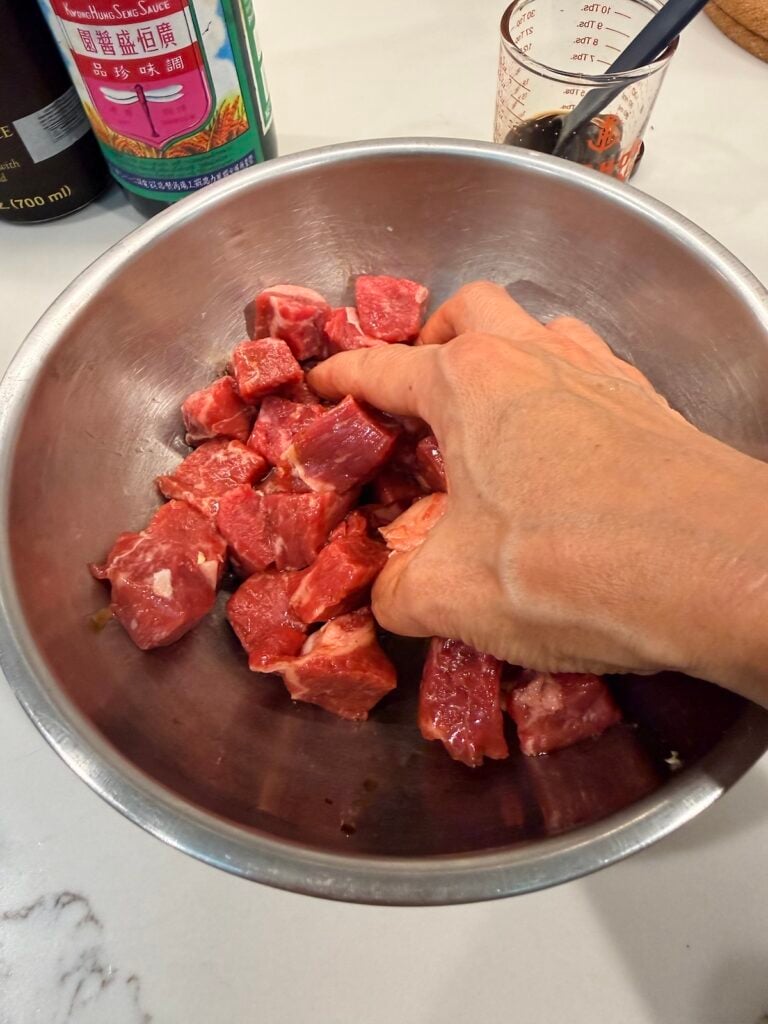
- Prep the meat: Mix together the seasoning sauce ingredients in a small measuring cup. Spoon 1 tablespoon of the seasoning sauce into a medium bowl. Add the beef, baking soda, and the sugar if you want a touch of sweetness. Massage the seasonings into the beef.
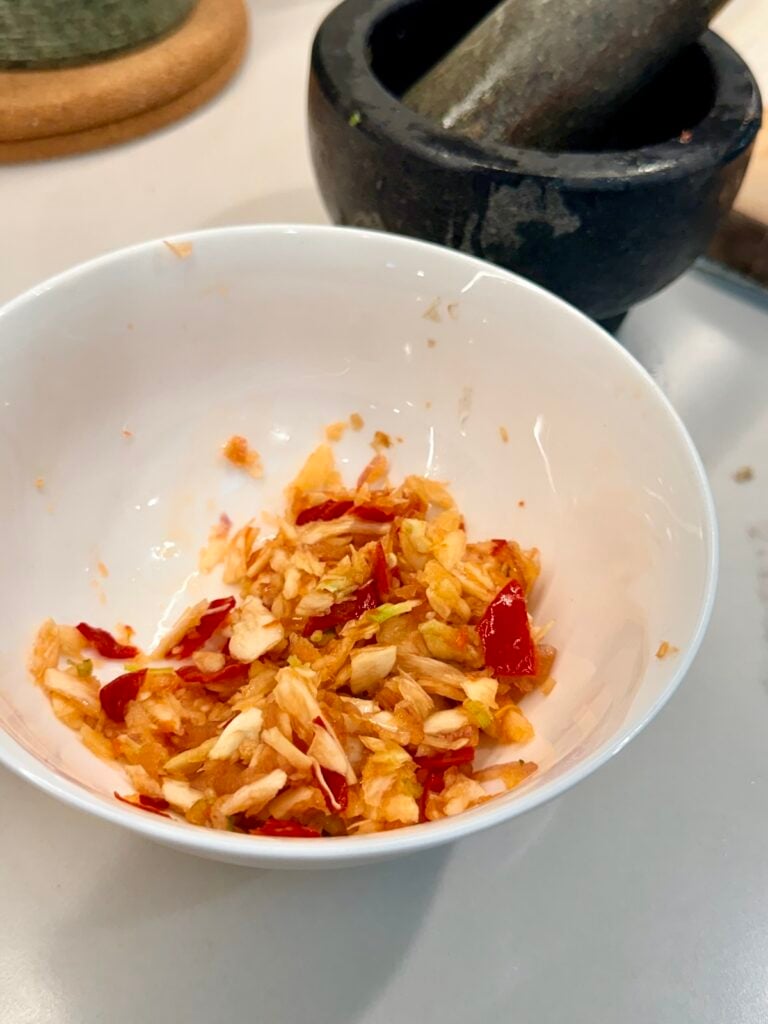
- Pound the aromatics: Use a mortar and pestle to pound the shallots, chilies, and cilantro root to a coarse texture (recognizable pieces of chili skin and shallot pieces are normal). Drop in the garlic, then pound to flatten. Scrape the aromatics into a small bowl.
- Halve the sweet peppers lengthwise, then seed and cut on the diagonal into pieces ½ inch (1.25cm) wide. Set the aromatics, peppers, beef, remaining seasoning sauce, basil, and oil by the stovetop.
- Stir-fry and serve: Set a large wok over medium-low heat on the biggest burner. When the pan is hot (to test, flick in a couple of drops of water; they should sizzle and evaporate within seconds), add 1 tablespoon of the oil, swirl the pan to coat with the oil, and add the garlic mixture. Let it gently sizzle, stirring continuously, to tease the garlic and mellow its harsh raw edge, 30 to 60 seconds. Take care to avoid burning. Return the garlic mixture to its bowl. Rinse and dry the wok.
- Set the wok over high heat. When it is hot, add the remaining 1 tablespoon oil and swirl the pan to coat with the oil. Add the beef cubes, spreading them out in a single layer. Let sear until browned on the underside, 1 minute.
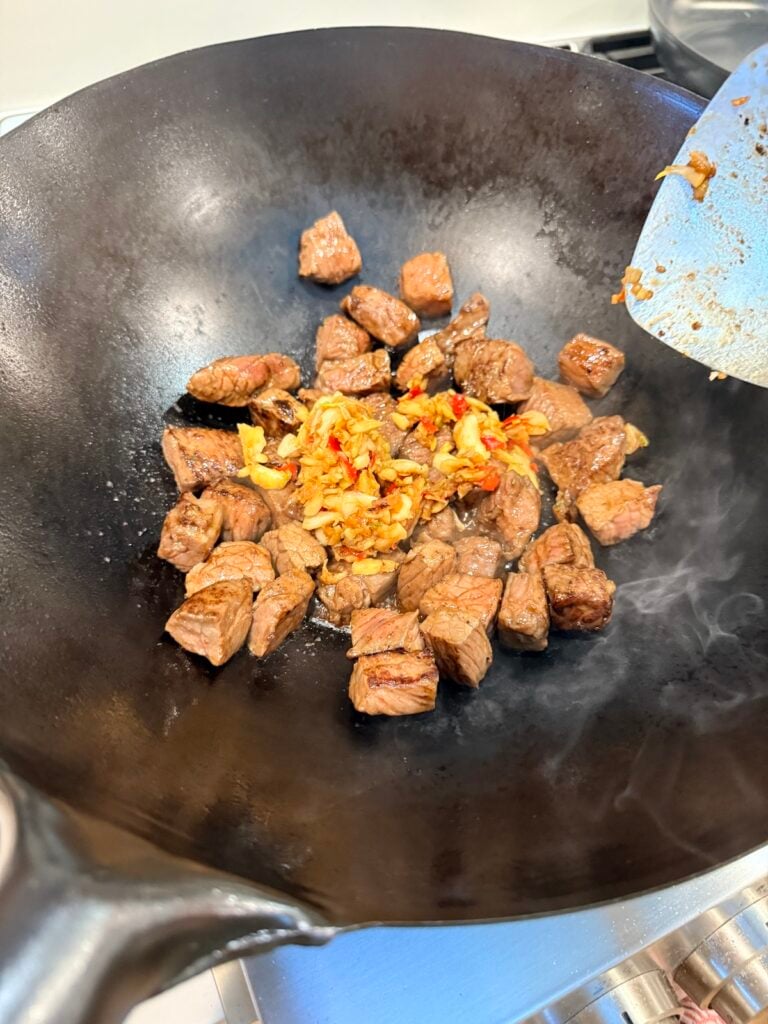
- Drizzle about 2 tablespoons of the seasoning sauce around the perimeter of the wok, letting it sizzle and caramelize as it slides down the pan wall to flavor the meat. Flip the meat, dump in the garlic mixture, and stir-fry briefly to further cook the meat, 30 to 60 seconds.
- Add the sweet peppers and the remaining seasoning sauce and cook, stirring, until the peppers begin to soften, about 45 seconds. Dump in the basil leaves and stir to incorporate and wilt, about 20 seconds.
- Turn off the heat, transfer to a serving dish, garnish with the basil tips, and serve immediately.
Leave a Reply