


Shopping for condiments to prepare great Thai dishes has always tripped me up. For decades, I couldn't figure out what was what at a Thai grocery store because I don't read Thai. Additionally, I've always wondered -- if you use certain condiments made in Thailand or for Thai cooking, will that make a difference in the outcome? No cookbook satisfied me with the answers. After spending about three years writing a cookbook with Michelin-starred Chef Pim Techamuanvivit (also a good friend), I have this to report: The answer is yes and yes! If you want spot on flavors, use Thai ingredients. But there is leeway too.
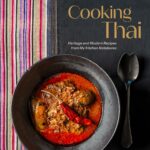
While developing recipes and writing Cooking Thai with chef Pim, I got to have all my Thai cooking questions answered. Additionally, I was able to stress test the recipes when made with non-Thai ingredients. Together, Pim and I put together a comprehensive guide to Thai ingredients for the book (preview it, if you have not).
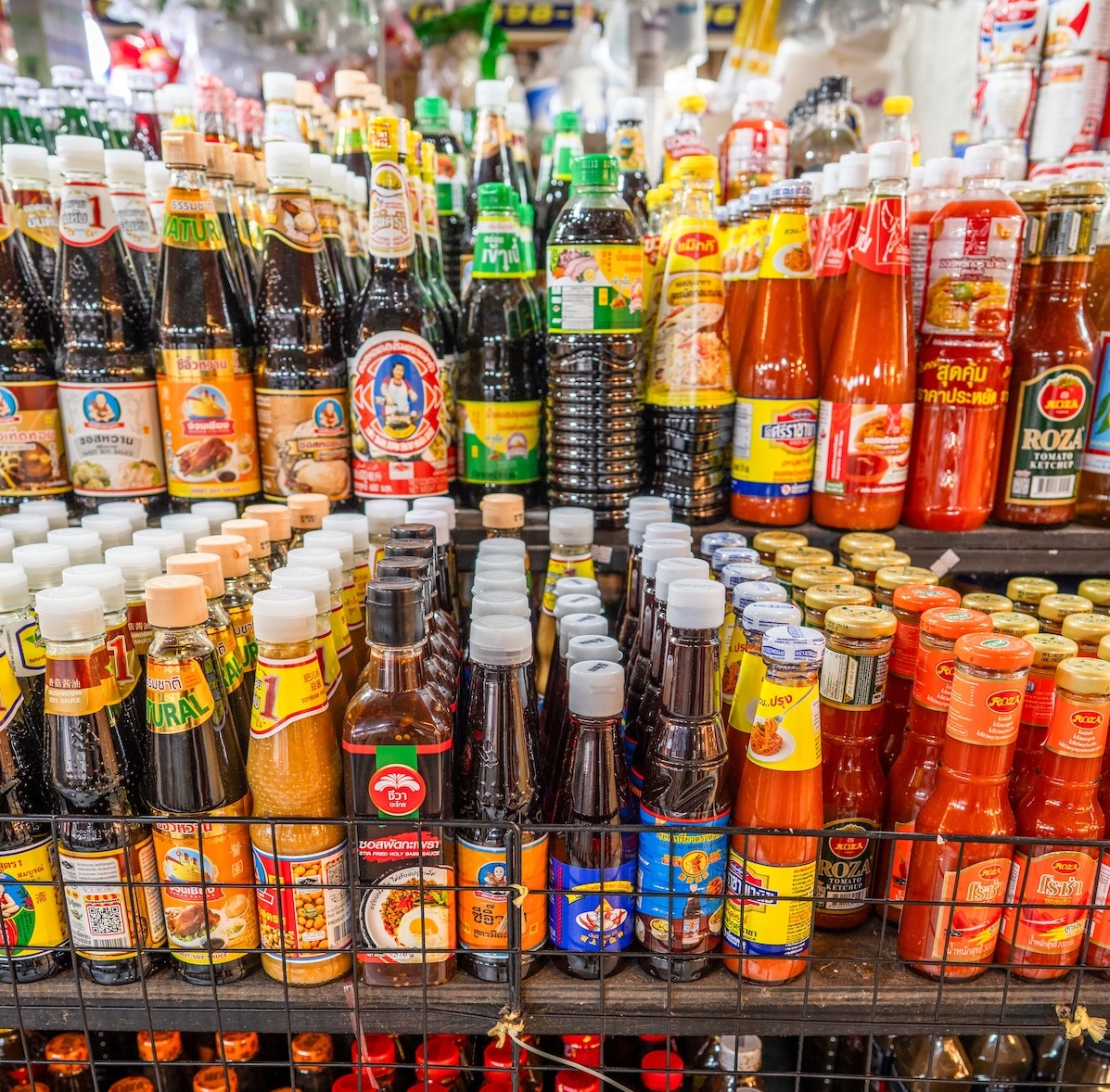
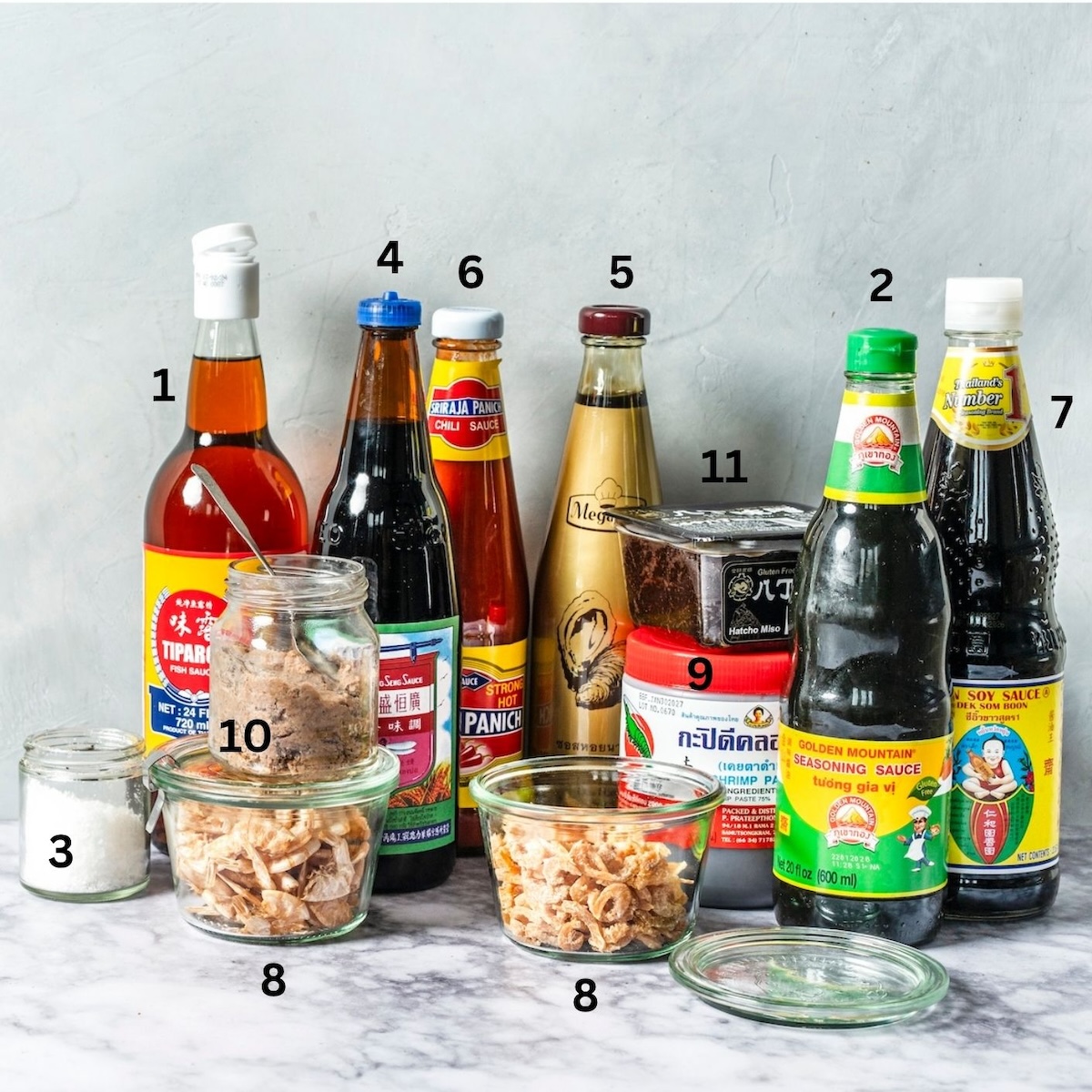
This blog post features an excerpt from our book, Cooking Thai. It's accompanied by the photo shot by Ed Anderson. The photo in the book (scroll on down) includes numbers so you can identify exactly what the label looks like. I have slightly tweaked things for internet layout and visibility. Bookmark and return to this page whenever you wonder about condiments and salty or umami seasonings for cooking up Thai food. Of course, this content was written for readers of the Cooking Thai cookbook. If you don't yet have a copy, consider getting the book. It's a keeper.

Savory, spicy, and salty Thai condiments
When a recipe ingredient is labeled "Thai," such as Thai thin soy sauce, use a brand from Thailand. It makes a huge difference in how the recipe comes out. Stock your pantry with these condiments to craft great Thai food.
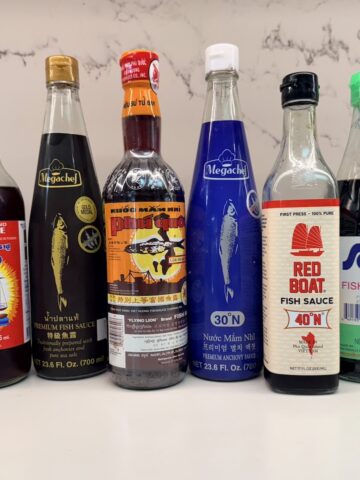
[1] Fish sauce น้ำำ˝ˇปลา is a liquid made from fermented fish and salt and is widely sold. The two brands I use the most are Thai- produced Trachang (scale logo) and Megachef. Two other commonly available Thai brands, Squid and Tiparos, are OK too. Those four Thai brands contain between 1,500 and 1,700 mg of sodium per tablespoon. If your brand differs from mine significantly, adjust as needed.
[2] Golden Mountain Seasoning Sauce ซอสภููเขา ฝาเขีียว has a distinctly savory, slightly sweet flavor that's akin to lighter Maggi Seasoning sauce. It harmonizes well with Thai ingredients, whereas Maggi easily overwhelms. If unavailable, substitute Thai thin soy sauce.
[3] Sea salt เกลืือทะเล , particularly fine sea salt that clocks in at about 550 mg per ¼ teaspoon, is what I often use in recipes. Check the nutrition label on your sea salt and adjust the amounts called for in recipes if needed.
[4] Thai black soy sauce ซีีอิ๊๊วดำำ˝ˇ is sweet, salty, and slightly syrupy- like diluted Indonesian kecap manis; this condiment is sometimes labeled sweet black soy sauce. I like the sauces by Megachef and Dragonfly, which is made by the Kwong Hung Seng company in Thailand.
[5] Thai oyster sauce น้ำำ˝ˇมัันหอย tastes salty-sweet with a hint of brininess to evoke the piscine origin of the original condiment long ago. I prefer a Thai brand with relatively low sodium. Maekrua brand is mild and fine, but harder- to-find Megachef brand is punchier and better (check online, including Weee!). If you use non- Thai oyster sauce, use about 25 percent less. For vegan oyster sauce, we use Lee Kum Kee brand.
[6] Thai sriracha ศรีีราชา is a chili-based hot, slightly garlicky, and mildly sweet condiment that originated in the 1930s in Si Racha, a town on the Gulf of Thailand. Generally available in two heat strengths, medium and strong, Thai-style sriracha works best for my dishes, like the Kin Khao Wings on page 78. I favor Sriraja Panich and Shark brands.
[7] Thai thin soy sauce ซีีอิ๊๊วขาว is not as dark as Chinese, Japanese, or Korean soy sauce, but it has a strong salinity and deep umami flavor so it pairs well with and can stand in for fish sauce in Thai vegetarian recipes. Healthy Boy thin soy sauce and Megachef gluten-free soy sauce work well.
Umami from land and sea for Thai dishes
Along with sauces and salt, these umami-laden seasonings help build exciting Thai dishes.
[8] Dried shrimp กุ้้˝ˇงแห้้ง are used whole or chopped to add savory depth. Check the cold case of a Chinese or Southeast Asian market for small or medium ones and keep them frozen to preserve flavor and freshness. When possible, buy dried shrimp without food coloring; those may not be the brightest orange, but they'll be better for you.
[9] Gapi กะปิิ (Thai shrimp paste) is the grounding umami in many Thai dishes. The dark mauve paste is typically sold in plastic jars, shelved in the fermented condiment or Thai section of Southeast Asian and Chinese markets. It is also sold online. Gapi is made from fermented shrimp (krill to be exact) and salt, plus maybe some MSG and sugar. Buy true, pure gapi made from just shrimp and salt, if you can. Brands such as Prateepthong (shrimp logo) and Trachang (scale logo) are good. Store it in the fridge, where it will last forever. Artisanal gapi is hard to find, so use my good gapi hack 0 (see page 118) to mimic excellent gapi produced in Thailand. Perplexingly, some Thai products labeled "shrimp paste" are not gapi. If the list of product ingredients includes oil and other spices, that's not gapi!
[11] Hatcho miso is a dark, thick, strong- flavored paste made from pure soybeans with no other grains (unlike other types of miso), is the best substitute for dried fermented soybeans, or tua nao ถั่่่วเน่่่า, from Northern Thailand. To make a swap for tua nao, I dehydrate miso and my recipes offer fast- and slow- drying methods. Shop for quality brands of hatcho miso, like Hikari or Marukome, at Japanese markets. When unavailable, use a dark aka (red) miso. If you are lucky enough to find real Thai tua nao, use it.
More on Cooking Thai (the cookbook!)
Learn more about the contents of the cookbook in this Cooking Thai preview, which includes tips on how to use the book well plus a video of a virtual book talk that Pim and I did for the International Association of Culinary Professionals.
To try some Cooking Thai recipes, check out these Substack newsletter dispatches by Georgia Freedman (Savory Thai Citrus-Herb Salad) and Maggie Hoffman (Kin Khao Wings). Nigella spotlighted the book's Bougie Pad Gaprao (holy basil and beef stir-fry) on her website. Yes, that Nigella.
When you cook from the Cooking Thai, tag us on social media so we may amplify your enthusiasm! And, please review the book on Amazon or wherever you purchased your copy to help other people realize the book's value.

Leave a Reply