







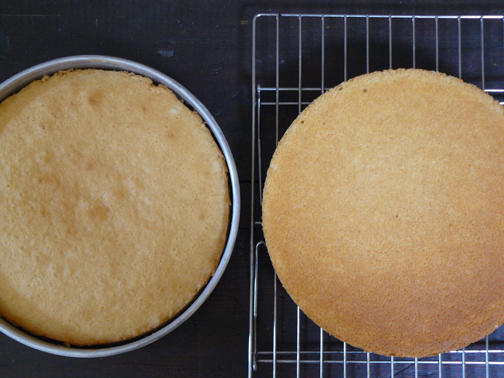
In the Vietnamese repertoire, sponge cakes (banh bong lan) are the go-to cake because they require just a handful of low-cost ingredients. The delicate sponges are great for cakes such as strawberry and cream cake or a Christmas yule log cake. But when you want to pour on the love, a butter cake is the answer. It's richer with more butter, yet light because of the fair amount of baking powder. It's also enriched by additional fat by way of milk, or in my case here, coconut milk, which gives the cake a tropical twist and good for the lactose intolerant. You can use this cake as a substitute for the sponge cake layers in the strawberry and cream cake. Layers of this cake are the foundation for my coconut and pineapple cake. <
Cake baking tips
- Please weigh the flour for this cake. Get a scale as it really makes a difference.
- Cake flour substitutes:
- Use unbleached all-purpose flour instead of cake flour, going by weight measurement. The cake will be superb but not have as tender of a crumb.
- Combine 3 parts all-purpose bleached flour with 1 part cornstarch to create cake flour.
- Form a raised ridge at the rim to bake this cake so that it has an even/flat top. Cakes with lots of leavening, such as baking powder, will rise with a center dome if you don't take precautions!
How to cream butter and sugar
It's not as simple as many recipes make it out to be -- whether you're creaming butter and sugar for a pound cake, layer cake, or cookies. Cream the ingredients with care and you'll get a lighter, more tender texture in your baked goods. In the past, people creamed butter and sugar by hand, but and electric mixer makes the job exceeding easy.
- Make sure the butter is at room temperature before using.
- Use a mixer (Kitchen Aid works well) with the paddle attachment. A hand mixer works fine but can be cumbersome.
- Don't add the sugar until after the butter has been beaten for 30 to 45 seconds. It should be soft, cling to the side walls and look satiny before you add the sugar.
- Add the sugar slowly. Hold the bowl of sugar on the edge of the mixer bowl and tilt the sugar bowl to add a nice slow sprinkling of sugar to the butter.
- Pause to scrape down the grainy mixture after all the sugar is added.
- Then run the machine again to continue creaming for another 4 to 5 minutes.
- The butter and sugar are creamed when the mixture is pale yellow, fluffy like frosting and not too grainy.
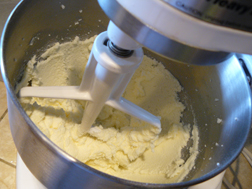
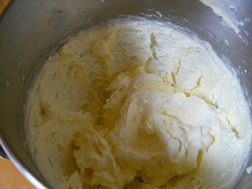
(Left) Sugar has all been added to the butter and the mixture is grainy.
(Right) Cream for another 4 to 5 minutes, until the mixture is fluffy and creamy
like frosting. There will be a slight graininess left from the sugar. You're done.
Recipe
Coconut Cake
For the coconut milk, Chaokoh brand is not as heavy as Mae Ploy, so it produces a lighter cake. For an even lighter cake, spoon off the heavy coconut cream from an unshaken can and then use all of the remaining lighter milk at the bottom of the can, mixing it with some of the cream to get the 1 cup needed.
Makes 2 (9-inch) round layer cakes
¾ cup (1 ½ sticks) plus 1 ½ teaspoons unsalted butter, at room temperature
12 ¾ ounces /360 grams (3 cups) cake flour, plus more for dusting
1 tablespoon baking powder
1 ¼ teaspoons salt
1 ¾ cups sugar
3 large eggs, very lightly beaten just to break up the yolks
1 cup coconut milk, Chaokoh brand preferred
1 tablespoon vanilla extract
1. Position a rack in the middle of the oven and preheat to 350F. Use the 1 ½ teaspoons of the butter to coat the bottom and sides of two high-sided 9-inch-wide round cake pans. Generously flour the pans, shake to distribute, then invert them over your sink, tapping out excess flour. Set aside.
2. Over a piece of wax paper or shallow bowl, sift together the flour, baking powder, and salt. Set aside. Put the sugar in a bowl and set aside at your work area.
Crack the eggs into a bowl and very lightly mix with a fork to break the yolks and blend it with the whites. Stir together the coconut milk and vanilla. Set the eggs and coconut milk near the sugar and flour.
3. Using a stand mixer (such as a Kitchen Aid) with the paddle attachment in place, cream the ¾ cup of butter on medium speed for 30 to 45 seconds, until it's clinging on the side walls and looks satiny.
4. With the mixer still running at medium, slowly add the sugar to butter; tilt the sugar bowl and it should flow slowly out into the butter. When all the sugar is added, stop the mixer. Use a rubber spatula to scrape down the sides.
Return the mixer to medium and continue creaming the butter and sugar for 4 to 5 minutes more. The mixture will become airy, a super pale yellow, and texturally like frosting.
5. With the mixer still running, add the beaten egg, about ⅕ or ⅙ of it at a time. Let the machine work in the egg before adding the next quantity. Think of how you slowly add oil when making homemade mayonnaise. Go slow.
6. Turn the mixer off. Add ¼ of the flour and ⅓ of the coconut milk mixture. Run the machine on low to incorporate. When the flour and coconut are no longer visible, stop the machine and add another ¼ of the flour and ⅓ of the coconut milk. Incorporate the ingredients on low speed and add another portion of flour and coconut milk. On the fourth addition, you will only have flour to add. When it has disappeared into the batter, turn off the machine. Finish by mixing the flour in with a rubber spatula to avoid over mixing. The finished batter should be smooth.
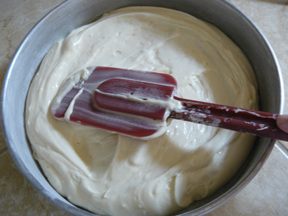
7. Divide the batter equally between the prepared cake pans. Weigh them if you care to be extra careful. Use a rubber spatula in a rotating motion to spread the batter outward from the center to create a raised ridge at the edge of the pan. This technique prevents the center from doming up too much during baking.
8. Bake the cakes for 30 to 35 minutes, until golden on top and the sides have begun to pull away from the pan. Gently press on the surface and the cake should spring back slightly.
9. Cool the cakes on a rack for 5 to 10 minutes. Then run a knife around the rim and invert and unmold onto a cooling rack. If you like, flip each cake over so it's right (top) side faces upward. To do so, put another rack atop the bottom of the cake now facing upward, and invert. Let cool to room temperature before using.
This coconut cake can be wrapped in plastic and stored at room temperature for up to 24 hours. Refrigerate it for up to 3 days. Or, freeze the cake layers for up to 2 weeks; thaw completely before using.
Variations
- If you don't have coconut milk, use regular whole milk. When using milk instead of coconut milk in this recipe, you'll bake a classic butter cake recipe!
- To inject a pale green color and delicate grassy flavor, Make ⅓ to ½ cup of intense pandan juice (use 8 to 10 big fresh leaves or 16 to 20 frozen ones) and combine that with coconut cream (thicker coconut milk on top of the can).
- Grate some lemon, orange, or lime zest into the batter as you're mixing in the flour and liquid.
- Sift spices such as ground ginger, cinnamon, or cardamom into the flour mixture.
If you have ideas for variations or tweaks you made to the coconut cake recipe above, don't keep them to yourself. Let us all know!


Binh says
Thanks, Andrea, for the recipe/instruction. I'm really digging your last couple of posts. Sweet.
red ribbon bakeshop says
Thanks for sharing the recipe.I always do sponge cake because i really love this kind of cake.
-Ava
Bizu Philippines says
I never taste the coconut cake before and i am interested to try this,sounds great and i know its delicious thank you so much for sharing the ingredients. Keep posting!
vee
Spice Rack says
Nice recipe! I never thought that coconut would also great for cakes. I wonder what type of spice did you put on this recipe. rating 4/5
LL says
Hi Andrea. Can you give me some tips on how to freeze this cake. I want to make it for my husband's birthday in September, but I will be away the week before. Thanks.
LL
Andrea Nguyen says
LL -- To freeze the cake layers, wrap each one in plastic wrap and then put them on a baking sheet. Slide them into your freezer so they sit flat. When they're frozen hard. Put them them in zip-top plastic bags. You'll be good to go. Just thaw them at room temp or in the fridge then frost.
Nhan says
This is exactly what I was looking for. I much prefer these cakes over the American ones since they are not as sweet. I'm going to try and bake this cake for my daughter's 1st birthday. This may be ambitious, but I'd like to try and make a three-tiered cake (10/8/6" pans). Is there a way to adjust the amounts for each ingredient to accommodate this? I was also thinking of making a 10" and 6" of this and making the 8" of the strawberry cake recipe. Thanks!
Karthik Kumar says
http://www.indiaflowerplaza.com
Send flowers to India , Gifts to India, Cakes to India, Birthday Gifts to India, Birthday Cakes to India, Gift to India, Flower to India, Cake to India, India Florist
Karthik Kumar says
Send flowers to India , Gifts to India, Cakes to India, Birthday Gifts to India, Birthday Cakes to India, Gift to India, Flower to India, Cake to India, India Florist
Madhu says
Order online to send flowers to Bangalore, Gifts to Bangalore, Cakes to Bangalore. You can also send flowers and gifts to bangalore for different occasions like Birthday, Anniversary , wedding etc. on any desired date or on same day. We have cheap gifts and flowers to select from to send them to Bangalore.
Gifts to Bangalore says
This looks delicious and simple! Thanks for sharing.! I love coconut.
nike shox saya says
The Chinese word for crisis is divided into two characters, one meaning danger and the other meaning opportunity. (Burejer, British writer)
jordan retro 5 says
Good products,and I think I must consider more about it.and I saw the comments who bought it,better or worse,different ideas.give me some time to think,and if I want,I will buy from you ,thanks.
ugg bailey button says
The lanscope belongs to the man who looks at it .
Mylinh says
Do I bake for the same amount of time at the same temperature if I use a 13x9 rectangular pan instead of two 9inch round pans?
Indian Gifts Center says
Oh great !!! I never taste this cake..I will try once.
Thanks...
http://www.indiangiftscenter.com
Bangalore Online Gifts says
Oh Nice Cake!! I will try.
Thanks..
http://www.bangaloreonlinegifts.com
Hyderabad Online Flowers says
Nice cake!! I like it very much..
Thanks..
http://www.hyderabadonlineflowers.com
Miami auto repair says
Delicious!! I'll try it next weekend and hope it tastes as it looks!!
Flowers Toronto says
Once you have made the wise decision to let a florist do your wedding flowers for you, it’s time to get to work with this skilled professional and design the wedding look of your dreams. Experienced florists are a wealth if information and ideas and the best ones will be able to shape your vision into a reality.
karthik kumar says
indiaflowerplaza.com helps you to order online to send flowers to India , Gifts to India, Cakes to India, Birthday Gifts to India.
We do delivery on your desired date or same day delivery of gifts and flowers to India.Thus you can send flowers to India, Gifts to India thru us.
Ravikumar says
Send flowers to Mumbai for same day delivery or delivery on your desired date. One can also send gifts, cakes for delivery in Mumbai. We are local florists and gift shop at Mumbai to send flowers, gifts, cakes to Mumbai and all over Maharashtra.
Karthik Kumar says
http://www.indiaflowerplaza.com
indiaflowerplaza.com helps you to order online to send flowers to India , Gifts to India, Cakes to India, Birthday Gifts to India.
We do delivery on your desired date or same day delivery of gifts and flowers to India.Thus you can send flowers to India, Gifts to India thru us.
[email protected] says
We take online order to send Cakes to Chennai, Birthday Cakes to Chennai, Cake to Chennai for all occasions, Cakes to Chennai from USA, Cakes to Chennai same day delivery, Cakes to Chennai home delivery, Cakes to Chennai mid night delivery.
http://www.chennaicakes.com
Ravi Kumar says
Send flowers to Mumbai for same day delivery or delivery on your desired date. One can also send gifts, cakes for delivery in Mumbai. We are local florists and gift shop at Mumbai to send flowers, gifts, cakes to Mumbai and all over Maharashtra.
Madhu says
http://www.hyderabadgift.com
hyderabadgift.com helps you to order online to send flowers to Hyderabad, Gifts to Hyderabad, Birthday gifts to Hyderabad,
marlon says
Thanks, Andrea, for the recipe/instruction. I'm really digging your last couple of posts. Sweet.
Karthik says
http://www.indiaflowerplaza.com
indiaflowerplaza.com helps you to send flowers to India , flower to India, Flowers to India, Flowers to India same day delivery,We are online florists in India to do delivery of flowers in India on your desired date . Order online for sending flowers to India.
Ravi Kumar says
Send flowers to Mumbai for same day delivery or delivery on your desired date. One can also send gifts, cakes for delivery in Mumbai. We are local florists and gift shop at Mumbai to send flowers, gifts, cakes to Mumbai and all over Maharashtra.
Madhu says
hyderabadgift.com helps you to order online to send flowers to Hyderabad, Gifts to Hyderabad, Birthday gifts to Hyderabad,
Gifts to Hyderabad from US, UK, USA, Flowers to Hyderabad India