

Earlier this year, I did an Asian hot sauce tasting for Bon Appetit magazine that included Filipino banana ketchup. I bought bottles of the leading brand, Jufran, and frankly, the stuff was oddly fake tasting in the banana department. There are many kinds of bananas in Southeast Asia and their funky fermented characteristics were in the sauces, as well as a ton of sugar. It was also bright red, practically like nail polish. I wondered what the real stuff was like.
What's the back story on banana ketchup? Filipinos love American ketchup but during World War II, they had a tomato shortage. One woman resourcefully came up with a knockoff made with bananas. (If you've been to Southeast Asia, you know that bananas are ubiquitous and the many varieties are extra delicious.) Banana ketchup, also known as banana sauce, was a local hit and became as popular as ketchup, writes Marvin Gapultos in his debut book, The Adobo Road. As a result, anywhere Filipinos went, they brought their ketchup with them.
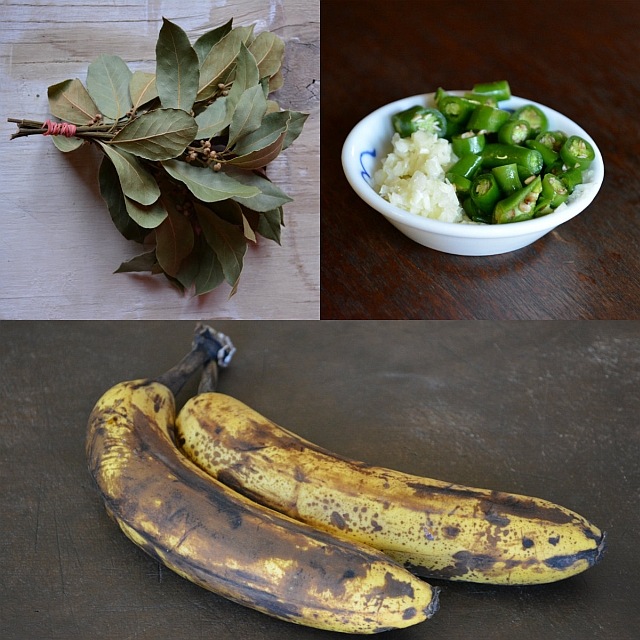
Fascinated, I made a batch this week from Marvin's book. I bought two big bananas and over ripened them to ensure their sweetness. Marvin calls for annatto (achiote) oil to brighten up the ketchup's color so I improvised a shortcut, which wasn't as intense-colored as his, but the impact was purely cosmetic.
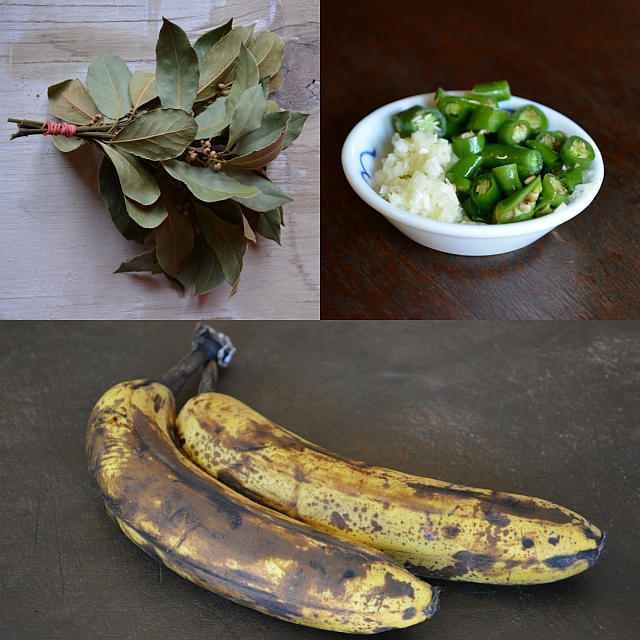
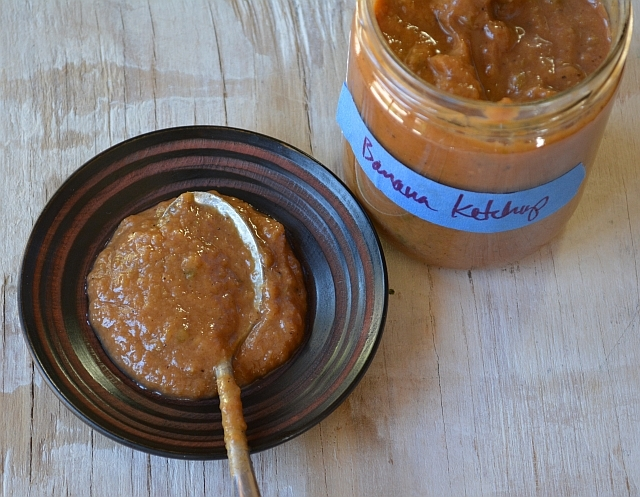
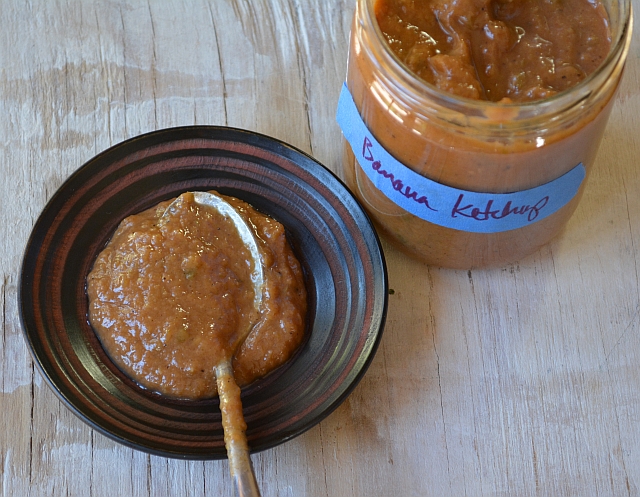
When I was done, the ketchup didn't look like your typical tomato-based ketchup. It was orange-brown, tangy, and thanks to the five chiles I added, it was spicy. The texture was like that of ketchup and the flavor, while earthy more than spritely, was pleasant in its own right. I can totally see how the Filipinos came to love their banana ketchup so much. Forget that bottled stuff
and tinker with making your own!
Recipe
Spicy Filipino Banana Ketchup
Yield: 1 ½ cups
Ingredients
- 2 tablespoon canola or peanut oil
- ¾ teaspoon annatto seeds (optional)
- 1 small yellow onion, chopped
- 2 cloves garlic, mined
- 2 to 5 Thai or Serrano chiles, chopped
- 1 generous tablespoon tomato paste
- 2 large ripe bananas, mashed (net 9 oz / 270 gr)
- ½ cup (120 ml) apple cider vinegar
- ¼ cup (60 ml) water
- 2 packed tablespoons dark brown sugar
- ½ teaspoon black pepper
- ⅛ teaspoon ground clove
- ⅛ teaspoon sea salt
- 1 teaspoon regular soy sauce
- 1 bay leaf
Instructions
- Put the oil and annatto seeds in a medium saucepan. Heat over medium-low heat and let gently sizzle for 3 to 5 minutes, until the seeds are nearly black. Cool for a minute, then use a slotted spoon to remove and discard the seeds. If you're not using the annatto seeds, go to
the next step. - Heat the oil over medium heat, add the onion and cook, stirring often, until soft and translucent, 5 to 7 minutes. Add the garlic and chile, stir and cook for 1 to 2 minutes, until aromatic. Add the tomato paste and cook, stirring often, until the mixture is orange red and the tomato is no longer visible.
- Add the mashed bananas, stir to combine well. Then add the vinegar, water, sugar, pepper, clove, salt, soy sauce, and bay leaf. Bring to a boil, lower the heat to simmer, partially covered, for 20 to 30 minutes, until thick like-ketchup! Remove from the heat, cool for 10
minutes. Remove and discard the bay leaf. - Use a mini food processor or blender to puree the mixture. Taste and add water to thin, sugar to sweeten, or vinegar to tartness. Transfer to a jar and use, or refrigerate for up to 3 weeks.
Adapted from The Adobo Road by Marvin Gapultos (Tuttle, 2014).
Related posts:
- 3 Interesting Indonesian Hot Sauces
- Sriracha Hot Sauce Week (links to articles and recipes on VWK, Bon Appetit, and BusinessWeek)
- Homemade Sriracha Chile Sauce recipe


Tami says
I love ketchup but the S.O. doesn't. I wonder if this will tempt him? 🙂
Andrea Nguyen says
Tami, this ketchup from your S.O.'s motherland may call to him in a different way.
Y U No Use Update Website says
Copyright 2002-2012 by Andrea Nguyen
We are in 2013 now, you know, and have been for half the year already.
Andrea Nguyen says
Well thanks for the reminder.
TinCook says
I've always been too scared to by it at the market, so this is tempting for me to make.
What do you use it on? Lumpia?
grateful.foods@gmail.com says
Hi!
I totally agree with your post. How the bottled banana sauces are ALL nasty and taste like chemicals! Did you ever read the ingredient list on those bottles like, Jufran, Mafran, UFC, Mama's Best etc? A deadly cancer causing chemical cocktail with a bunch of food coloring! I couldn't believe that was the only options out there.
I'm filipino myself and hate the fact that the commercial representation of our beloved banana ketchup is so gross! I've taken this personally and have created a blend of my own family's recipe from the northern island area (ilocos norte region). It's completely chemical + preservative + food coloring free. It is currently available in a few local restaurants in southern california now and word is on the streets that people from all backgrounds are enjoying it.
I hope the world can taste the real thing instead of the other red nail polish looking stuff.
Kevin Hopkins says
If you are allergic to to tomato's Banana Sauce is great. A real life saver. By the way, I don't think you really made Banana Sauce when you add tomato past to the ingredient list.. Again, people are allergic to tomato's.
Andrea Nguyen says
Tomato paste is a great thickener and adds a tart note. It's an ingredient in Marvin's Filipino recipe. Maybe yours is different? Many people are not allergic to tomatoes. If they are, they can omit it. Thanks for the tip.
RoamingHunger says
Saba Bananas are more like plantains than the banana we are used to eating in america. What type of banana did you use?
Andrea Nguyen says
That looks like a regular banana to me. Those are typically Cavendish, I believe.