



Chinese-style chile oil is a staple in my kitchen. I've been making it for years and published a recipe in Asian Dumplings (2009), because if you're going to eat Chinese-style dumplings (including Japanese gyoza, which are based on Chinese dumplings), you want the toasty, nutty heat of chile oil. But over the years, I've found other uses for chile oil, like drizzling it over feta cheese and serving it with fresh herbs and pita. I've also garnished noodles and non-noodle soups with it.
The recipe in Asian Dumplings is awesome and has never failed me. But it requires 1 cup of semi-refined Chinese peanut oil and ¼ cup dried red chile flakes. That can seem intimidating to many cooks (unfamiliar oil and a lot of it!). Plus, it may seem like too much of an ingredient commitment. As cookbook authors age (and maybe mature!), many revisit and revise recipes. They rethink and refresh past techniques because perhaps they've had new insights or observed that cooks have changed, too.
For me, I'm always trying to figure out ways to get more cooks to try and appreciate classic techniques and flavors, as well as to inspire them to figure out new ideas for themselves. I've meditated on those ideas for years, starting with when I was writing Vietnamese Food Any Day, a book about easy-going Vietnamese cooking.
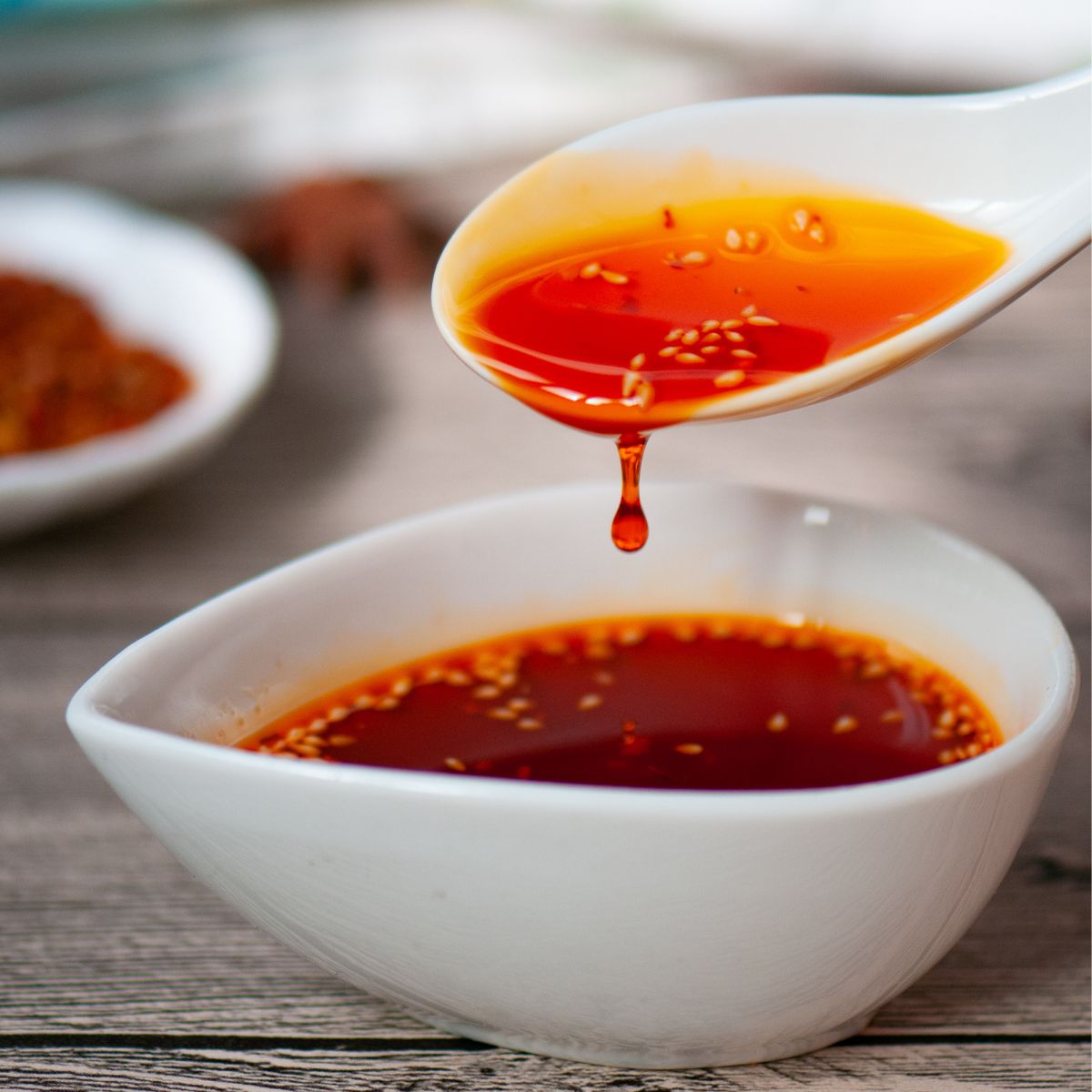
Recently, I set my sights on my favorite chile oil recipe from 2009. It's a classic -- one that's been around and much easier to make than chili crisp. It's also about making a flavorful oil that blends in easily to add gentle heat to foods. How I could streamline it so more people would make it?
Half batch cooking solutions
First off, I made half batches. The original recipe called for a fair amount of oil that enabled you to heat the oil with a deep-fry thermometer to monitor the temperature. Making the recipe with ½ cup of oil involved asking cooks to wing it a bit. But it was okay.
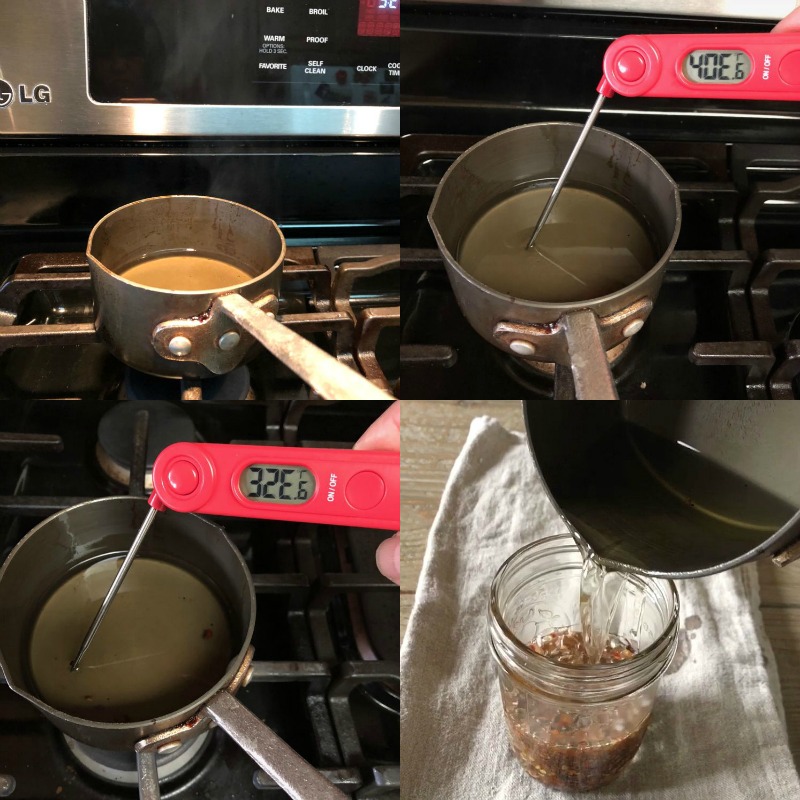
The simple method. All you have to do is heat the oil until it's very hot and just starting to smoke. That's when it's around 400F! Then you slide the pan to a cool burner and let it cool for 3 to 4 minutes to where it's between 325 to 340F. Then you carefully pour the hot oil into a heatproof container that contains the chile. Then leave it to cool and develop flavor. It's as simple as that.
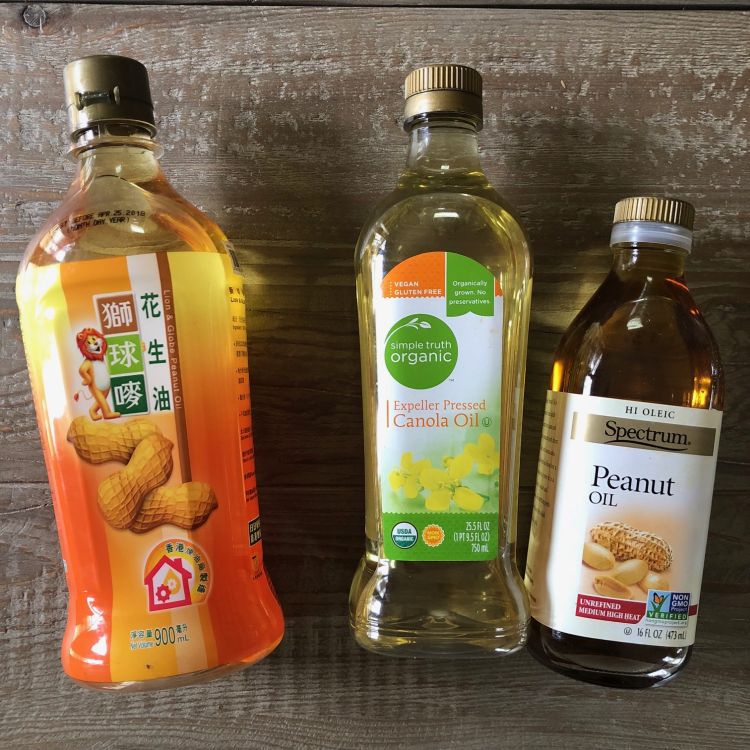
What oil to use?
For a pleasant nuttiness, use semi-refined peanut oil sold at many Chinese markets; Lion and Globe is the go-to brand and it's excellent. Or, you can blend American supermarket oils like canola withunrefined peanut oil. Unrefined or semi-refined peanut oil is nutty and toasty. It lends dimension. Because unrefined peanut oil has lower smoking point and more intense flavor than semi-refined peanut oil, I blend it with rice bran, canola or another neutral-ish oil. Rice bran oil has an alluring toasty flavor and it's also light in texture and viscosity. I would not use heavy corn oil. Allergic to peanuts? Blend sesame oil with canola. You can use just a neutral oil in a pinch but push yourself a tiny bit for better flavor.
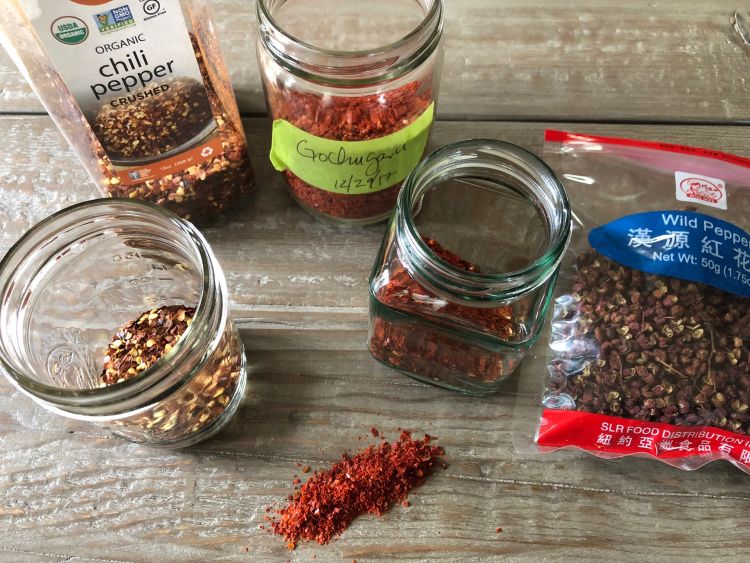
Chile options for chile oil heat
The large container of chile flakes came from Costco! But if you want a more robust red color, add Korean gochugaru chile flakes, available at Korean markets. For mild heat but racy color, chose mild dried California; stem and seed the chiles then grind them to a coarse texture before measuring for making chile oil. Not hot, Sichuan peppercorns add a fun numbing quality to the oil (see more further below).
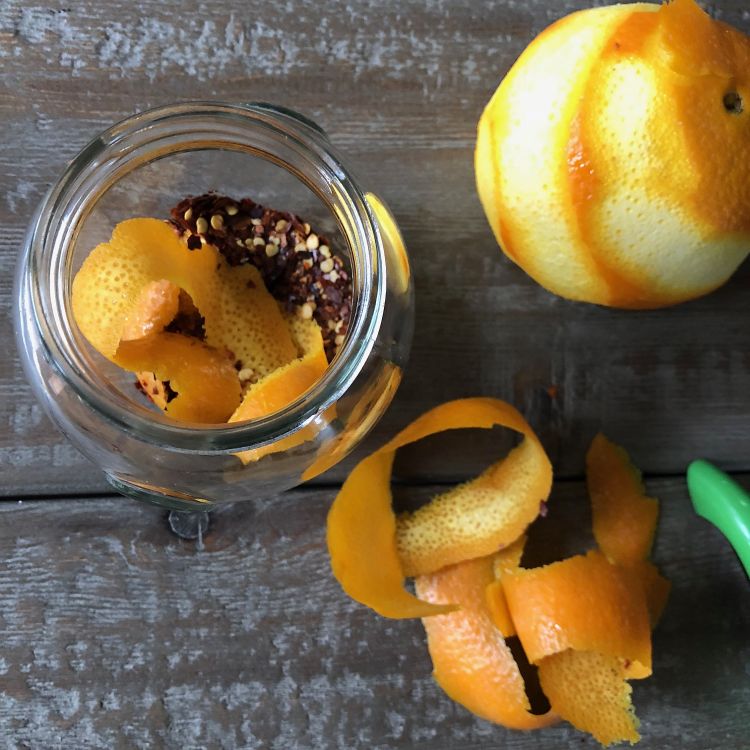
Tinker with chile oil flavor add-ins
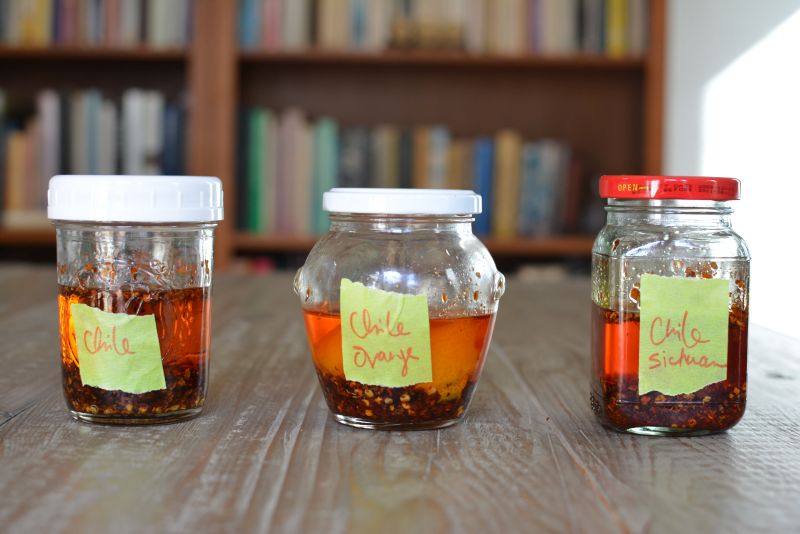
Chile and oil make a perfect and classic combo. Playing around and wanting some bright red nuttiness, I used gochugaru and sesame seeds along with the pepper flakes. For color and tingling numbing sensation, I made a batch by adding gochugaru and ground Sichuan peppercorn. In another experiment, featured the chile flakes with gochugaru and the peel of one navel orange.
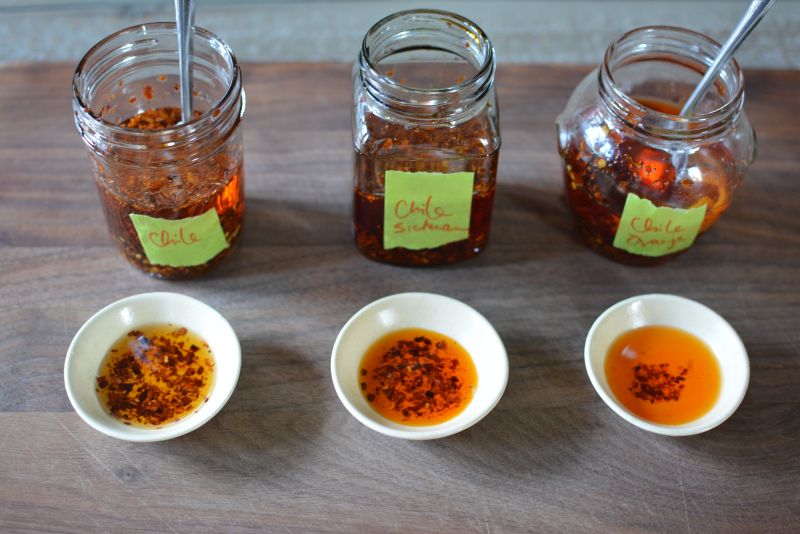
The result were fun chile oils, each with their own personality. Classic, bright and nutty, tingly, and citrusy. You can tell the difference in color, too, as this photo shows.
That's it. Homemade chile oil that you can keep for months in the cupboard or a year or so in the fridge.
How to use chile oil
Start with some dumplings! Here are a few to get you going. If you don't want to make your own dumplings, use the chile oil to spice up frozen dumplings.
- Chanterelle, Shrimp and Chicken Dumplings
- Roasted Kabocha and Vegetable Dumplings
- Sichuan Crescent Dumplings
- Tempeh Pot Stickers
Drizzle chile oil onto salads, such as wood ear salad or noodles like Sichuan cold noodles or Peking meat sauce noodles (zha jiang mian). Chilled silken tofu or a cucumber salad would benefit from the toasty rich heat of this chili oil too!
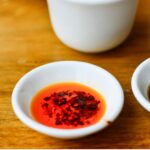
Chile Oil
Ingredients
Flavor options (choose 1)
- Classic: 2 tablespoons dried chile flakes
- Bright, nutty red: 1 ½ tablespoons dried chile flakes + 1 ½ teaspoons Korean coarsely ground chile gochugaru + 1 tablespoon sesame seeds
- Zingy: 1 tablespoon dried chile flakes + 1 ½ teaspoon Korean ground chile (gochugaru) + 1 ½ teaspoon ground Sichuan peppercorn
- Citrusy: 1 ½ tablespoons dried chile flakes + 1 ½ teaspoons Korean ground chile (gochugaru) + peel of 1 navel orange (use a vegetable peeler to remove)
Oil options (choose 1)
- Asian market: ½ cup (120ml) semi-refined peanut oil (see Note)
- Toasted peanut-y hack: ⅓ cup (80ml) unrefined toasted peanut oil + 2 ½ tablespoons neutral oil
- Sesame blend: 2 tablespoons roasted sesame oil + 6 tablespoons (90ml) neutral oil
Instructions
- Ready the vessel: Put the chile flakes and any other seasoning(s) in a dry glass jar (1 cup capacity is what I used)or small metal bowl.
- Make the oil: Put the oil(s) in a small saucepan. Heat over medium heat until smoking hot (the temperature will top 400°F) and remove from the heat. Wait 3 to 4 minutes for the temperature to decrease to 325° to 350°F (drop a chile flake in and it should gently sizzle), and then carefully pour the oil into the glass jar. The chile flakes will sizzle and swirl. Cool completely before covering and storing up to several months; refrigerate if to keep for longer. Regardless, let the oil mature for 24 to 48 hours before using.
Notes
Unrefined roasted peanut oil is available at health food grocers. Whole Foods, Spectrum, La Tourangelle have lots of peanutty flavor.

LuckyDibs says
Thank you so much, Ms. Nguyen, for these oil additive ideas! I will try them all.
I like to use the peanut oil and add just a dab of the sesame oil. My favorite additive is ground up dried shrimp...it can be drizzled on so many things...even my finger LOL!
Thanks again.
Andrea Nguyen says
Nice idea with the dried shrimp. I do something like that for a Viet sot sa-te, which is like a Viet version of X.O. sauce. Many people use so sa-te for spicy pho. There's a recipe in The Pho Cookbook. I put it in all kinds of dishes, not just pho. The dried shrimp sends it over the top. So glad you do something similar. Brilliant minds cook alike!
Kevin says
Andrea,
We're fortunate enough to have a *wonderful* Vietnamese restaurant here in Southern New England. They make their own chile oil which, among other ingredients, has both cinnamon and star anise as components. They never recommend putting in pho, but it's incredibly delicious and complex. Sometimes, the very sweet owner gives me a small jar 😉
Regards,
-Kevin
Andrea Nguyen says
Hi Kevin, I think the restaurant is making a rendition of sot sa-te -- a chile, shallot, and dried shrimp mixture slow cooked in oil. It's used in Southern Viet dishes and can turn pho into "spicy pho." I have a recipe for the addictively good condiment in The Pho Cookbook. Next time you go, ask the owner if that's what it is. I'm curious. So kind of them to give you a small jar!
Will says
I sometimes grind up Arbol or Japones chiles in the food processor and use that as the flakes. I also like to add finely minced garlic and ginger to the mix. Thanks for the idea on the Szechuan peppercorns, I will try that next time.
Andrea Nguyen says
Great idea to mix chile varieties! Thanks for sharing the tip.
Happyluke says
Lets say I don't have an orange at home, can I just use lemon instead? Will the taste have a big difference if I just use the latter? Thank you!
Andrea Nguyen says
It'll be fine. You'll have lemon chile oil!