



I keep canned chicken broth in my pantry, and I also make my own for excellent flavors that tilt toward Asia. I've been making chicken stock for decades and used to use only chicken parts. With the price of chicken going up and parts not easy to obtain, I've changed my recipe to include meaty bone-in parts because they are easier to get, chicken feet for their rich collagen and round mouthfeel, and everyday vegetables. You can omit the vegetables but scraps are what go into my chicken stock. It's affordable and sophisticated but you don't have to spend a lot of money or time.
The reward is luxurious "liquid gold" to enhance your recipes, whether it's noodle soup, a stir-fry, or braise. Or, just warm 1 cup in a pot, add leafy greens and or tofu, for a nourishing soup. I also love to sip on the broth as a nourishing life giving beverage.
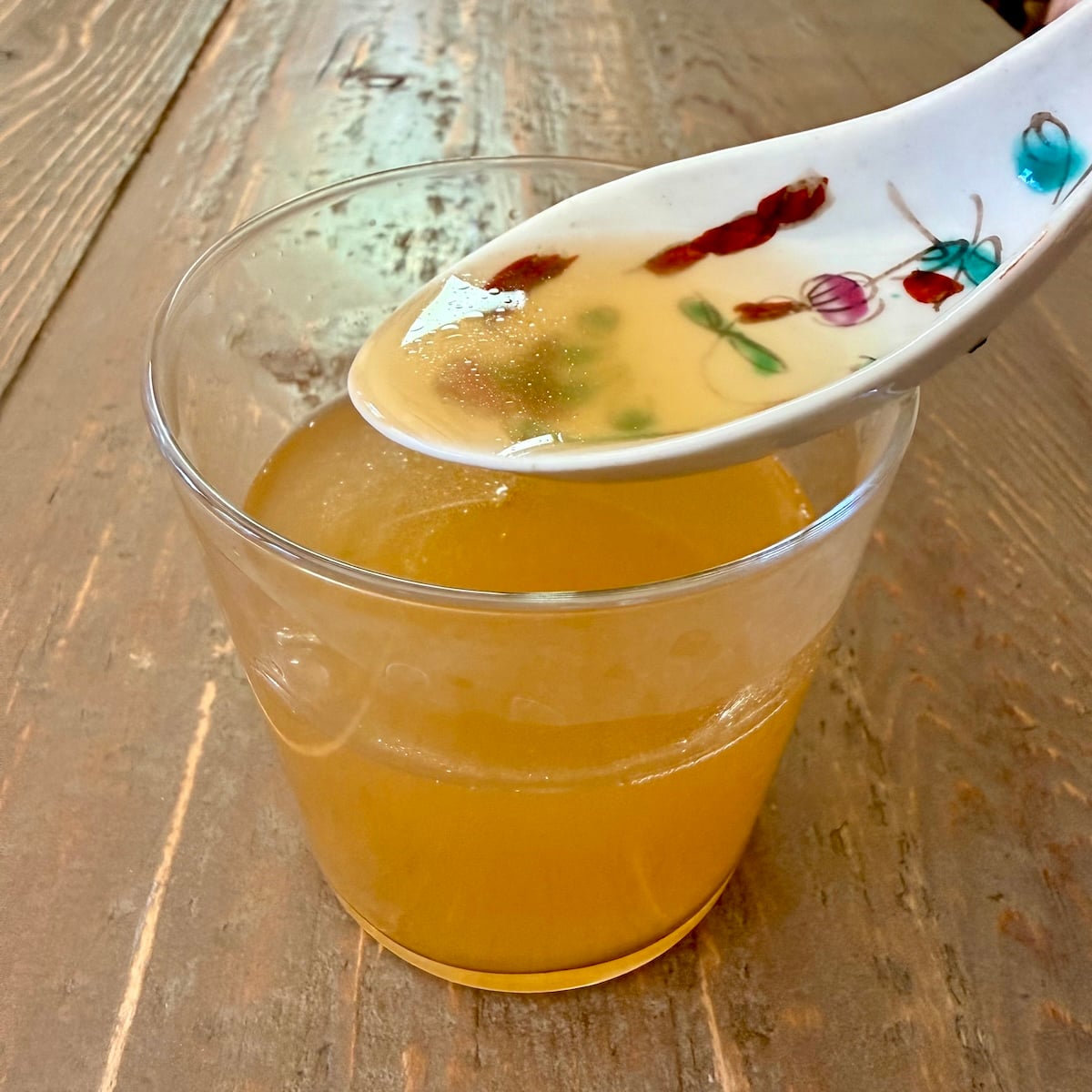
Below you'll find my recipe to make flavorful stock fast in a pressure cooker (it takes about 1 hour of actual cooking and you don't have to monitor the pot much), tips for cooking stock in stockpot on the stove, and an explainer on why I add certain vegetables to my chicken stock formula. From there, you can confidently put your own imprint on your chicken stock.
The Secret to "Liquid Gold" Stock: Chicken Feet & Vegetable Scraps
After years of making stock from scratch, I know this is true: choose chicken parts and veggies wisely for flavorful results.
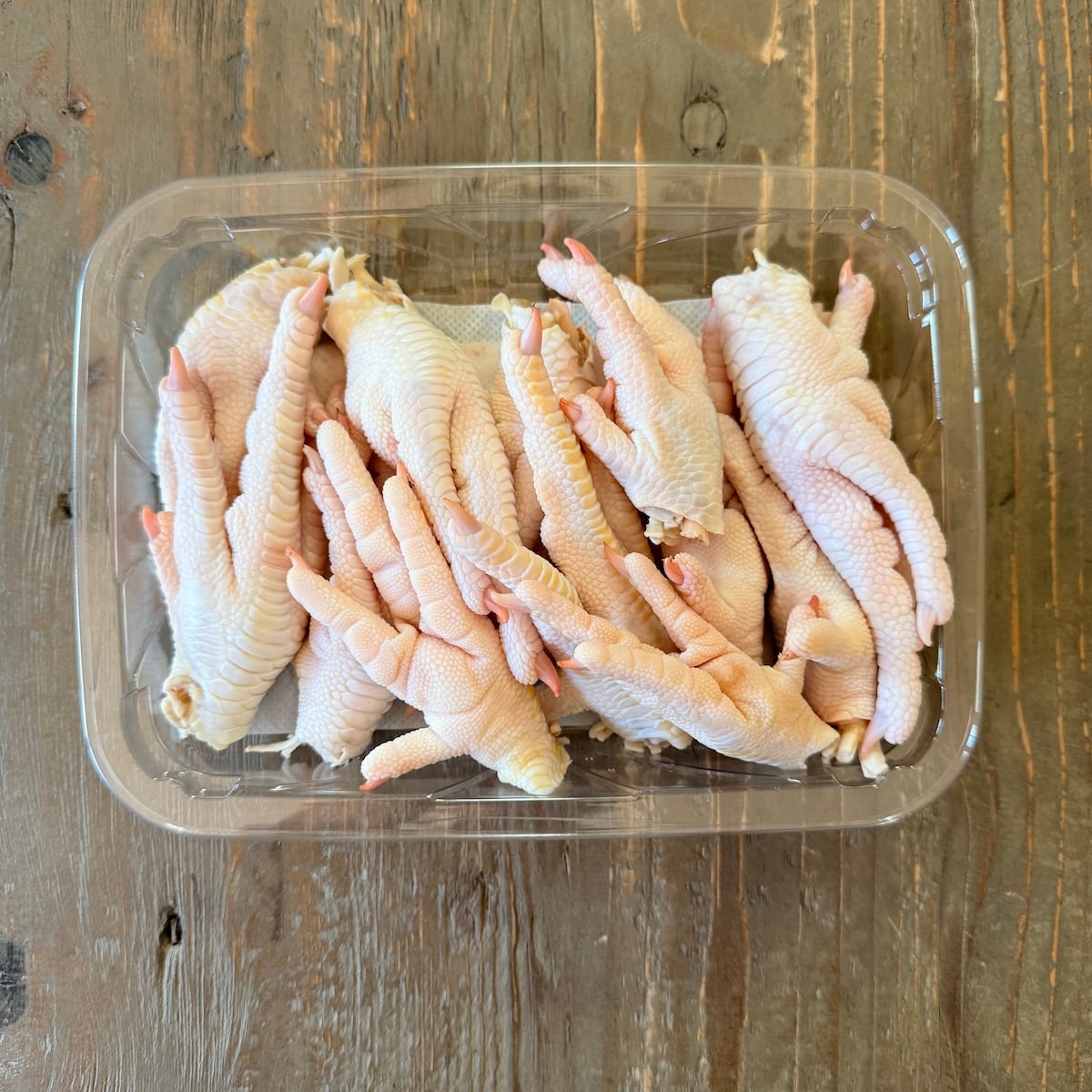
Chicken parts like legs and breasts alone don't yield super-tasty stock because, although they are meaty but they don't have enough skin or fat for richness. Given that, combine chicken parts with chicken feet (often sold as 1-lb | 450g packages at the market). Or, use backs, though they can be harder to find sometimes. may be fatty, they aren't meaty enough. Don't see chicken feet or backs? Ask for them at the meat counter or, save backs when you break down a whole chicken. If backs and feet are totally unavailable, use all meaty parts.
To build flavor, add produce. You don't need much and can use scraps. Over-the-hill veggies that are mildly dehydrated work well because they have concentrated flavor. Here are my favorites, which are listed in the recipe below. You don't have to use all of these vegetables! HOWEVER, ginger and onion are required.
- Ginger and onion lend sweet pungency.
- A sweet apple, such as Fuji, lends a mild sweetness.
- Carrot lends sweetness and golden color. Scrub and don't peel because the peel adds complexity to the stock.
- Corn cobs have sweetness but add too much and the stock will have a corny flavor. After cutting off kernels, freeze the cobs.
- Asparagus ends are full of umami. Trim them when prepping asparagus and freeze them for stock, if you're not using them ASAP.
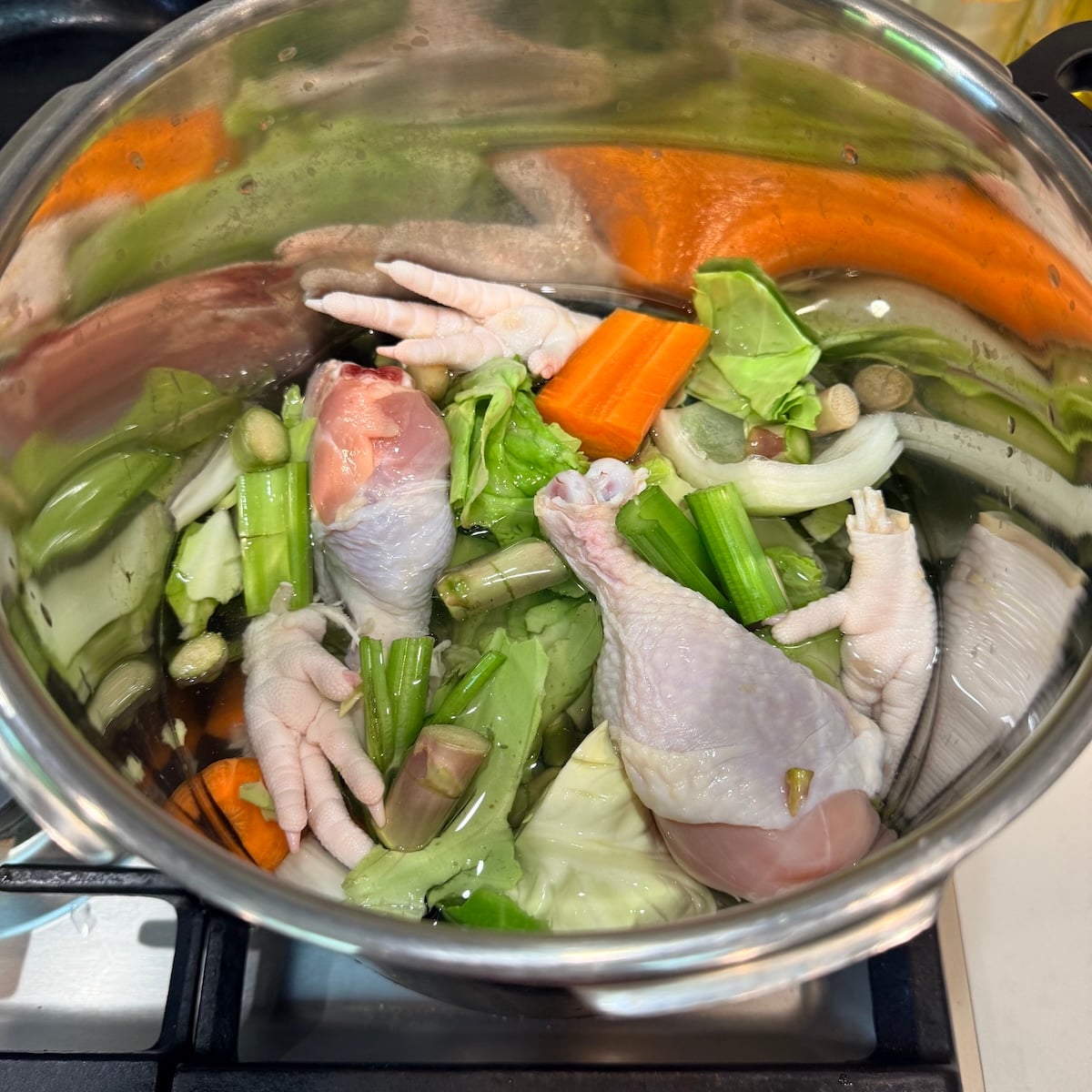
- Mushrooms add earthiness and umami but don't add too much or they may darken the broth or take over flavor. Use dried shiitake mushroom, or fresh cremini or white button mushroom. Save the dried stems from dried shiitake prep for stock.
- Cabbage leaves (napa or green kinds) add verdant sweetness and minerality. Wilted leaves that you'd discard actually have extra potent flavor. Red cabbage will color your stock reddish!
- Celery has a verdant minerality to support the chicken vibe well. Include the leaves of the rib too.
- Dried kombu (kelp) add gelatinous texture and umami flravor.
- Cilantro sprigs or coriander seeds contribute a pungent citrusy notes.
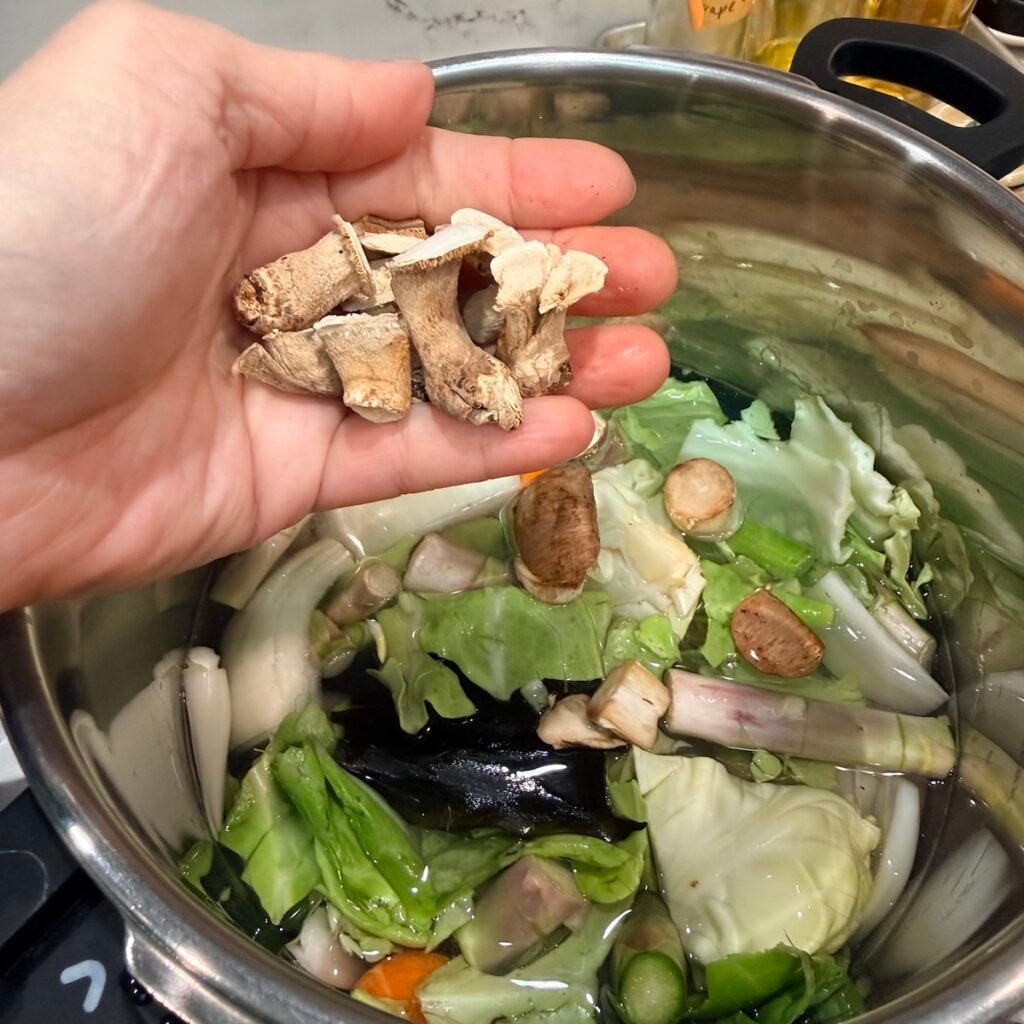
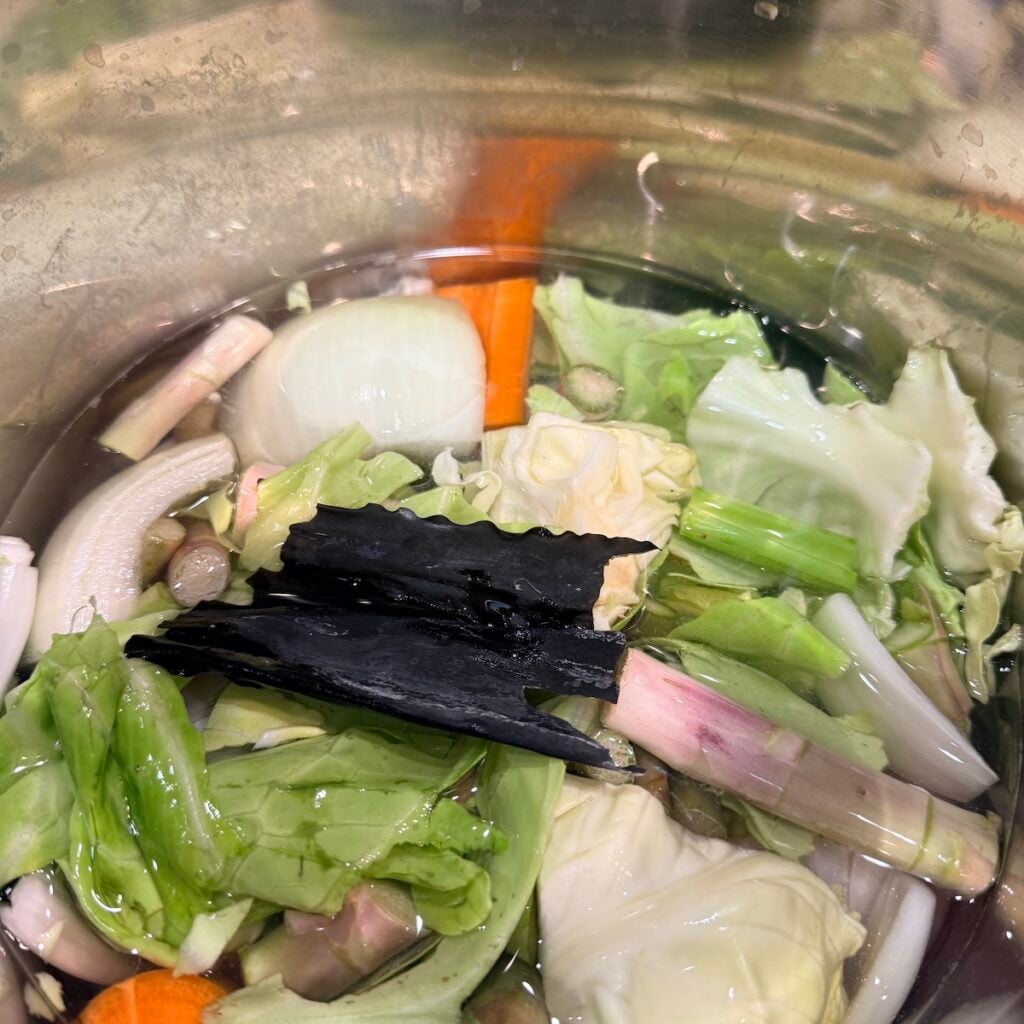
Instant Pot vs pressure cooker vs. stockpot chicken stock
Which to use? Despited being branded a multicooker, the Instant Pot is basically a pressure cooker but you can set it and forget it. The pressure cooker requires a little monitoring but is easier to clean than the Instant pot. Pressure cookers extra flavor fast and efficiently. I like it for stock. (If you need assistance, check my guide to buying a pressure cooker and Instant Pot.) On the other hand, the stockpot produces lovely stock too. It just takes about 30 to 40 percent longer and you need to monitor water level.
Chicken stock tips
Some bonus tips to further guide you to beautiful chicken stock:
- Chicken part swaps: When whole chickens are on sale, buy a couple, cut them up (or ask a butcher to do the deed) and use the backs and some of the meaty parts for stock. You want about 2 ½ (pounds total.
- Parboil parts or not? If your chicken parts are hacked though the bone, parboil them for about 1 minute in water to cover to remove the scummy denatured protein bits. That will yield cleaner tasting and clearer stock. Parboiling does not diminish the flavor.
- To make stock in a stockpot: Put all the ingredients in a 6 to 8-quart stockpot. Add 8 cups water. Bring to a gentle simmer and continue simmering, uncovered, for 2 hours. Add water if the liquid level falls below the solids. Remove from the heat and let cool and rest for 15 minutes before straining. If needed, boil to reduce to about 6 cups, or add water if the stock is too strong.
- Save the harvested fat for stir-frying, refried beans, and other dishes. Freeze it. If it's liquidy, watch out when reheating because it will spit.
Once things get going, gingery and chicken-y aromas will soon fill your kitchen, and you'll have a rich, viscous stock to enhance your food.

Instant Pot Chicken Stock
Equipment
- Instant Pot or pressure cooker
Ingredients
- 1 to 1 ½ pounds | 450g to 1.13kg chicken drumsticks thighs, or breast
- 1 pound chicken feet
- Chubby 1½-inch | 45g section ginger unpeeled, cut into 3 pieces and bruised
- 1 medium yellow onion halved and thickly sliced
- 1 ¼ teaspoons fine sea salt
Optional additions (use some, all, or none)
- ½ small Fuji apple peeled and chopped, or ½ corn cob
- 1 medium carrot scrubbed and sliced
- 1 celery rib coarsely chopped
- 1 small handful asparagus woody ends
- 3 large cremini 2 medium dried shiitake mushrooms, or 6 to 8 dried shiitake mushroom stems
- 2 or 3 napa or green cabbage leaves coarsely chopped
- 6 square inches 7.5cm kombu
- ¼ lightly packed up coarsely chopped cilantro stems or 1 teaspoon coriander seed
Instructions
- Cook the stock: Put all the ingredients in a 6-quart Instant Pot-style multicooker or pressure cooker. Add 6 ½ cups (1.5L) water. Lock the lid in place. Bring to high pressure, adjust the heat to maintain pressure (if needed), and cook for 45 minutes. Unplug the Instant Pot or remove the cooker from the heat, depressurize naturally for 20 to 25 minutes, and then manually release the residual pressure.
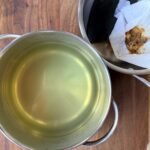
- Strain and use: Unlock the cooker and wait for any bubbling to subside, about 5 minutes. Using a metal ladle, remove most of the fat on top, leaving some for flavor. (Or, remove the fat after straining and chilling the stock, when it's easier.) Using a slotted spoon, remove the large solids. Position a fine mesh strainer over a medium or large saucepan (line the strainer with muslin for super-clear stock and easy straining) and ladle or pour the stock through. Use the stock immediately, or transfer to airtight containers and refrigerate for up to 3 days or freeze for up to 3 months.

Leave a Reply