

When cooks talk about basil, they often mention the varieties used in the Mediterranean but basil is popular in many parts of the world. In fact, basil was domesticated first in India and Southeast Asia circa 3000 BCE. It took thousands of years and trade routes to bring basil to ancient Egypt around 350 BCE, and then to the Mediterranean. Basil's modern association with pesto and the like wouldn't have existed if basil didn't first arrive on the scene in Asia. In this post, I'll share some fun facts about basil and delve into three kinds of Asian basil: Thai basil, holy basil, and lemon basil.
From royal embalming to pesto: the journey of the "King of Herbs"
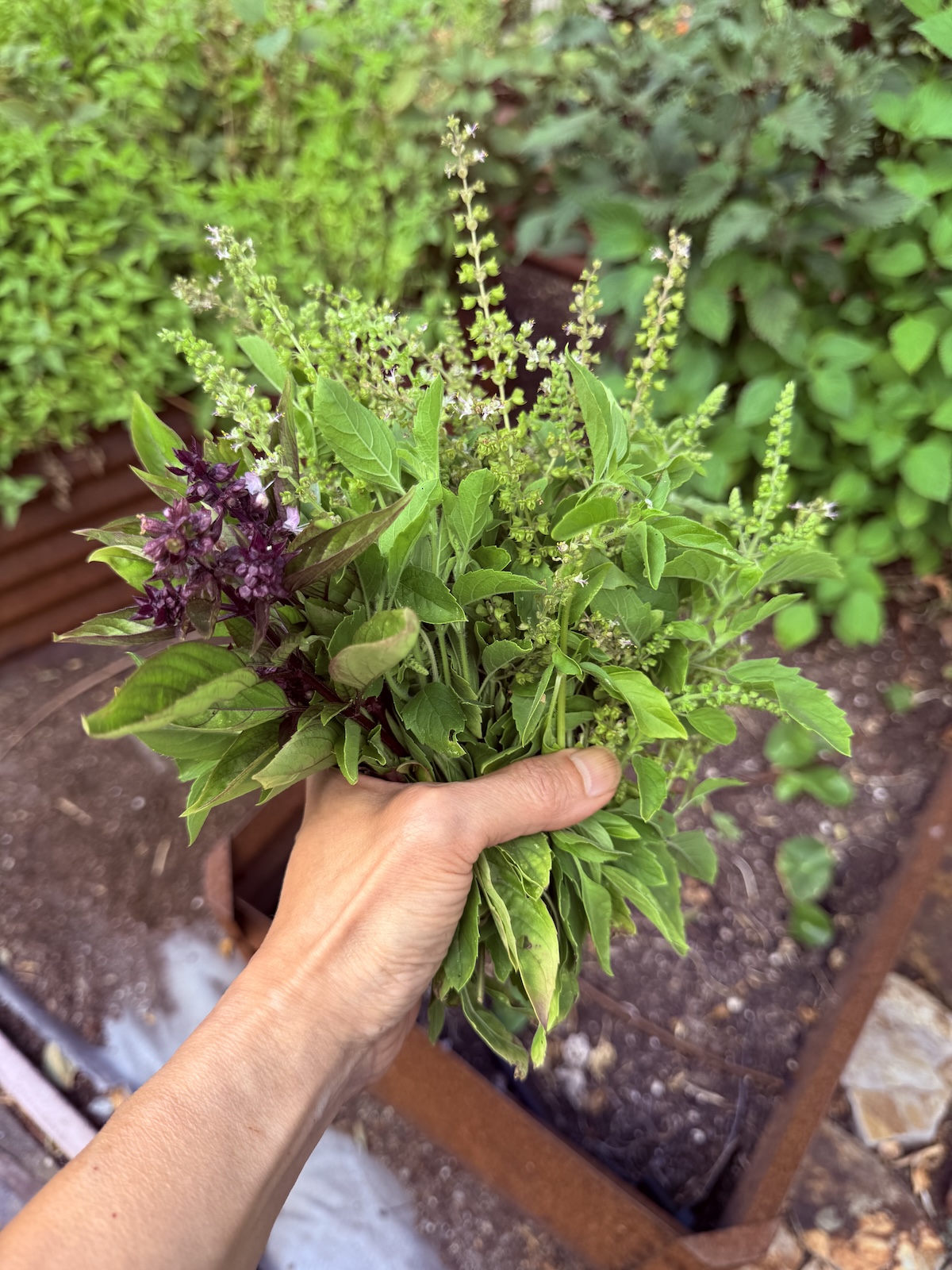
Basil got its start in India and through trade routes going eastward across the Indian Ocean to the South China Sea, variations of Ocimum basilicum (sweet basil) traveled to the areas we now know as Southeast Asia -- Thailand, Vietnam, Laos, and Cambodia, plus Taiwan. Plant selection by local farmers resulted in specialized varieties. There are three main kinds of basils used in Asia today.
Thousands of years later, around 350 BCE, trade brought basil from Asia to ancient Egypt. Basil's preservative quality made it great for embalming bodies in ancient Egypt. Alexander the Great likely brought basil from Egypt to Greece, and from there migrated further into the Mediterranean. Basil's modern name comes from basilikon (Greek for "royal" or "king"). So it's the King of Herbs. During the 16th and 17th centuries, basil went westward in Europe and to the Americas with European colonists in the early 1600s. But, you're here for Asian basil insights to let's get to it!
Thai basil (O. basilicum var. thyrsiflora), the most common Asian basil
What's widely known as Thai basil (Ocimum basilicum var. thyrsiflora) was bred to withstand Southeast Asia's hot rainy, humid weather, have favorable flavors of anise, licorice, and mint, and have a sturdy stem that won't easily wilt! It became a cornerstone for Thai cuisine and southern Vietnamese cooking. Thai speakers know Thai basil as horapa and Viet speakers know it as rau húng quế. Most other people know it as the go-to Asian basil.
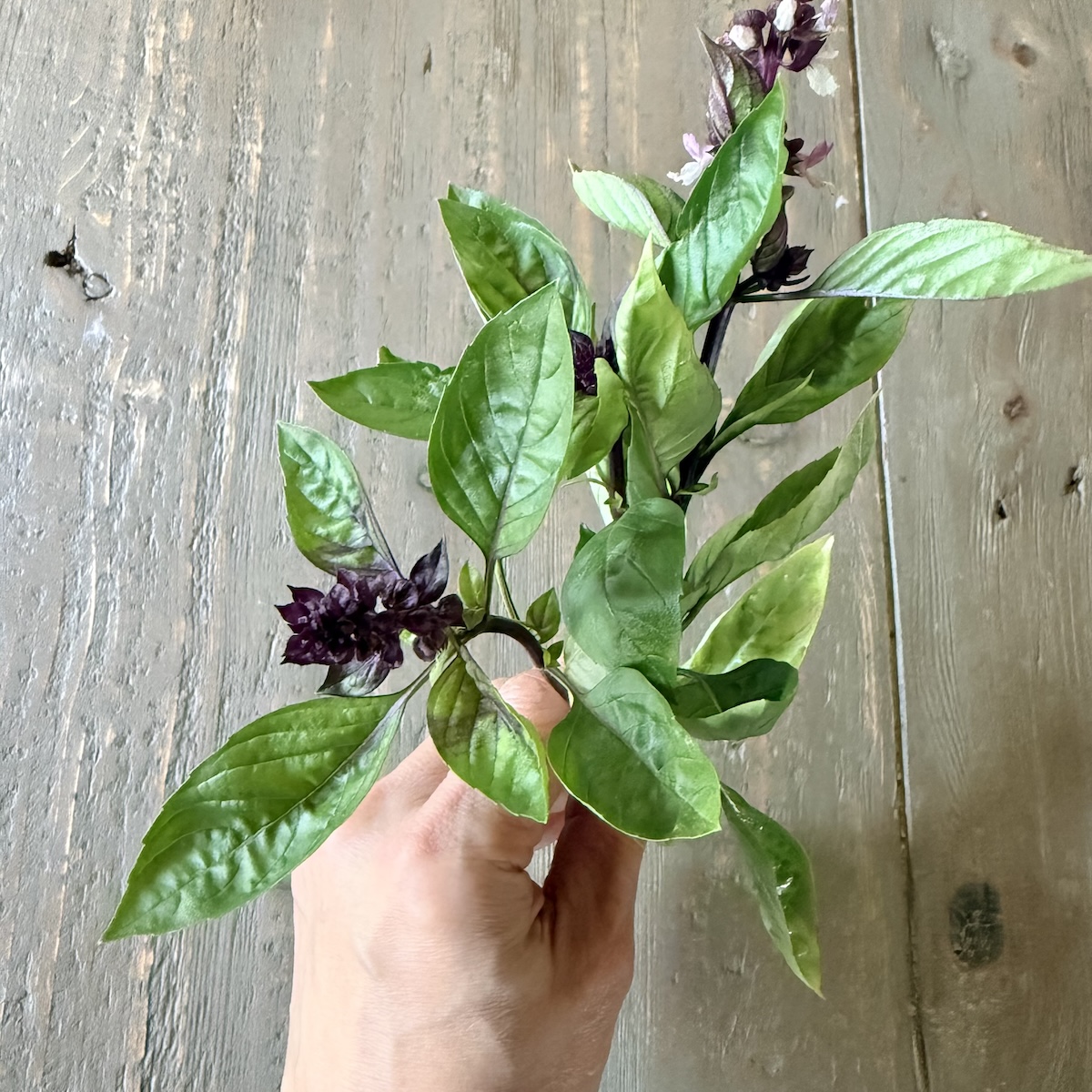
Thai basil literally means cinnamon basil in Vietnamese but know that there is a cinnamon basil variety that is a different cultivar. There are over 40 cultivars of basil so it's easy to be confused! If you cannot find Thai basil, use dark opal basil, which has similar flavor. Thai basil has a stronger flavor than Italian/Mediterranean basil so if you sub one for the other remember to use more (or use less!).
- Thai basil cultivars: What's sold as Thai basil at Asian markets has a thicker, sturdier stems and fleshier leaves than what is sold as starter plants at typical nurseries. The Asian market's Thai basil often has a stronger flavor.
- Thai basil uses: Add to Thai curry for aroma and flavor at the last minute. Serve as a garnish for southern Vietnamese-style beef pho. Stuff into a sandwich!
- Thai basil sourcing: Thai basil is sold year-round at Asian markets. Grow your own for the freshest. Seeds are available here on Etsy. I buy starter plants from Southeast Asian markets like Battambang or Thien Thanh in San Jose.
Holy basil or Tulsi (Ocimum tenuiflorum), a mighty and precious herb
Holy basil has softly serrated leaves with a tiny bit of fuzz. It's one of the oldest varieties of basil, having originated in India. It was revered not as a mere plant, but as the earthly manifestation of the goddess Lakshmi. Its holiness was not just spiritual. Early Sanskrit medical texts identified tulsi as a major adaptogen which can help the body deal with stressful situations. Nicknamed "The Mother Medicine of Nature", was valued for treating respiratory conditions, fevers, and snakebites.
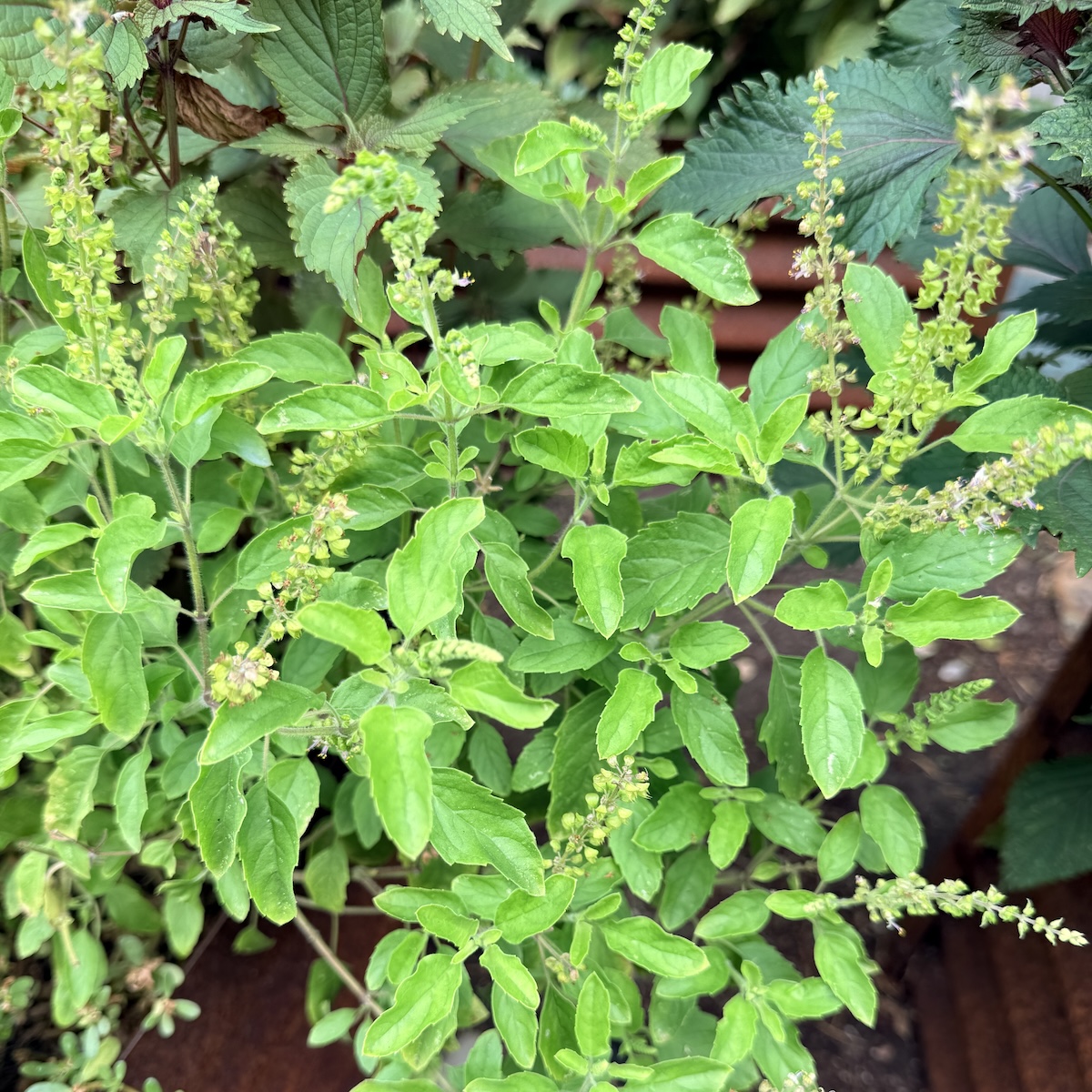
In Thai, holy basil is known as กะเพรา (gaprao) and in South Asia, it's called tulsi. Thai holy basil comes as green or reddish purple cultivars. Compared to familiar Thai basil, holy basil has a spicier, more peppery flavor than Thai basil. Some describe holy basil as have a punch clove-like scent. It's unique and distinct.
- Holy basil and tulsi cultivars: Indian tulsi has slightly thicker leaves than Thai gaprao. You can use tulsi in the Thai stir-fry and vice versa for Indian tea.
- Holy basil and tulsi uses: Steep in hot water for a calming, soothing tea that's great for sleep. Pluck off the leaves for the Thai classic - Pad Gaprao stir-fry. You'll need about 1.5 oz (45g) of holy basil leaves plus lots of garlic and chilies for one pound (450g) of protein (chicken, pork, beef, or tofu). Holy basil seeds are steeped for a thickish pudding like dessert (think chia seed like). Vietnamese chè hột é (chè hat é) features holy basil seeds in a dessert sweet soup with cooling grass jelly and other ingredients.
- Holy basil and tulsi sourcing: Buy during warm weather season from Cambodian markets or Southeast Asian farmers who will bring them to farmer's markets. Grow tulsi and gaprao from seeds or starter plants (I buy mine from Battambang, a Cambodian market in San Jose).
Lemon basil (Ocimum × citriodorum), delicate looking yet flavor packed
Lemon basil has a lovely citrusy scent that may evoke lemongrass. The leaves are a lighter green than Thai basil and smaller, with delicate features. It's classified as Ocimum × africanum but most people know it as lemon basil, hoary basil, Thai lemon basil, or Lao basil.
Interestingly, lemon basil is a hybrid basil (Ocinum basilicum) and American basil (Ocinum americanum). The primarily grows in northeastern Africa and Southeast Asia ior its lemony perfume and flavor. Many cuisines employ lemon basil, from Middle Eastern, Indonesian, and Filipino to Lao, Malaysian, Indian, and Thai.
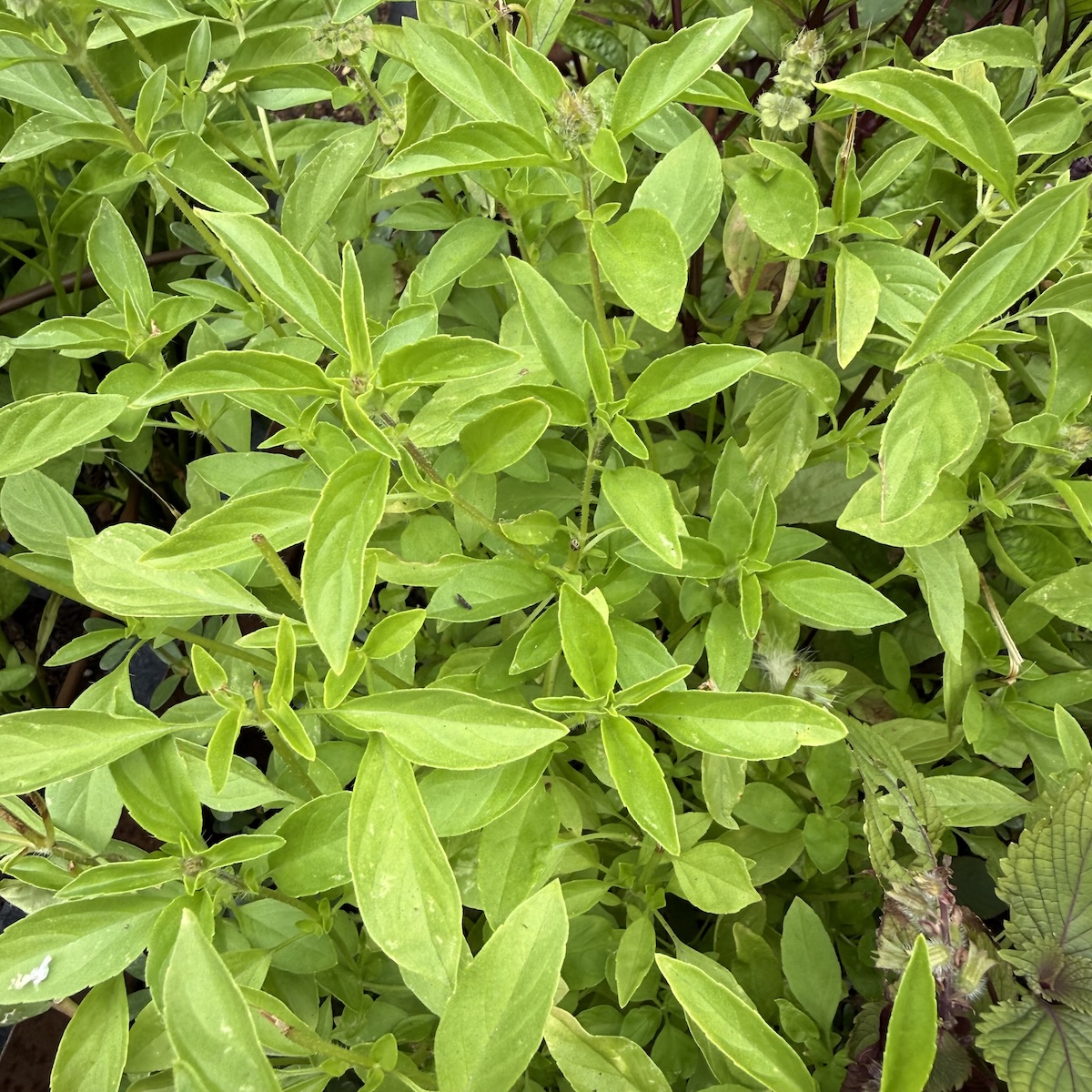
- Lemon basil cultivars: Mrs. Burn's lemon basil is easy to grow but is not as aromatic as the cultivar grown by Southeast Asian farmers. Use extra if you've got Mrs. Burn's.
- Lemon basil uses: Enjoy raw or stir leaves into a curry at the last moment. Lemon basil is delicate when the sprig is long. Use it soon if it's leggy.
- Lemon basil sourcing: During summer, Cambodian markets seem to have a good supply of lemon basil, sold in bags or as starter plants. Hmong and Lao farmers grow it during the warmer months too. Buy "Thai lemon basil" seeds if you want the Southeast Asian variety. Persian (Iranian) markets often sell lemon basil too.
Asian basil uses and substitution in recipes
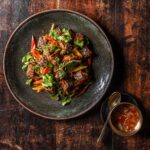
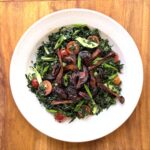
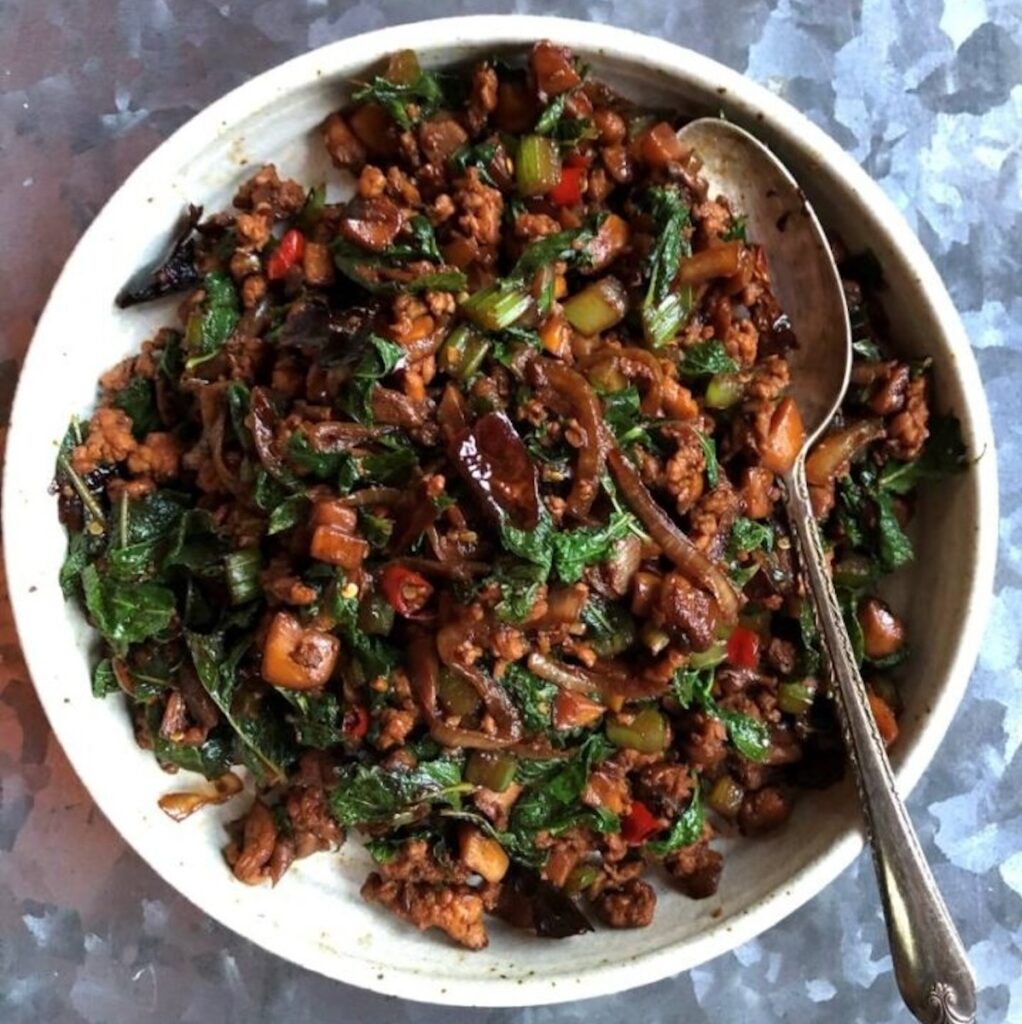
These three Asian basils have certain "proper" uses but the certainly can be used as substitutes. A traditional Thai pad gaprao should feature holy basil. But, I use them for this chicken and mushroom rendition of Thai holy basil stir-fry. If you use other basils, change the name to Pad Horapa (Thai Basil Stir-Fry), for instance!
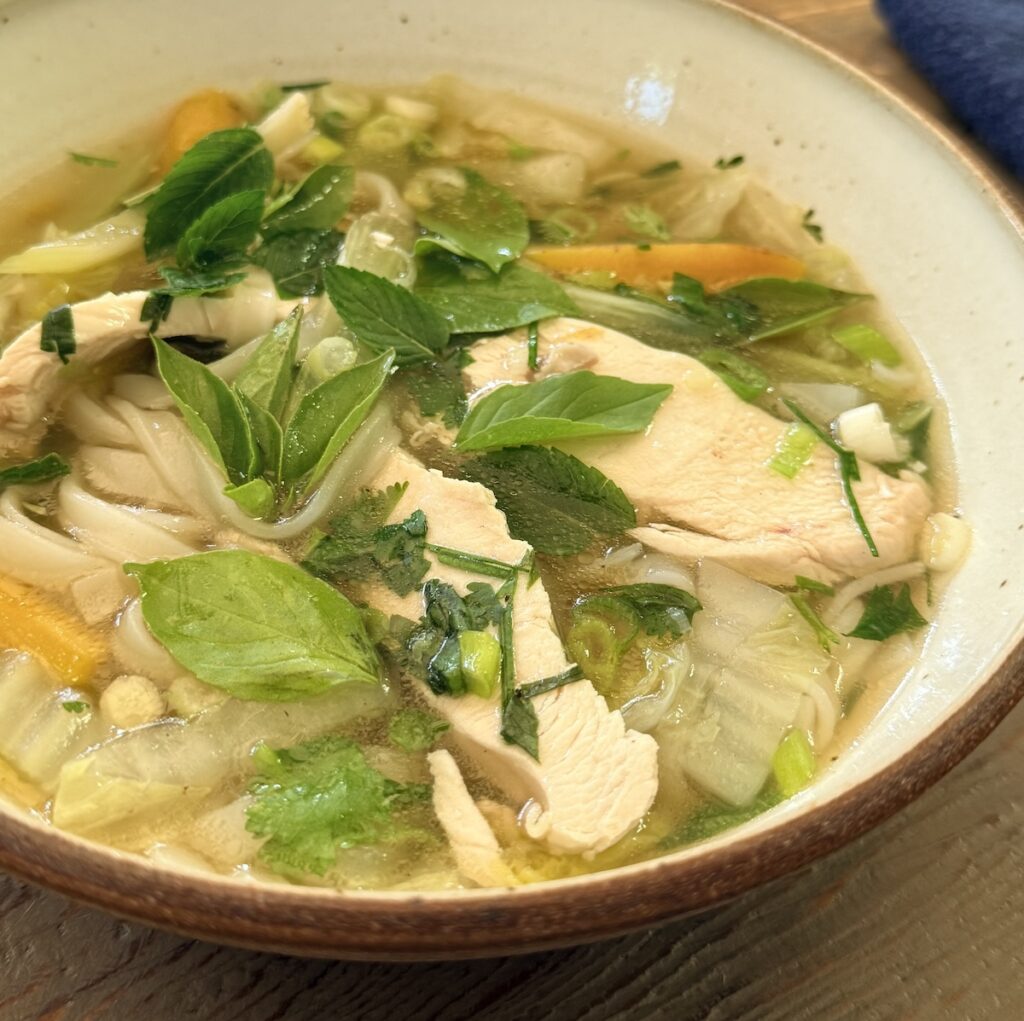
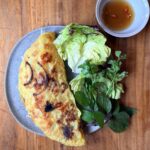
Hearty Thai basil is fabulous with beef pho but for chicken pho, I prefer lemon basil's lighter flavor. Viet people also eat Thai basil raw along with certain foods like hot vit long (half-hatched duck eggs, aka balut).
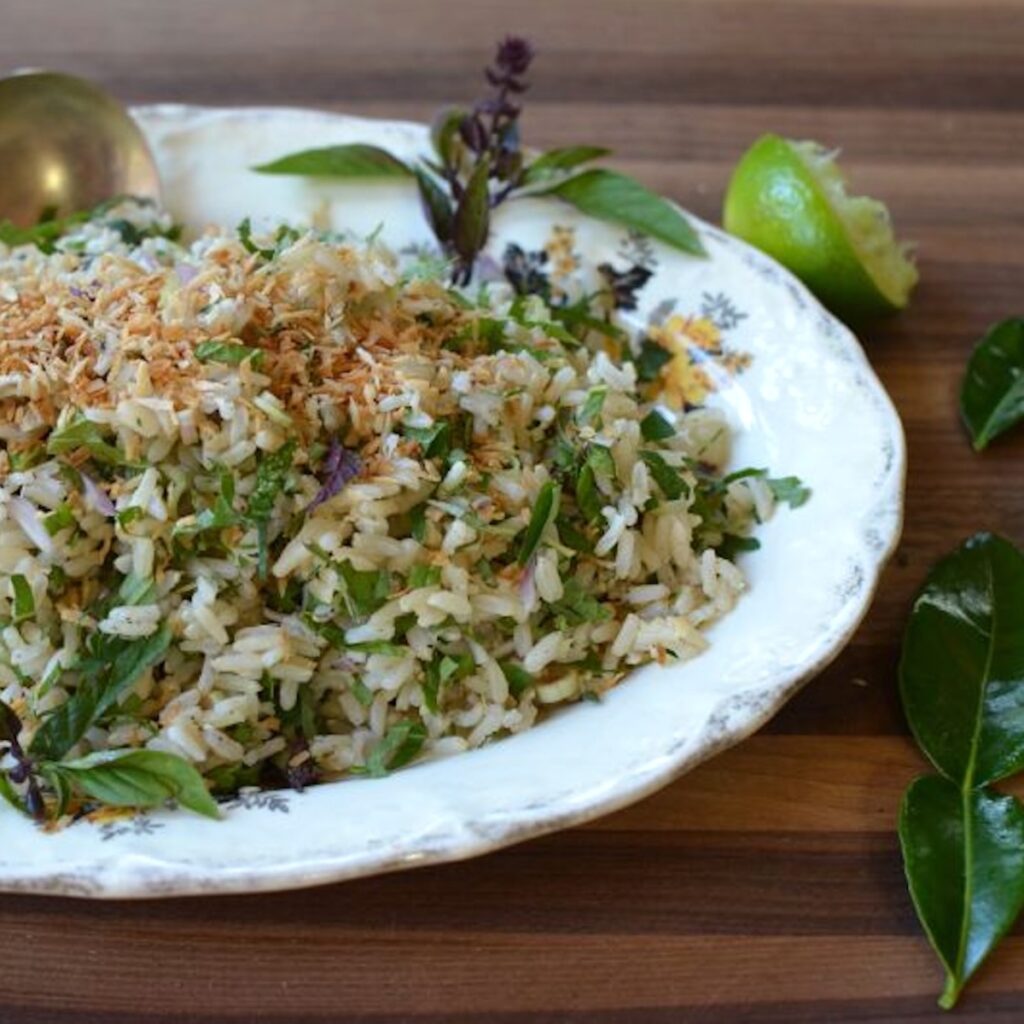
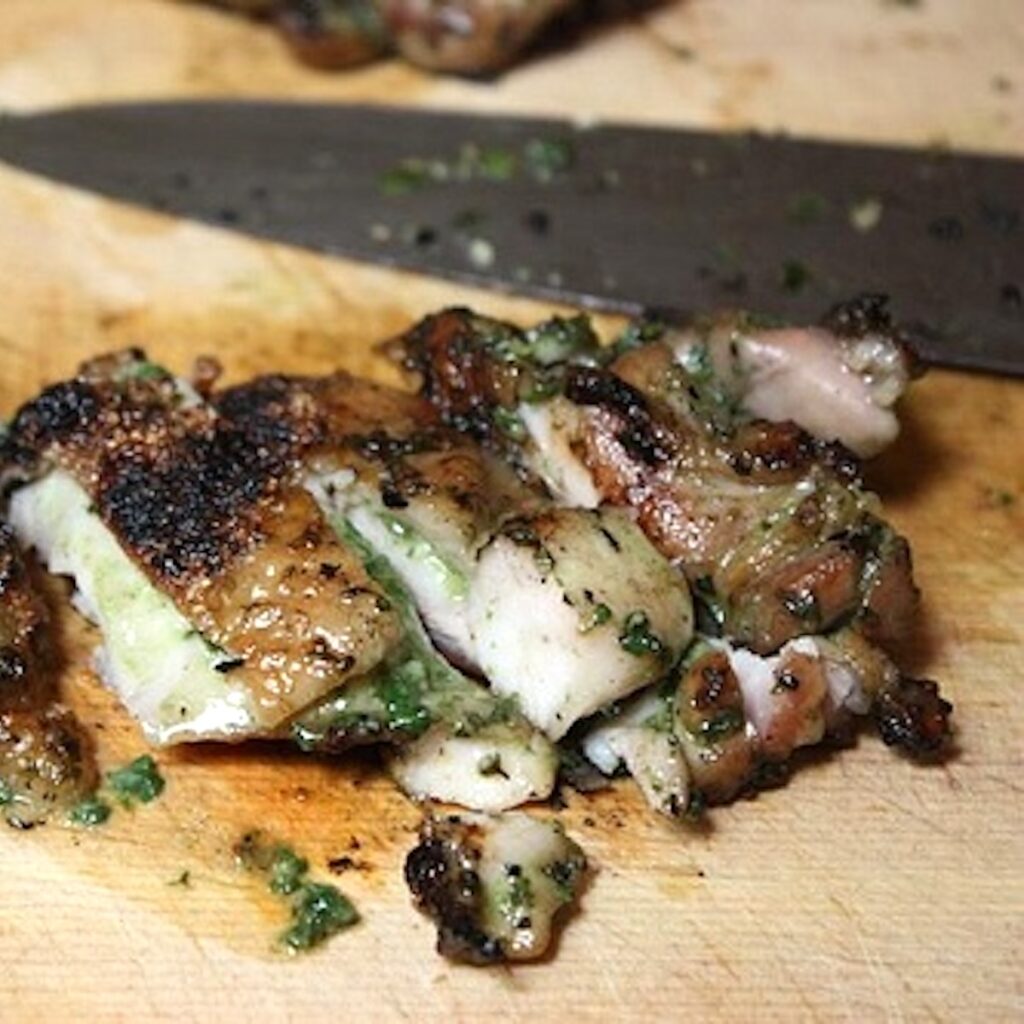
For nasi ulam, a Malasian rice salad, you can use whatever you like! When making my grilled lemon basil chicken, you can swap out Thai basil for wonderful results too. There's so much more to basil than Genovese and pesto. Asian basils unlock more flavor opportunities for your culinary repertoire.

Leave a Reply