


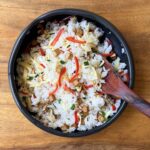


It seems like a cook's dream come true -- a wok that comes pre-seasoned (or nearly seasoned) and heats up super hot to deliver the wok hei (wok-kissed flavor) plus the sounds of good wok cooking. I didn't think it was possible. For the past two years, I've been test driving three carbon steel woks to make fried rice, stir-fries, noodles, fry eggs, and so much more. A wok can do the work of many other pans. It's a workhorse. You can make a meal in a wok, if you'd like.
After all that hands-on, real life testing, I can safely say that I'd be happy to cook with any of them. I'd be thrilled if anyone gifted me one of them, though I don't need one because I already own them all. But you don't own one of these yet. Each of these carbon-steel woks have their personalities but they share three characteristics that make them excellent for wok cooking:
- You don't have to stress much to season the wok
- Heats up extremely hot and stays that way so home cooks can satisfying wok away
- Is naturally nonstick so there is no teflon coating to be concerned about as you're cooking on high heat or your biggest burners
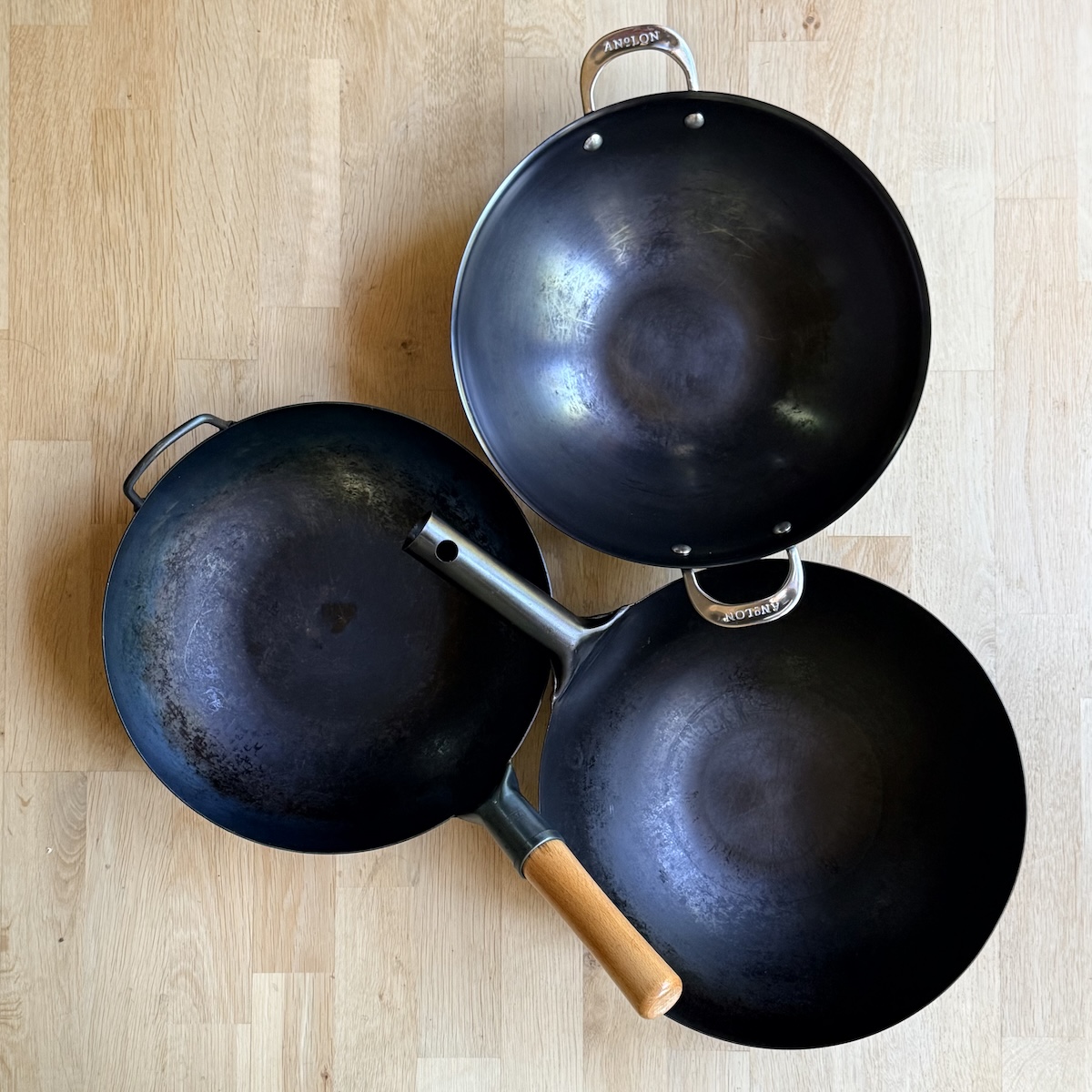
Wok quick comparison chart
But one may work better for you than the others. Use this chart for an at-a-glance look at how the three pre-seasoned carbon steel woks compare. Beyond that are my notes to summarize their pros and cons.
| Make/model | Material | Size | Weight | Heat source | Price range |
| Yosukata, flat bottom | blue carbon steel | 13.5 in (34cm) | 4.6 lb (2.2kg) | Electric coil, gas, smooth surface induction | $85 to 95 |
| Anolon EverLast, flat bottom | nitrided carbon steel | 14 in (35.5cm) | 5 lb (2.3kg) | Electric coil, gas, smooth surface induction | $104 to 149 |
| Japan iron wok (Beijing wok, pow wok), round bottom | 1.2mm carbon steel | 14 in (35.5cm) | 2.6 lb (1.2kg) | Gas | $35 to 65 |
Yosukata blue carbon steel wok review
Weighing at 4.6 pounds (2.3kg) when empty, the Yosukata wok is heavy. The name sounds Japanese but it is made in China, where woks were invented thousands of years ago. The Yosukata has virtues as well as limits so it may be for you (or not).
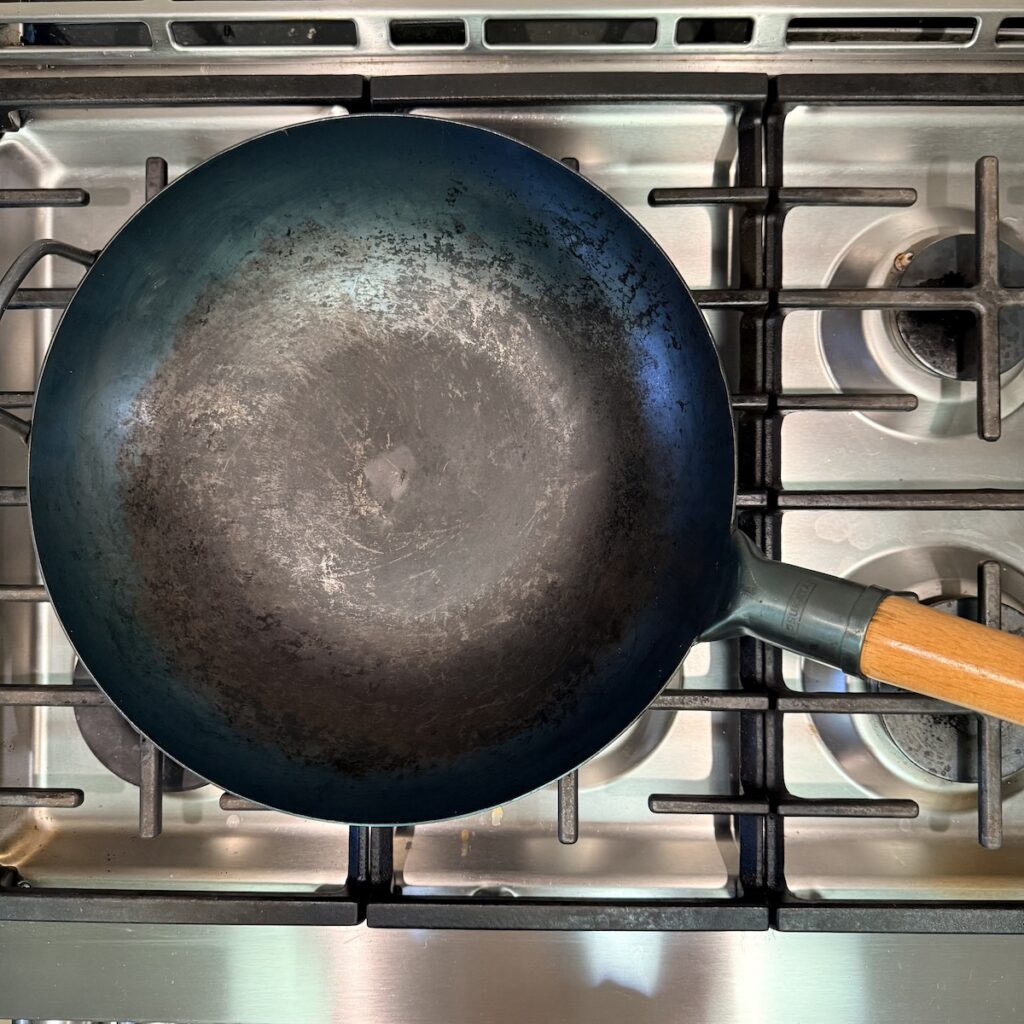
- Pros: The Yosukata wok arrives pre-seasoned so there is little time wasted; Yosukata advises a brief seasoning before using the wok. It heats up super hot and with a flat bottom that is wider than most woks, the heat radiates broadly (you can use it like a medium-skillet for pan-frying steaks, tofu, etc.). This wok retails heat exceptionally well. In fact, if you are not carefully, food may scorch. When cooking food in this wok, you will hear the thrilling swift sizzle of good wok cooking. On my wok burner, I cook at a lower heat than normal when using this wok. Easy to wash and re-seasoning, when needed.
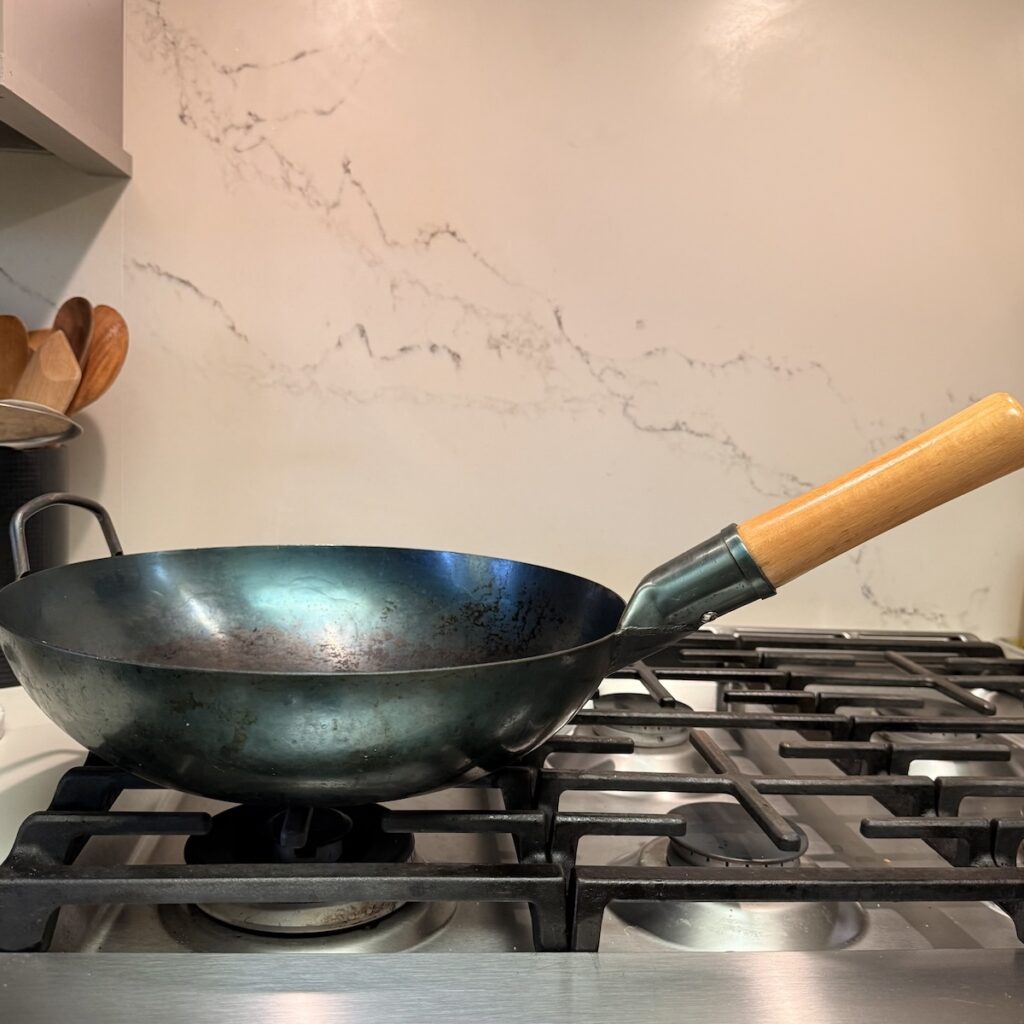
- Cons: When containing food, the wok is heavy so picking it up to toss food can be difficult. The handle is at a steep angle (see photo at right) so if you are relatively short, it may be hard to comfortably pick up. (I'm 5'5" and it can be a beast to pick up.) The metal by the wood handle gets very hot so do not mistakenly touch it when the wok is hot. Dishing up food can be hard because tilting the heavy to scoot food out can be awkward.
- Cooking and cleaning tips: When cooking on a 20K BTU burner or more, use slightly lower heat than what a recipe calls for. The pan stays hot for a long time. If it is too heavy to lift to pour out food, use this hack: Turn off the heat prematurely and scoop food out before picking up the wok. If the wok look dry or crusty, wash and scrub it well, then do a quick seasoning with some aromatics or potato peels and salt, as detailed here.
- Who it's best for: A cook who wants/needs a broad flat bottom surface on a wok. Cooks using induction stoves will get good wok performance from the Yosukata's design. The wok is best for cooks of average or taller height, especially if the person doesn't mind heavy-ish lifting once in a while.
- Blue carbon steel vs. black carbon steel: Blue carbon steel costs more but for a good reason -- it has already been treated to be highly resistant to rust and corrosion.
- Purchase from: Yosukata, Amazon
Anolon EverLast nitrided carbon steel wok review
Shiny and looking like it's a coated nonstick pan, Anolon's EverLast carbon steel wok is one of the prettiest woks I have ever owned. That's due to its nitrided carbon steel finish, which is smoother than normal carbon steel due to a special heat treatment which makes it seasoned and ready for cooking duties. (More on why and how nitrided carbon steel pans are built to be nonstick forever here.) Here's a run down of the Anolon EverLast wok's pluses and minuses.
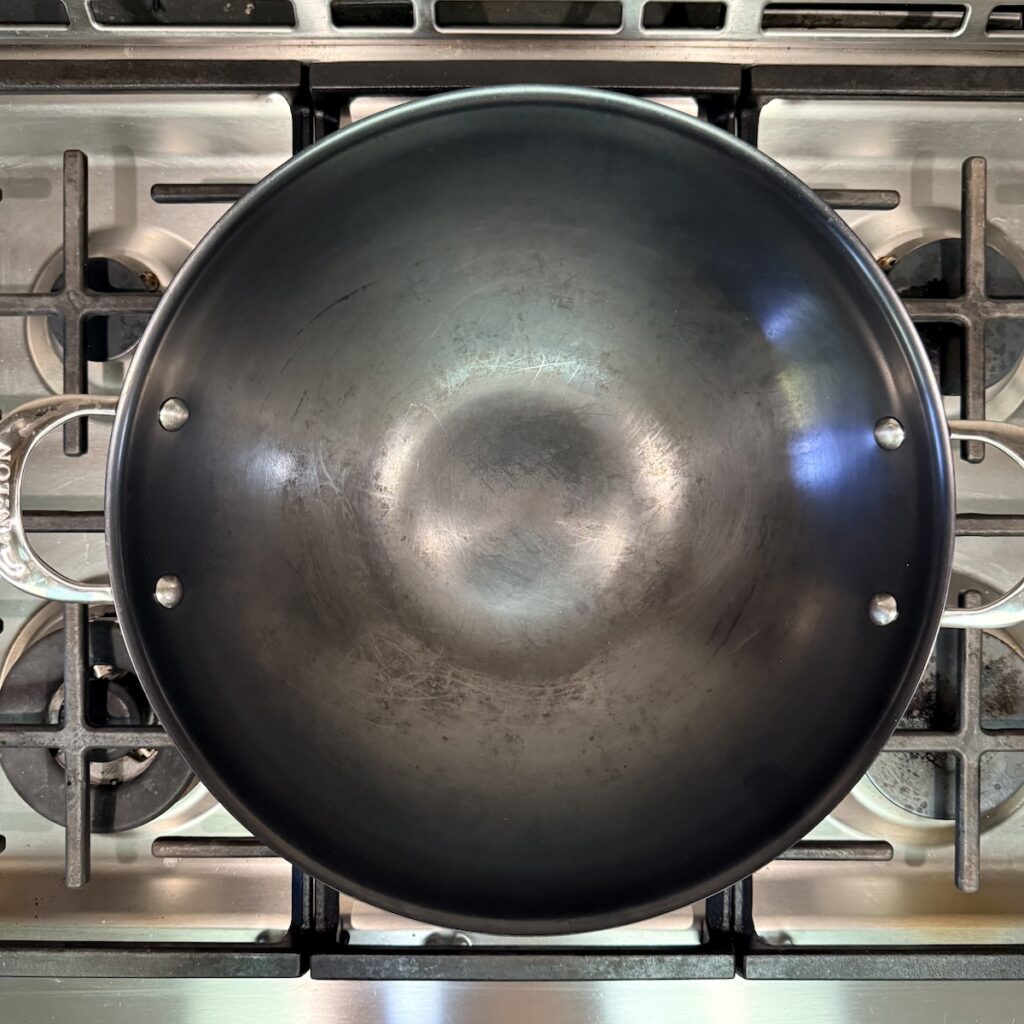
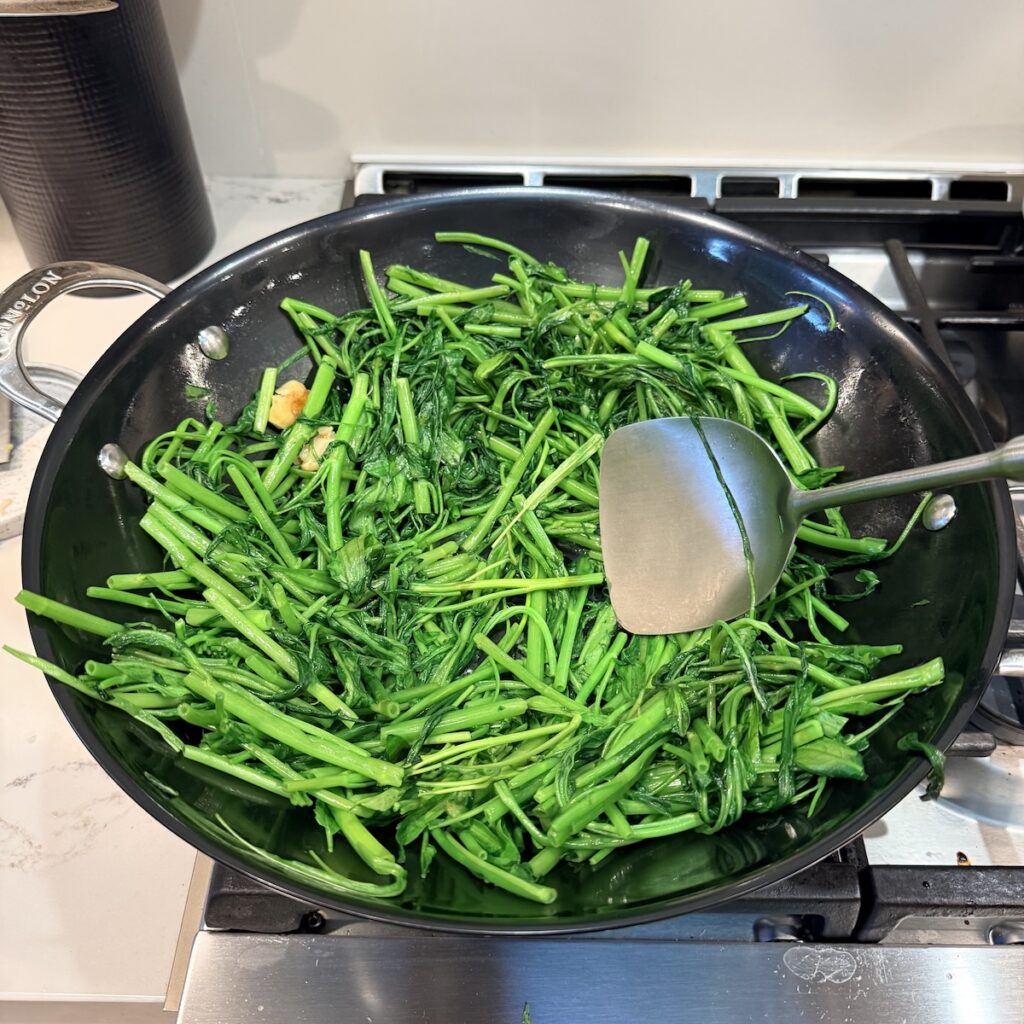
- Pros: The Anolon EverLast wok heats slower than most over medium heat but once heated the wok is hot all over -- up to the rim practically. Heat retention is excellent. Combine that with the depth of the wok, it allows you to easily stir-fry a bunch of water spinach with ease. Most times, the wok wall do not get as hot as it does with this Analon, which allows you to use the walls to sear and cook food efficiently. When you cook in the Everlast wok, food glides around smoothly with the swoosh sizzle sound of good wok cooking.
- Cons: This wok costs more than the others I tested. There is no extended handle to grab so tossing food in the wok is not possible. The two ear-like handles get warm but cool quickly, though I would use heat pads to grab them if the wok is hot and you want to pour out the food. Otherwise, use a wok spatula or big metal spoon to scoop and transfer food to a serving vessel. The Anolon wok's flat bottom is not as broad as the Yosukata so on an induction stove you, will not have as much of a flat surface to cook off of.
- Cooking and cleaning tips: Preheat the pan over medium heat for several minutes to ensure it's hot all over. Flick water in and it should disappear within seconds! When done, use coarse salt and a sponge to easily scrub off stuck bit. If you like, re-season with a teeny tiny bit of oil.
- Who it's best for: Anyone who wants a handsome, reliable wok to have forever.
- Purchase from: Analon, Amazon
Japan iron wok (Beijing/Peking wok, pow wok) review
What's called a "Japan iron wok" is made of carbon steel, round bottomed and very lightweight. At core, it is a Northern Chinese-style wok that's also known as a Beijing (or Peking) wok, or a pow wok. Names aside, the wok is often marketed to professional cooks and commercial kitchens. Its round bottom design and light weigh signals that it's not for home cooks. It is not labeled as "pre-seasoned" but required little effort to prepare it for cooking. It costs little money. This wok defies many home wokking assumptions. However, the affordable carbon steel pow wok is one of my all-time favorite woks. Here's why:
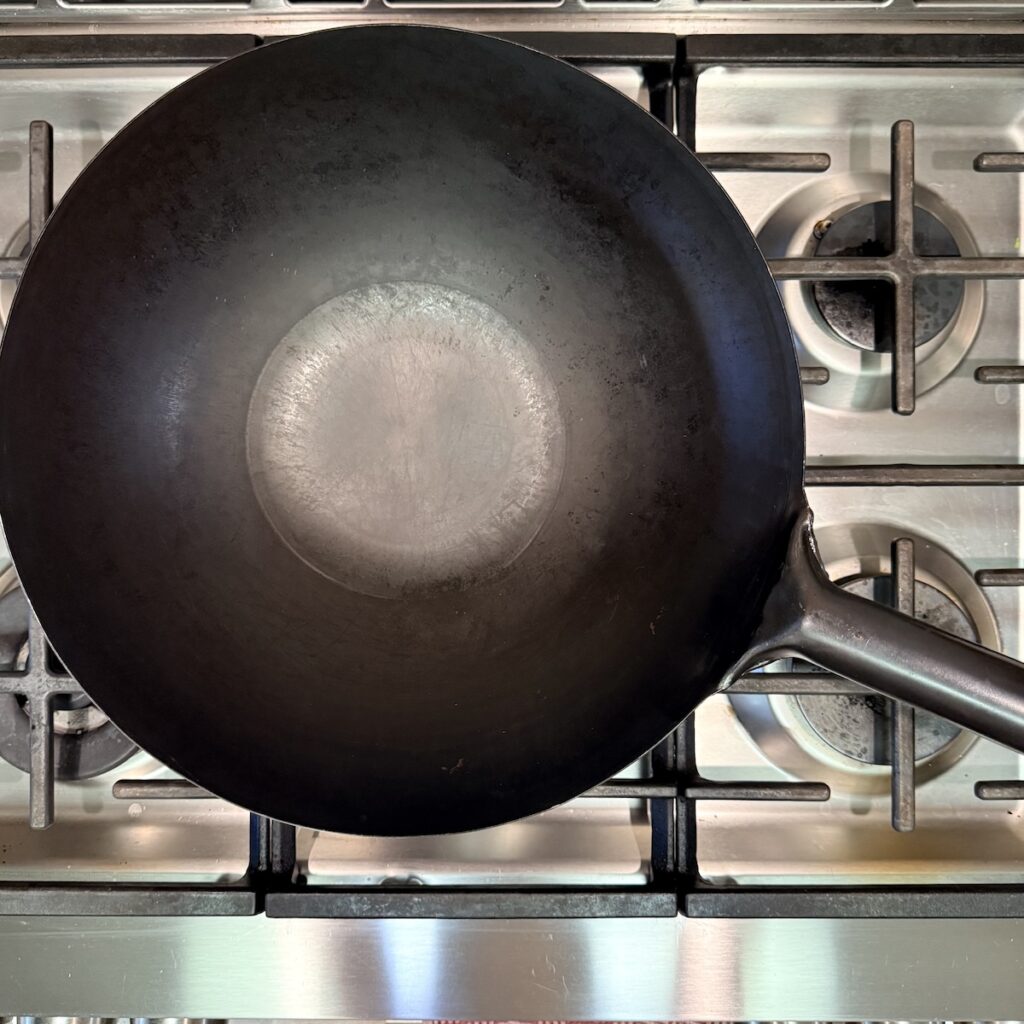
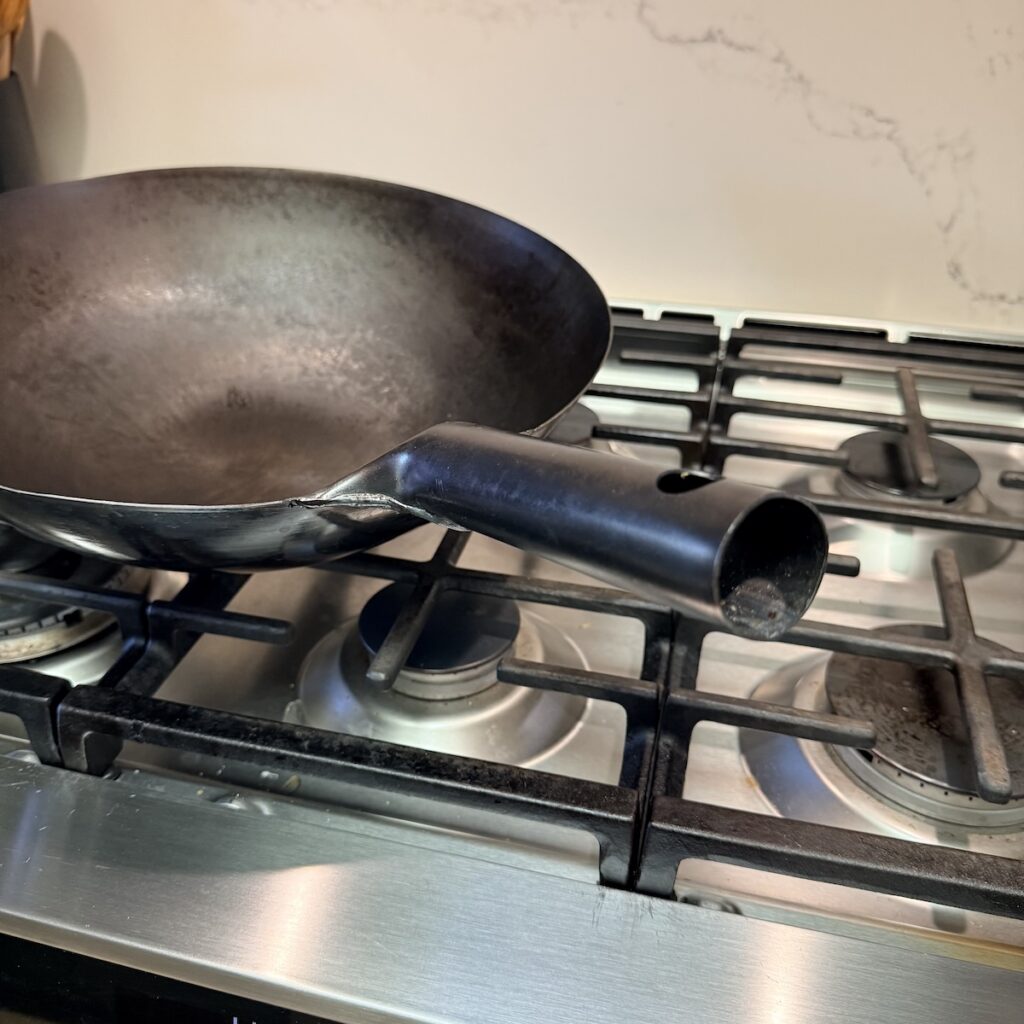
- Pros: The pow wok is designed to heat up fast because of its light carbon steel construction, which means you can also control the cooking process with ease too. The walls heat up well to but not as fast as the Anolon EverLast or Yosukata. The round bottom does not mean you must use it with a wok ring. The wok initially does not sit evenly but one food goes into it, it steadies itself . Making quick stir-fries in this wok is wonderful. You can easily pick up a pow wok to toss and flip food. You feel like a professional cook! Deep-frying in a pow wok bottom wok is doable so long as you are careful but you'd have to do that with any pan.
- Cons: The hollow handle vents heat but it will eventually feel hot if you have a big burner. Use a mitt to grab it, as needed. The round bottom means you cannot pan-fry so well in it. Its thin metal construction may mean it may not last as long as heavier-duty woks made of thicker carbon steel.
- Cooking and cleaning tips: The pow wok I purchased only required a quick wash with Dawn Power Wash (or as Uncle Google for guidance to use something else) and initial stir-frying some green onions to season; I road tested it by frying an egg and that was no problem! The pow wok I own is very easy to scrub clean and smooth. Anything that stuck comes off easily with water, a smidgen of dish soap, and scrubby or dish scrubber.
- Who it's best for: Cooks with gas ranges and cooking adventures.
- Purchase from: I bought my pow wok for about $45 in 2024 from MV Housewares & Restaurant Supplies in San Jose, CA, located in the Grand Century Mall. Shop "Japan iron wok" online at Japanese cookware shops like MTC Kitchen and Japanese Taste. Amazon sells Japan-made woks by Kanda and Kote2. The Wok Shop sells Beijing/Peking woks. They all look like what I bought. (Large pow woks costing $20 may not be great quality.)
How I tested these woks
I cooked with these woks and washed and seasoned them. Beyond identifying their strengths, I also learned their quirks. I used them to help others cook well too. Watch the Japan iron wok in action in this video, which I made for a great kung pao recipe at my newsletter:
Final wok verdict
Which wok is best for you? It depends on your stove (gas, electric coil, or induction) and needs (do you want a light weight or heavy duty wok? do you want to pan-fry in it more than stir-fry quickies? A summary to help you make the best choice:
- Heat source: Yosukata is best for induction. Yokusata and Anolon EverLast are great for electric coil and gas. All three are fabulous with gas.
- Weight: Pow wok is the lightest wok. The Anolon is heaviest but conduct superwell. Yokusata is heavy and sometimes hard to pick up by the handle.
- Cooking needs: If you just want to do quick stir-fries only, choose the pow wok (which also does an amazing job of frying an egg to a crisp roundness because of its shape and heat conduction!). To use a wok for stir-frying, panfrying steaks or tofu, and deep-frying, go with the Yosukata. If you're just into stir-frying small and big batches of food plus deep-frying in the wok, the Anolon EverLast is a very good choice.
I have all three in rotation in my kitchen and it is very hard to choose which I like more. Woks are not expensive and I have owned about twelve woks in my cooking life. The Yosukata, Anolon EverLast, and Japan iron wok are some of the best I have owned and used. I hope this post helps you make a decision!

Leave a Reply