





Not all mushrooms have earthy flavor or are they spongy. Wood ear mushroom are a neutral tasting, crunchy, slithery wonder. They grow in many parts of the world but in Asian kitchens, they are beloved and well used.
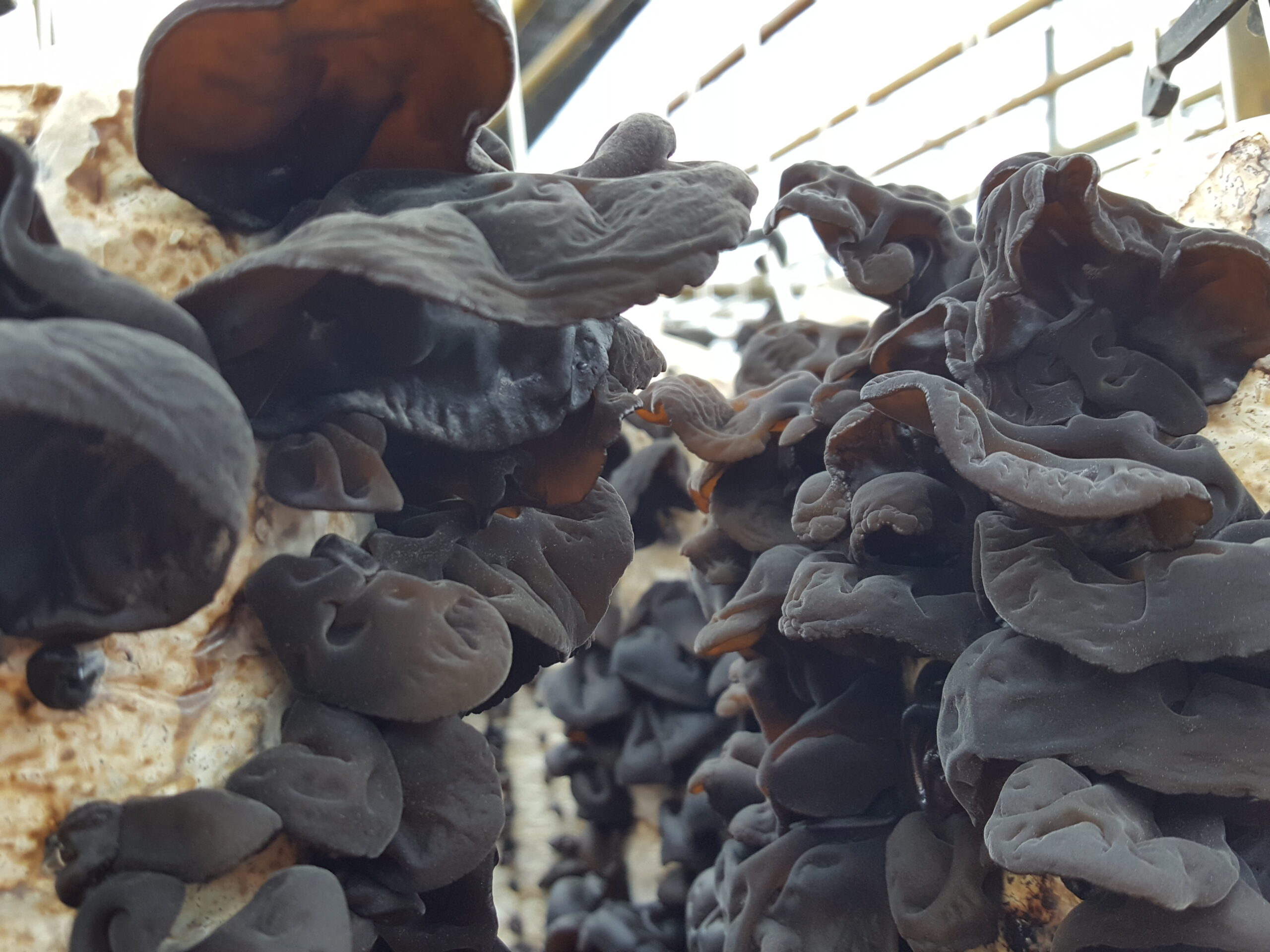
The espresso dark brown, sometimes ebony greyish fungus grows on logs. They look like ears sprouting from trees and their texture evokes cartilage, hence the moniker wood ear mushroom in English. But in Chinese, they are often simply called black fungus mushroom: 黑木耳 (hēi mù ěr). In Vietnamese, wood ear mushroom are called nấm mèo (cat ear mushroom) or mộc nhĩ đen. Japanese cooks know them as kikurage and Korean cooks call them mogi-beoseot.
Why cook with wood ear mushrooms?
Because they are one of the most useful mushrooms to keep in your East Asian and South East Asian pantry for Chinese, Taiwanese, Japanese, Korean, Vietnamese and Thai dishes. They are really second to dried shiitake. Wood ear mushrooms rehydrate fast so you can toss them into stir-fries, soups, stuffings, salad, and banchan. They're also low calorie: a serving of 3.5 ounces (100 grams) has 25 calories! The black fungus often plays a supporting role in foods to add textural and dark color accents. They don't change much during cooking too.
Vietnamese cuisine uses wood ear mushroom in soups and fried imperial roll (cha gio) stuffings, among other dishes. But I've used them in modern Vietnamese salads as a vegan substitute for pig ears. Chinese and Taiwanese cuisine has myriad ways to use wood ear mushroom as an accent note, like in hot and sour soup, and as the main feature. Ditto for other Asian cuisines. You may have seen wood ear mushroom in Korean japchae stir-fried noodles and Thai glass noodle salads.
Buying wood mushroom can be confusing when you're looking at all the options at Chinese and Vietnamese markets, for instance. This post is loaded with information and tips for you to make the right decision at the store. And, once in your kitchen, the prep tips will help you confidently cook with the little wondrous fungus.
Wood ear mushroom health benefits
The fungus is loaded with beneficial nutrients including pantothenic acid, selenium, riboflavin, thiamine, magnesium, zinc, B6, folate, calcium, potassium, and manganese. They also contain antioxidants and polyphenols to potentially protect cells against oxidative damage and thus help us deal with lowering cholesterol and avoiding cancer, heart disease and rheumatoid arthritis. In Chinese medicine, wood ear mushroom has been used to improve the gut-brain connection, assist circulation and cognition, and support Yin. Who would think that such a little wood ear would be so powerful! As with any "healthful" food, eat a moderate amount and not too often!
How wood ear mushroom impacts food
These are not thick, meaty mushrooms. They are more cartilage-like because they deliver crisp crunch. Flavor-wise, they have little to offer. However they will absorb a modicum of flavor from dressings like in this easy Taiwanese wood ear mushroom salad.
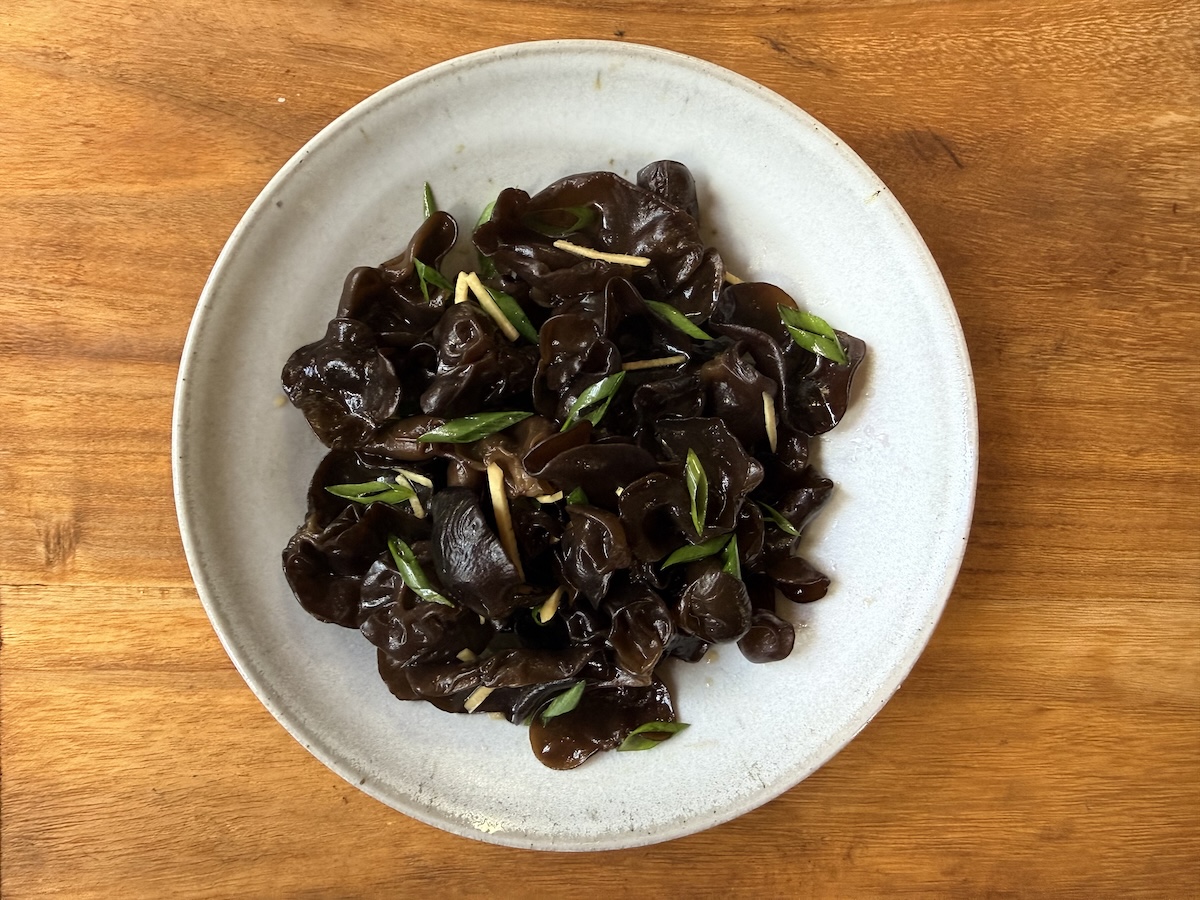
In Vietnamese cooking, we may combine shiitake and wood ear. The latter contributes aroma and umami. The latter lends color and texture. You can use them separately or together. You see the two mushrooms combo used in Chinese hot and sour soup too.
Should you buy fresh or dried wood ear mushroom?
Fresh wood ear mushroom look like adorable tiny velvet berets. They are easily cultivated fresh but are mostly sold at Chinese markets in the fresh produce section on styrofoam trays. In Asia, they're super fresh and my understanding is they only last about 2 days. In the States, I've kept fresh wood ear mushroom for about one week. What's cultivated here is grown for durability.
No worries. Most people used dried wood ear mushroom. If you shop right, you'll find dried wood ear mushroom to be just as good as fresh. Seldom is the case that fresh mushroom is as good as their dried version. But in this case you'll be fine. One bag of dried wood ear mushroom lasts indefinitely too.
How to shop and wood ear mushroom
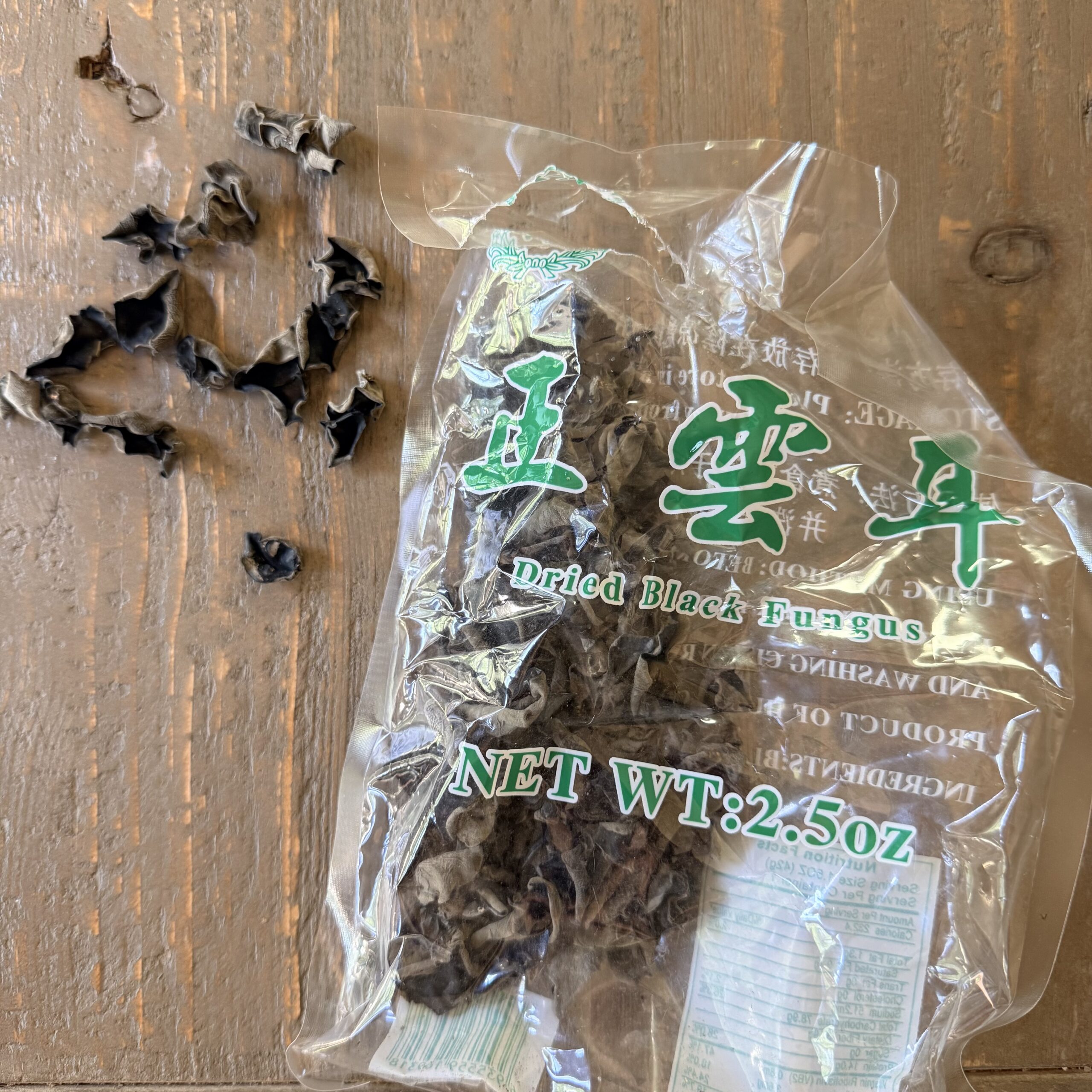
Up to now, I've used the terms interchangeably but you need to know this: they are kin but not quite the same. There are four common kinds (listed below) but in the main, what you see sold at Chinese and Vietnamese markets are labeled black fungus, cloud ear, and wood ear. It's fine and correct to call them all wood ear!
- Black fungus (Auricularia heimuer)
- Cloud ear fungus or wood ear (Auricularia cornea)
- Jelly ear (Auricularia auricula-judae)
- Silver ear fungus (Tremella fuciformis)
What are the difference between these? Labels may confusingly indicate "black fungus", "fungus", or even "black wood ear mushroom fungus"! So, look at the mushroom in the packaging. Usually greyish on one side, black fungus is thinner and more delicate than wood ear mushroom, which often sports one tan side but tends to be thicker. The difference is nominal to most cooks. They are interchangeable. Cloud ears tends to be very small and thinner than black fungus, hence its name.
What do I select? My go-to is "black fungus" because it tends to be of medium thickness and nice texture. Wood ear mushroom with one tan side tends to be thicker and chewier -- nice for when you want extra texture and rusticity. Suggested brands of wood ear mushroom include: T&H Trading, Richin Trading. If those brands are unavailable buy at the mid to upper end of the price spectrum at the market.
Should you buy whole or sliced wood ear mushrooms?
Select Buy the fungi as whole or odd-shaped pieces. Avoid pre-sliced strips which hamstring your prep options. Why let someone else determine the size of your food? Wood ear mushroom is very easy and fast to slice, chop, and mince.
How to store dried or fresh wood ear mushroom?
Fresh wood ear mushroom should be refrigerated and used within the week. Dried wood ear mushroom last nearly forever in a canister or airtight container stashed in a dark cupboard. They don't have an aroma to dissipate so you don't have to worry much!
How to measure dried or fresh wood ear mushrooms?
Measuring the frilly dried fungi can seem cumbersome but your recipe won't be dramatically altered if you're slightly off. A weight measurement helps so know this: ½ cup (120ml) of dried wood ear mushroom weighs .67 ounce (20 grams). So, 1 tablespoon should weigh about 2.2 grams; using ounces for this quantity is sort of pointless. Metric is better.
What if you're starting with fresh wood ear mushroom? ½ cup (120ml) dried yields a good 2 cups (480ml) soaked -- about 4 times! When a recipe soaks 1 tablespoon of dried, you will need about ¼ cup (60ml) fresh. If you're slightly off, the recipe will not be ruined.
Wood ear mushroom and black fungus prep and cooking tips
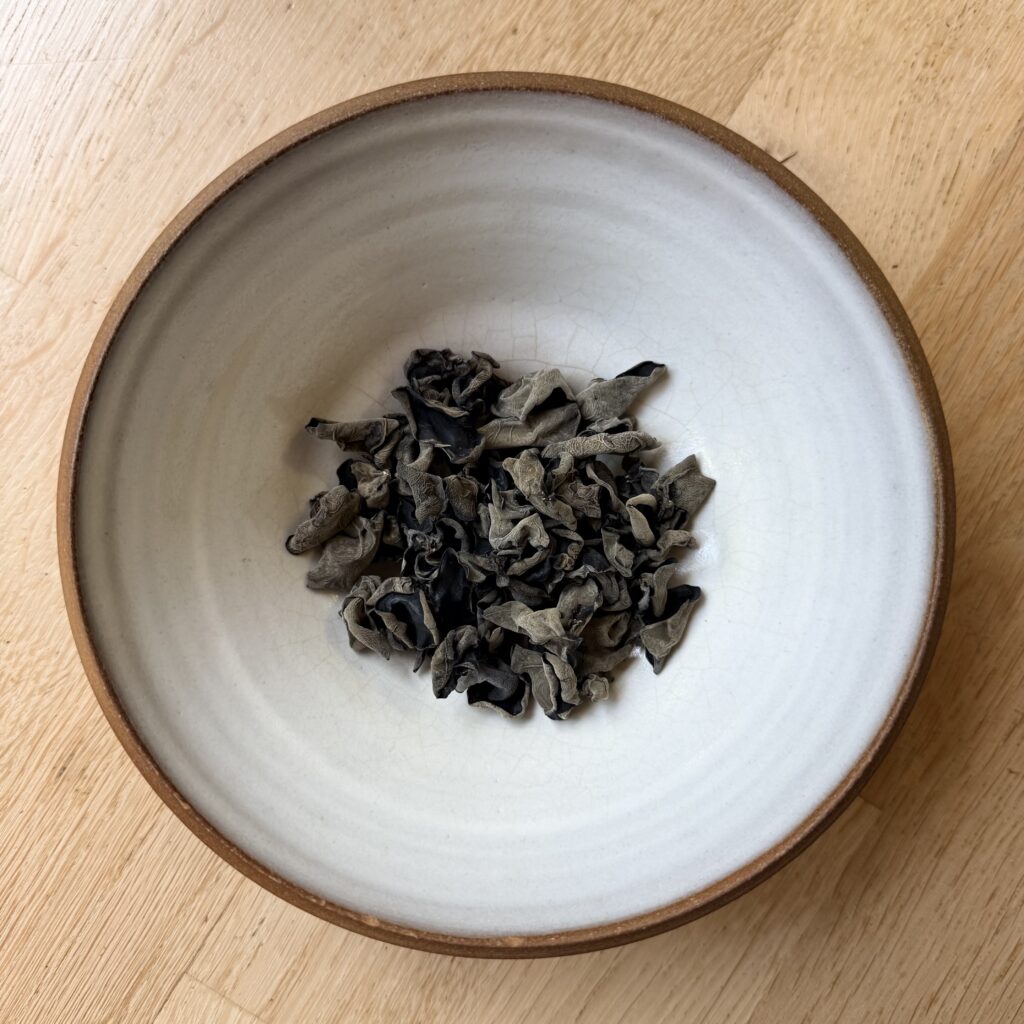
During rehydration, dried wood ear mushrooms expand to be four to five times their original dried size. It's remarkable so be prepared: Always woak dried wood ear mushroom in a large enough bowl with hot water to cover by 1 inch (2.5cm). In about 15 minutes, they will plump up, be soft and dark. Below is a before and after of the same amount of mushroom -- dried and after soaking.
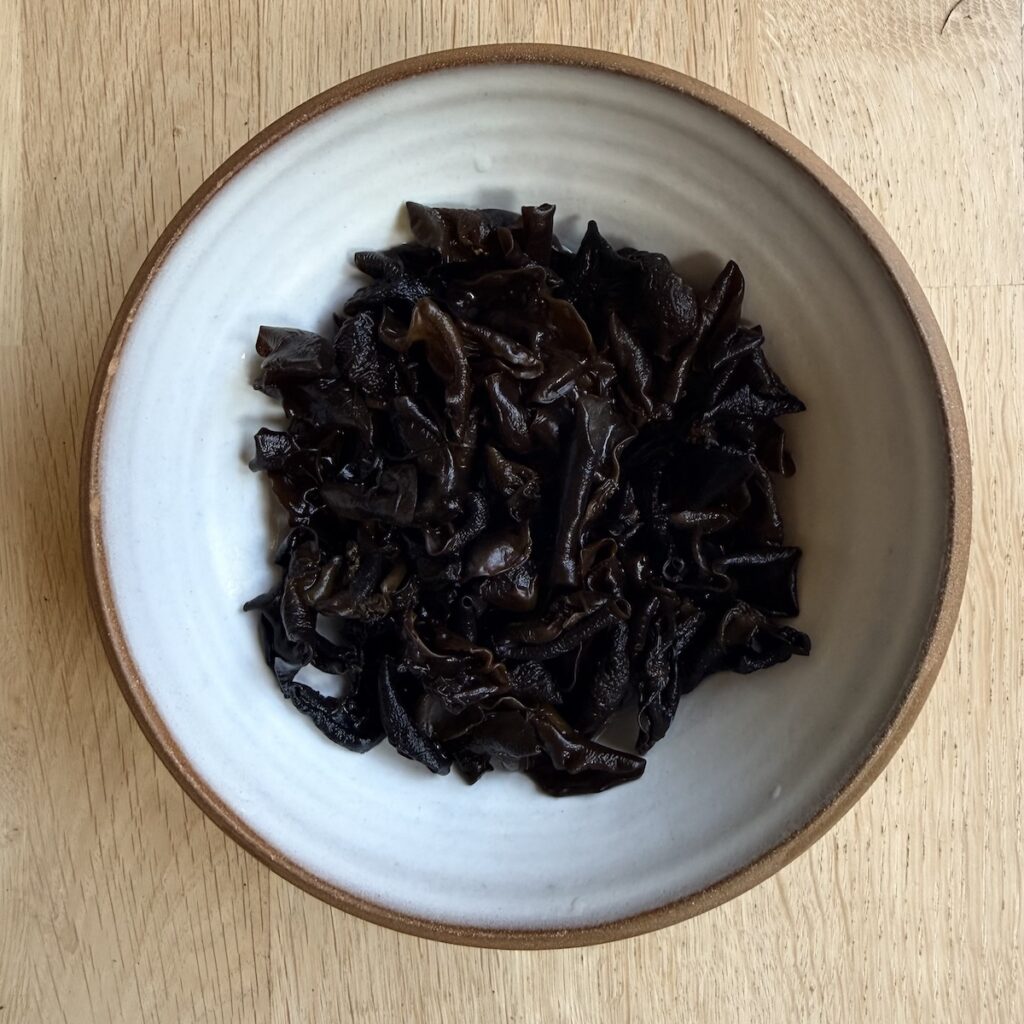
After rehydration, drain and inspect the mushroom. If you spot super hard knobs, cut them off. That use to be the case years ago but it appears that nowadays, the hard knobs have been pre-trimmed my the producers and packagers. Use the rehydrated wood ear mushrooms soon or refrigerate for up to a week (discard or repurpose the mild tasting soaking liquid). If you've got fresh wood ear mushrooms, just keep them chilled until you need them.
Also note this: To prep in advance, slice, chop or mince wood ear mushroom and keep it in the fridge for up to a week, until you need it! It is hard to ruin wood ear mushroom and they can add alot to Asian food.


Leave a Reply