

I have a love-hate relationship with pea tips. When they are perfect, shot through with tenderness and spring-fresh
pea flavor, I'm in a state of bliss. But they are an iffy vegetable to
buy, a potential pain in the butt. If you're not thorough in prepping them or
buy a bag full of mature tips, you end up with a stir-fry riddled with dental
floss-like pieces. Sometimes the pea tips resemble damp toothpicks. In other words, you don't want
to eat them because you can't chew them. Pea tips thrill but can frustrate.
What are pea
tips? A
variety of snow pea that's grown only for its tender tips. Sold at Chinese
markets, they're called dou miao in
Mandarin. Pea tips look like pea vines but they only grown a foot or two; they
are not trellised. (If you want to grow pea tips, here is a seed source.)
A few
years back, I visited with an Asian-American farmer who explained that harvesting pea
tips is very time consuming. To get a
bag of good tender ones you have to be careful and knowledgeable when snipping.
She showed me some plants in a hot house and while they all looked the same to
me, they were over the hill to her. We had to squat to get at them. Pea tips
are a bargain at $3 to $5 a pound, given the amount of labor that's required to
get them to market.
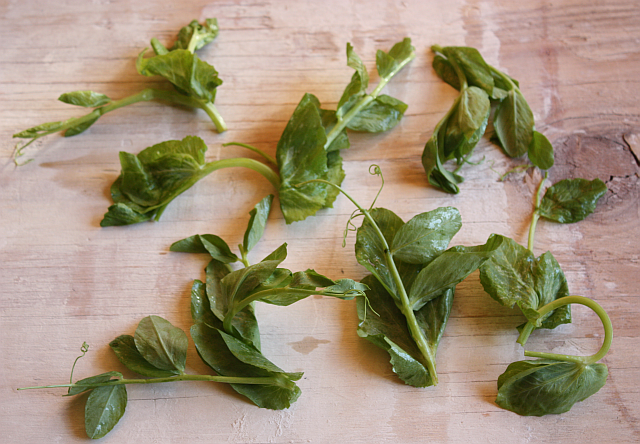
Last
week, I bought two bags for about $3.50 a pound. They looked fresh and tender
at the market. My husband cleaned them, snipping off the tendrils that always
cook up like floss. What he and I didn't anticipate were the stiff
pieces that refused to soften in the wok. I had cooked them up for a Lunar New Year dinner but decided to not serve
them because they were not ready for primetime. I wasn't about to tell guests
to spit out woody, inedible pea tips.
The
next day, I went through the pea tips again and found that some pieces felt very hard and stiff. They seemed unyielding compared to the stems that charmingly bent. The stiff ones were likely the ones that gave me trouble.
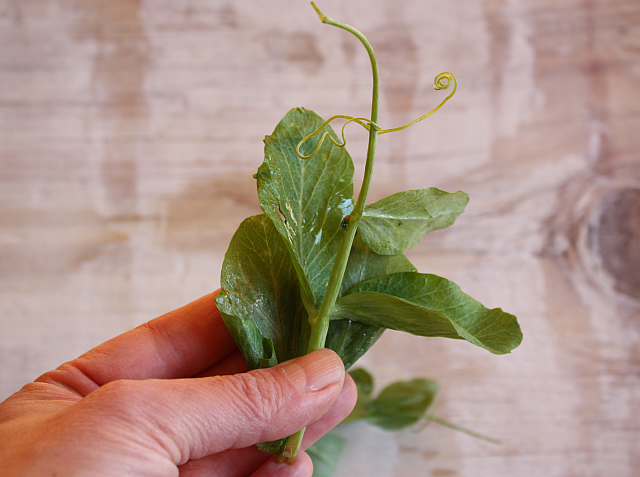
I
snapped all of stiffies and in some cases stripped off the leaves to cook. At the end of the line, I had only about ¾ of my stash.
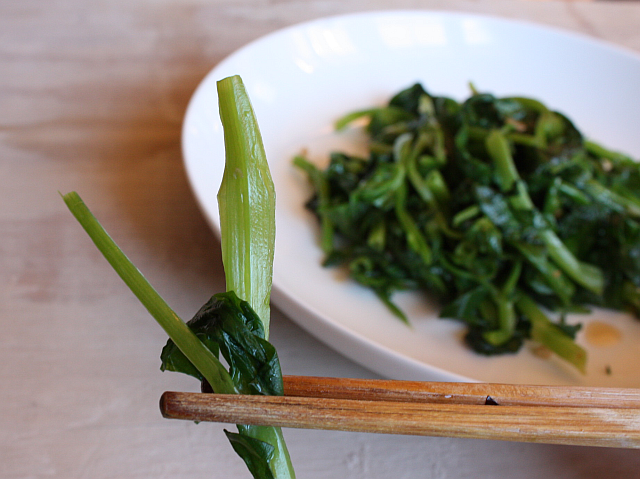
I stir-fried what was left and even with the
second pass, there was still an inedible piece that stuck out from the rest of
the pile. That said, what I ate was delicious, the essence of peas but
in leafy green form.
The
pea tip experience reminded me of something my mom likes to say, "Tiền nào của nấy," (tee-en now cu-ah ney) which roughly means you get what
you pay for. Next time, I'm buying closer to the $5 a pound range. I'll hopefully waste less time and fewer pea tips. If you have pea tip tips, please please share!
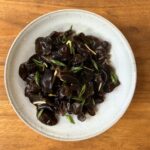
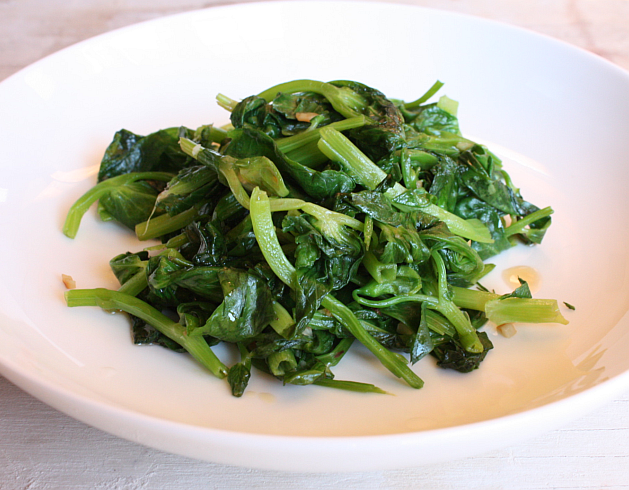
How to cook pea tips? Restaurants often present
them in a shallow bowl surrounded by a moat of rich chicken stock. At Koi
Palace, a fantastic Cantonese restaurant in Daly City, CA, the chefs add some
fresh tofu skin (yuba) for color and textural contrast.
I've
stir-fried pea tips with stock and chicken/duck fat in the past too. But you
can also just do this:
Simple Pea Tip Stir-Fry
Yield: 4 servings
Ingredients
- Swirl
of canola oil - 1 or
2 cloves garlic, finely chopped (optional) - 1 ⅓
pound of pea tips, tendrils removed and stiff pieces discarded (net 1 pound) - Kosher
salt - Sesame
oil
Instructions
- Heat a wok or large skillet over
medium-high heat. Swirl in the oil, add the garlic and cook, stirring, until
fragrant, about 45 seconds. Add the pea tips and a sprinkling of kosher salt. Stir-fry
for several minutes, until wilted. If things seem dry, splash in water to
facilitate cooking. - The pea tips are done when
they're about a third of their original volume. Dish out to a serving plate.
Drizzle on some sesame oil.
More simply delicious vegetable
sides:

Abbe@This is How I Cook says
Have never tried these but I do like peas. Will have to look for them!
Diane says
Yes, this is my experience too, and I am often too lazy to do all the prep. So I end up chewing a mass of hard flossy bits. Consequently I don't buy them much any more, although I love the flavor.
Well - sigh - I guess you've inspired me (or shamed me) into doing this the right way. It's less frustrating and less time-consuming than cooking them and not eating them. They are yummy.
Tuyet N. says
I love pea tips when doing Chinese hot pot for dinner. They soak up some much flavor and come out prefectly cooked! I had no idea that they can be a pain to prep! Maybe I'm paying more for my pea tips but I never realized it. I'll be on the look out next time. Thanks for the great tips! Pun intended!
dissertations says
These types of blog post Simple Stir-Fried Pea Tips Recipe and Buying Guide are always attractive and I am pleased to find so many excellent point here in the blog post, writing is just great, appreciation for sharing.
asics pas cher says
Happiness is not about being immortal nor having food or rights in one's hand. It’s about having each tiny wish come true, or having something to eat when you are hungry or having someone's love when you need love.
sunflowii says
Thanks for the tips on the these tips. 🙂 I love stir-fried Dou Miao and Dou Miao in broth.
I checked out the link for that seed source. Do you know if the seeds are non-GMO? taking baby steps with vegetable gardening so I've never really bought seeds before.
Karen M. says
Hi Andrea,
Thanks for confirming my thoughts on pea shoots/dou miao! I buy bunches at the College of San Mateo Farmers Market for $1.00 and then spend I don't know how long picking off the tendrils and the stiff stems... I've never bought them any place where they didn't have stiff stems. I guess this is why they are a popular and $$$ restaurant item.
P.S. I really enjoyed the dumpling class at Love Apple Farms (wish it was easier to get to that place other than the Hwy 17 nightmare)...
Jackie Ly says
Snow pea tips are my favorite vegetable in the world! I can dine on it 365 days a year. Yes, "cleaning" them is a task and occasionally, there are green caterpillars living in the greens. There isn't a short cut around the process unless you want extra fiber and don't mind eating caterpillar(s). The snow pea shoots are less tasty - less sweet and more chewy. But you don't have to worry about caterpillars and snipping off the tendrils.
I like to put the salt in with oil and garlic before putting in the snow pea tips. I'm less worried of it not mixing well and it's one less thing to do after you put in the snow pea tips.