



I’ve had pumpkin dumplings in Monterey Park and Beijing, their pretty tangerine-colored filling of grated winter (hard) squash were unpleasantly bland and sometimes undercooked. It’s an Asian dumpling that I’ve let simmer on the back burner for a while and didn’t tackle till this week, when faced with leftover roasted kabocha squash. My husband Rory said, “Let’s make Italian raviolis with the kabocha.”
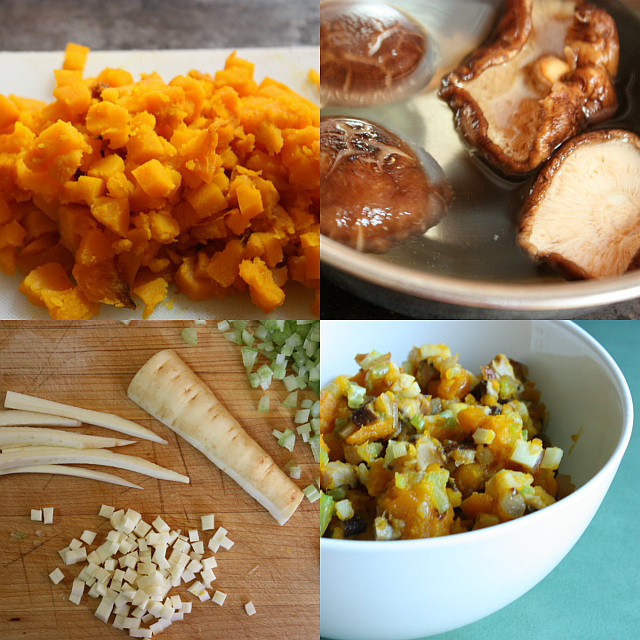
I responded with this dumpling filled with roasted squash, earthy shiitake and parsnip, and upbeat celery. The seasonings involve fried shallot, lots of ginger and enough garlic for pungent depth. I wanted the ingredients to support and elevate the natural sweetness of the kabocha. I’d planned on adding soy sauce but in the end, there was so much great flavor from the vegetables that the only seasoning I added was salt.
In other words, gluten-free dumpling eaters, this filling is for you too! No need to get the wheat-free tamari out. See the link at the end of this post for gluten-free dumpling dough options.
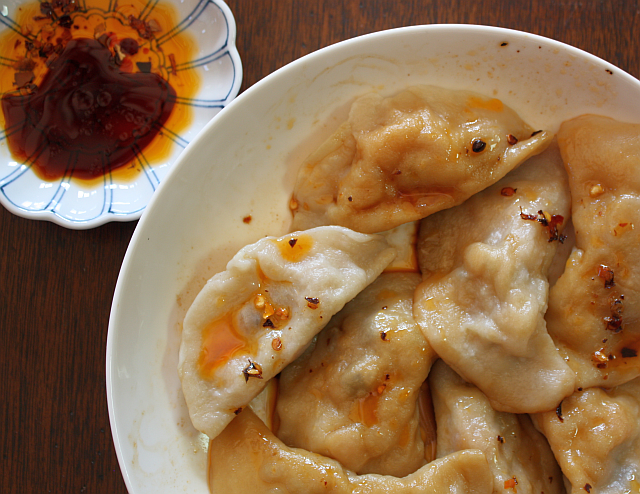
The cool thing about a dumpling filling is that you can use it for boiled, steamed, pan-fried, or deep-fried dumplings. I made my basic dumpling dough and tried the result in three cooking methods. I also put the filling in wonton skins and poached them. The point is this: Asian dumplings are inherently flexible.
Which cooking method worked best? As much as love the crispiness of pot stickers, the delicate and varied flavors of this filling is best showcased via a poached dumpling; treat it like a ravioli but tumble it in chile oil, soy sauce and vinegar.
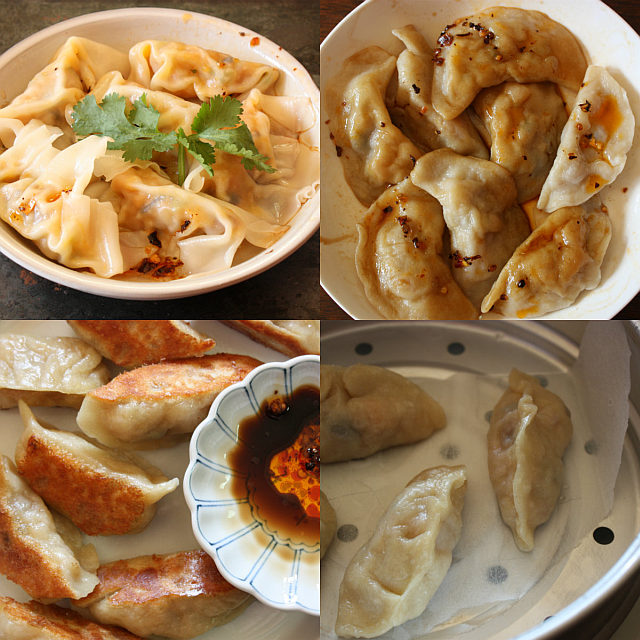
Four ways to cook the kabocha dumplings: wontons, poached water dumplings (shuijiao), pan-fried pot stickers, or steamed
What’s extra nifty about this filling is that you can tweak it to be vegetarian or not. The recipe below is vegan but if you substitute diced ham, sausage or fried bacon for the mushroom, you have a flavorful low-meat dumpling. Finally, since the filling is cooked, you can taste and tweak the flavors as you go along without fear of raw meat.
“This is the best thing you’ve made in a while,” my husband said. Really? Not the roast duck at New Year? What about the rava dosa and matar paneer?
“No, this is really good. Did you use a recipe?” he followed. Nope, I made it up. Here’s the recipe for you to add to your dumpling recipe collection. Try it out for Lunar New Year/Chinese New Year!
One note: The kabocha needs some texture so use the part that are on the firm side – that you can dice. It’s fine to have a bit of mashed squash but aim for tiny chunks, which will mush down during cooking so it’s better to start out firmer, lest the filling gets too heavy in the end.
How to roast a kabocha squash? I hack it into large 4 to 6 pieces (use a heavy cleaver), scrape out the seeds and rub the flesh with canola oil and soy sauce. Then I roast it, one cut side down, at 425F until I can easily stab it with a fork or knife.
Recipe
Roasted Kabocha and Vegetable Dumplings
Yield: 32 to 48 dumplings, depending on the wrapper you choose
Ingredients
- 2 tablespoon canola oil
- 1 medium-large shallot, chopped (½ cup / 2 oz / 60 g total)
- 1 tablespoon finely chopped ginger
- 1 large clove garlic, finely chopped
- ½ cup / 60 g diced parsnip
- ½ cup / 60 g diced celery
- 3 medium dried shiitake mushroom, reconstituted, trimmed and chopped (½ cup / 60 g)
- About ¼ teaspoon salt
- Sesame oil
- 6 oz / 180 g roasted kabocha squash, diced and/or chopped
- 1 pound of Basic Dumpling Dough (see page 22 of Asian Dumplings) or about 48 storebought wonton, dumpling, or pot sticker skins
- Soy sauce
- Unseasoned rice vinegar or Chinkiang vinegar
- Chile oil, purchased or homemade (see page 216 of Asian Dumplings)
Instructions
- Heat the oil in a medium skillet over medium-high heat. Add the shallot and fry, stirring, for 3 to 4 minutes until fragrant turning a golden brown. Add the ginger and garlic, cook, until aromatic. Then add the parsnip, celery, and mushroom. Sprinkle on the salt, cook for several minutes, until partway cooked. Taste a piece to test. If needed, splash in water or any leftover mushroom soaking liquid to coax the cooking. When done, drizzle on some sesame oil, stir to
combine, then remove from the heat. - Add the squash, mix, then taste. Season with extra salt as needed for a savory-sweet flavor. Set aside for about 30 minutes for flavors to develop before using. Makes about 2 cups that you can keep refrigerated for a couple of days.
- If you’re using the Basic Dumpling Dough from the Asian Dumplings cookbook, you’ll use a tablespoon for each one. If you’re using purchased dumpling skins, you’ll use about 2 teaspoons for each; remember to seal them well. You can make these any shape you want: half moon, pea pod, big hugs
or pleated crescents. (See this link on Asian Dumpling Tips for video tips.) - To cook the dumplings, poach them in a pot of boiling water and fish them out after they look gauzy and puffy. Or, steam them until the skins are translucent. Or pan-fry the dumplings in a skillet with a little water (like pot stickers) in a fry-steam-fry method of cooking. Serve the dumplings with soy sauce, vinegar and chile oil. Invite guests to mix up their own sauce. I like all three for a salty, tangy, and spicy finish.
Related posts:




Diane
I make "wing it to use up veg in the fridge" dumplings a fair bit, and one of my favorite ones that I've stumbled into is something like your recipe. Sweet potato diced finely, shitakes, water chestnut (if I have it, which often I don't), ginger, scallion, and the usual seasonings. It's pretty great, and I bet this would be even better. Thanks for the recipe!
Andrea Nguyen
Great ideas, Diane. Vegetarian dumplings are a nice light option and a great way to use leftovers.
Allison Day
I don't make dumplings nearly enough (like, almost never) and the boyfriend's been complaining about the lack of homemade dumplings around here... and this especially sounds like the sort of recipe he would love! Plus, he's the perfect excuse, because I really want to make/eat these too. 😀
TinCook
I'm thinking this might be a good match with har gow dough for the wrapper since it's so colorful.
Andrea Nguyen
Allison -- Maybe your boyfriend can become the dumpling maker? OR, make it a couple project. Spread the love, I say. 😉
Andrea Nguyen
TinCook, definitely. The colorful filling would look lovely -- lantern like, in that whitish dough.
Pinos
I love your dumpling recipes and this one is definitely a must-do...
point of sale solution
Vegetable dumplings sound to be a great idea. I like to use dumpling fillings for deep fried dumplings. Looks amazingly delicious! Will try out some at home. Fantastic post!
tariqata
I made these for dinner tonight (using the wonton skin recipe from Asian Dumplings). They were lovely! And also a perfect way to use up a tiny bit of leftover squash...
When I've had Italian ravioli with pumpkin, they've often been tasty but boring to eat because there are no contrasting textures in the filling. These definitely didn't have that problem - I really liked the combination of the soft squash with the bit of crunch from the parsnips and celery and the bite of the mushrooms.
Thebackyardlemontree
I love Asian dumplings and only discovered recently how easy they are to make at home. They are great to make with kids. The pumpkin filling is unusual I must give it a try.
Sonia
Hi, this recipe is just what I am looking for to serve to vegan friends. Could I make the kobocha dumplings ahead and freeze them? If so, at what point should I freeze them? After shaping them?