


When researching tofu history in America for the book, I came across this factoid: In 1986, USA Today reported that tofu was America’s most hated food. Poor little bean curd, maligned and loathed during the year of Ferris Bueller’s Day Off, Falco, and Huaraches sandals. I had just graduated from high school and had no idea of tofu’s plight in mainstream America.
After 26 years, 1980s music and Huaraches are making a strong comeback. John Hughes's movie airs on cable for wistful gen Xers like me. (I still get a kick from Matthew Broderick's hilariously subversive Ferris Bueller.)
Tofu has luckily moved on to better places too. In fact, many chefs have hopped on the tofu train. For the March issue of Sunset magazine, I developed a recipe for tofu with a miso and mustard glaze. It was based on the vegetarian tasting menu dish at 2-star Cyrus restaurant in Healdsburg. Douglas Keane shared his unusual and tasty technique with me for the story.
On Saturday, food journalist Charlotte Druckman wrote a Wall Street Journal story about tofu skin (often times referred to as yuba, its Japanese name). A seasoned traveler, eater and cook, she fell for tofu skin long ago. Charlotte wasn’t off base. She was actually ahead of her time.
In the article, she discussed modern tofu skin preparations at high-end restaurants, such as Coi (Daniel Patterson), Attelier Crenn (Dominique Crenn), and Alinea (Grant Achatz). These are among the most celebrated restaurants in the United States these days, and tofu is part of their repertoire.
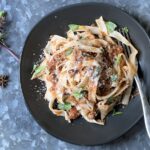
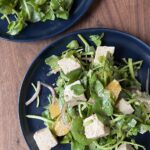
To showcase tofu skin’s deliciousness, Charlotte prepared a riff on the spicy yuba ribbons recipe in Asian Tofu. She added vegetables to the dish for color and crunch.
Her creative brilliance turned a vegan tofu skin side dish into this carb-less pasta-ish preparation:
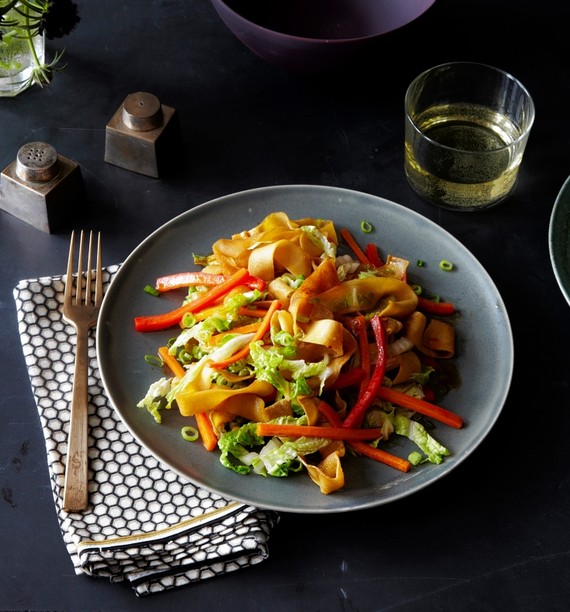
Charlotte interviewed me for her story and shared that she’d converted a tofu hater into a tofu lover with the dish. See her piece, titled “Gimme Some Tofu Skin” for the recipe. (That’s a GoogleNews link that should give you access to the full article.)
So what is tofu skin?
It’s simply the film that forms when soy milk is heated in a pot. If the milk is super rich and thick (think half-and-half or cream), the skin is very fatty, supple and sublime. It’s ethereal tasting, a pure expression of the soybean.
Tofu skin is called called dou pi in Mandarin, dau hu ky in Vietnamese, and yuba in Japanese. Many tofu people in the know like to call it yuba because, well, Japanese is like the French of Asia. It kinda sounds better than dou pi (literally, bean skin) and tofu skin.
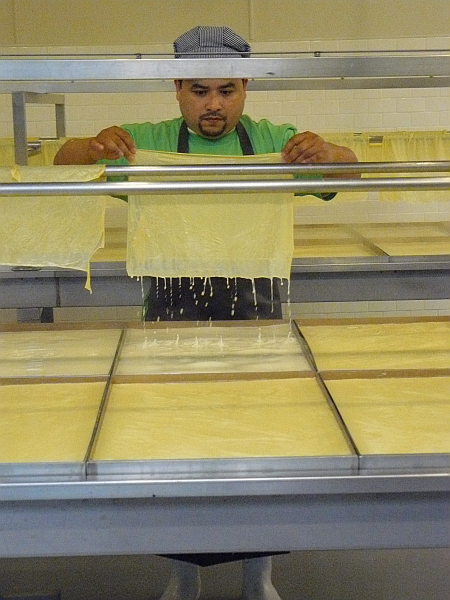
Some tofu makers, such as Hodo Soy (the inspiration for the spicy yuba ribbons recipe), specialize in making fresh yuba. Here’s a photo of how they do it at their Oakland, CA, factory; it's the same set up as in Taiwan:
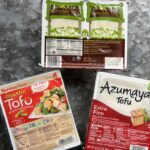
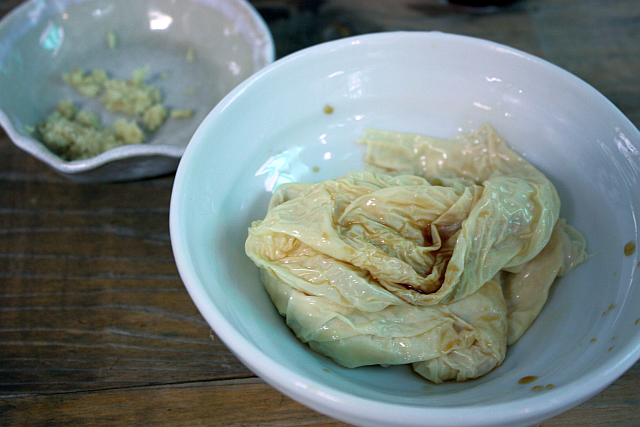
If you make tofu and a skin forms in the pot of soy milk, pull it off and eat it with some excellent soy sauce and wasabi or grated ginger. The photo at the top of this post is of the tofu skin that Mr. Ishijima of Takeya Tofu in Tokyo pulled off his pot for me and my friend Junko to eat. That was part of our breakfast during the early morning tofu lesson with Mr. and Mrs. Ishijima.
Different kinds of tofu skin
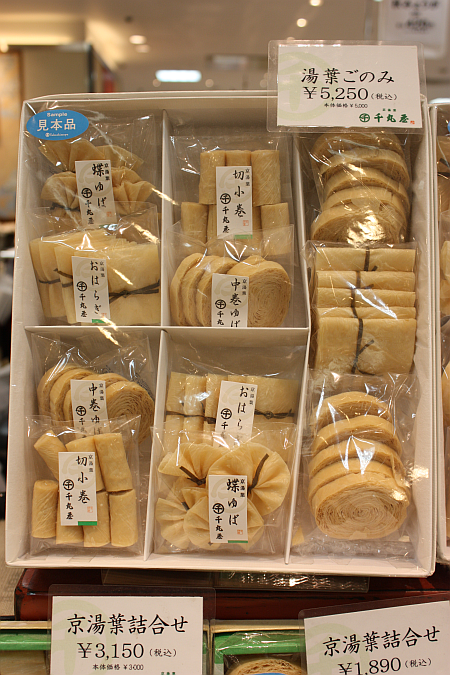
I realize that tofu skin may seem like esoteric food but it’s not. It’s traditional East Asian fare. When tofu skin is fresh, it’s called nama yuba in Japanese. Kyoto is one of the yuba hotspots in the world and comes in all kinds of guises – from silky soft rolls in savory dashi that you can pick up for a snack.
Fancy department store food halls have dried gift packs to present to your boss and loved ones. Yes, tofu is a precious gift to many.
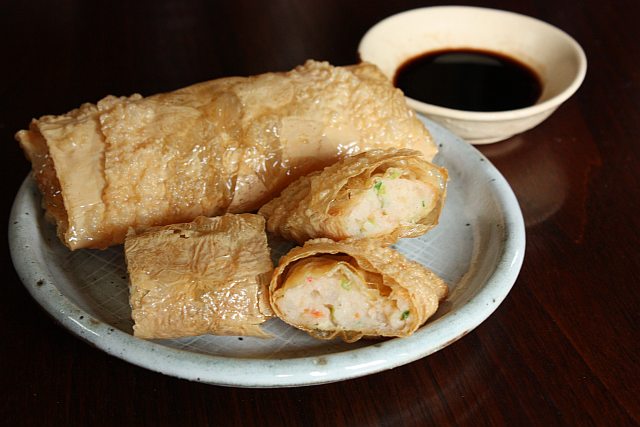
Some tofu skin comes as partially dried rounds (imagine a 24-inch round tablecloth!) and are great for encasing dim sum treats. If you’ve had Vietnamese rice plates with a crisp shrimp filled roll, chances are that roll was wrapped with dau hu ky. Known as dou fu pi or fu pi in Chinese, the rounds of tofu skin are often labeled “fresh bean curd sheets” or “bean curd spring roll skin”; look for them in the refrigerated or frozen section of Chinese or Vietnamese market.
Tofu skin can also be sold as dried tofu sticks called fu zhu in Chinese (literally “bamboo sticks”); they have a meaty and slightly smoky quality.
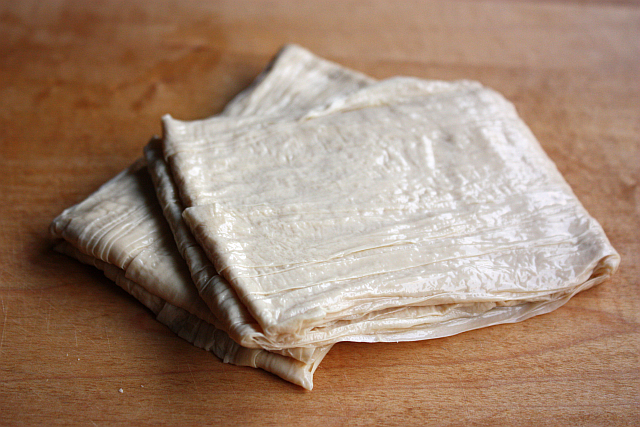
For the recipe that Charlotte made and the one in Asian Tofu (page 139), you can use many kinds of tofu skin, though the fresh tofu skin packets is what is called for. They look like gauzy pads and sold as fresh tofu skin packets called dou fu bao. The buff-colored tofu skin is often labeled “fresh bean curd skin” and sold on Styrofoam trays or in bulk containers covered by water.
In New York City in April, I could only find the tofu skin packets in frozen from May Wah, a vegetarian foods specialty market at 213 Hester Street in Chinatown:
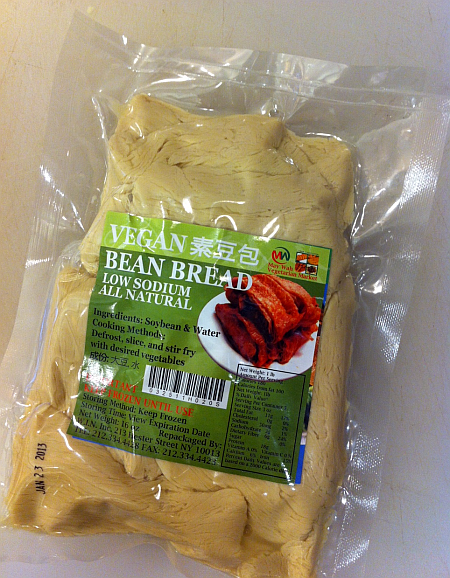
Note the awkward translation of bao as bread instead of packet. When in doubt, ask a Chinese person for “dough foo bow” and check the characters.
How to cook with tofu skin?
You can apply practically any cooking method to tofu skin. It really depends the type of tofu skin -- its shape and whether it is dried, wet or freshly made. In Asian Tofu, there are recipes that involve searing in a skillet, simmering in broth, and deep-frying.
Tofu skin looks weird at first but you can manipulate it in countless ways. Check individual recipes for guidance as there’s no set standard for all types of tofu skin.
If you’re interested in doing more with tofu, explore tofu skin. It’s an ancient Asian food that’s getting the gourmet spotlight in America.
Familiar with tofu skin/yuba? What's the best way that you like to use or eat it?




Yun Ho
Wow, this is a very comprehensive information about Tofu skin. Unfortunately, Korean cuisine seldom use tofu skin and is something Koreans are missing out... The closest to tofu skin is actually abura age (fried tofu) to make inari sushi or as toppings for noodle soups.
Andrea Nguyen
I was wondering why Korean cooking doesn't include tofu skin. It's a natural part of the tofu-making process. The tofu makers no doubt are eating it because when it forms in the pot, you need to remove it!
Abura age is a puffy slice of fried tofu. It is skin-like, which I didn't think of until you mentioned it, Yun Ho. Hmm...
Ashley
The first time I was conscious of yuba was when I was researching vegan entrees for my job as an event planner for a high end catering company. After just reading your article I realized I have had it before at dim sum but hadn't known it at the time! The whole story of how it is made is quite interesting. Your Asian Tofu book has inspired me try making tofu at home so now I will have a use for the skin as well! I love your blog and I coveted your asian dumpling book for several months before I got it. Dumplings are my favorite and your book is fantastic. Thank you for sharing!
Andrea Nguyen
Hi Ashley, You are not alone in your tofu discoveries. There are so many kinds out there aside from the ubiquitous white block! For years I ate the tofu skin rolls too at dim sum and never wondered about how they're made. The tofu skin is amazing when used either for a dumpling wrapper or chopped up for a dumpling filling. Hm... you reminded me of an idea on my to-do list.
Thanks for the kind words on Asian Tofu and Dumplings!
DT
Your blog is very good, thank you.
Ambika
Do you know an online source to buy good Tofu skin? Preferably non-GMO and organic? Thanks!
Maria
Thanks for sharing the information. Yesterday I stumbled over these misterious sheets in my fav. asian supermarket and was intrigued. Next time I'll buy them and try some ricepts out. Thanks to you! 🙂 Great blog btw. Compliments from Germany, Maria
El_joeman
Great information, and as an American who was 29 in 1986, I have always loved tofu, in any form.
The deep fried shrimp tofu skin rolls look amazing. It ALL looks great. I really enjoy all your writing. Thanks!
Valerie
I make a mortadella-type sausage for sandwiches, using yuba skins.
Andrea Nguyen
That's terrific! I've seen Chinese recipes for sausage that use tofu/yuba. What is yours like?
george
hi i leave in orange county ca do you know where can i buy fresh
Andrea Nguyen
Check Whole Foods in the tofu section. They MAY have Hodo Soy's Yuba. It's made in Oakland but may be distributed in SoCal.