





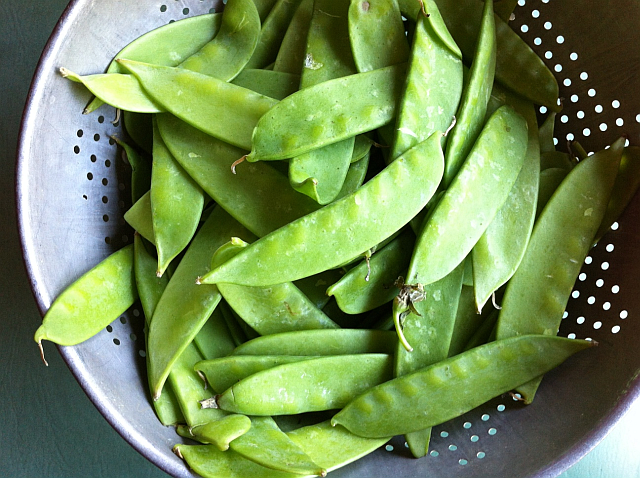
I like snow peas but don’t love them enough to eat an entire dish of them. They’re great for accenting stir-fries and soups, in which a little goes a long way. However, when you buy them at Chinese markets – where they tend to be very fresh and well priced -- you usually have to purchase them in one-pound bags. Unless you plan to serve snow peas every day of the week, it’s hard to get through the entire bag.
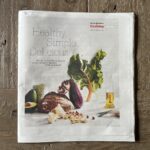
I am guilty of leaving my Chinese market snow peas to linger for too long in the fridge. Inevitably, the over-the-hill pods are dumped into our greencycle bin on trash night. Enter pickled snow peas – the first recipe I happened to have turned to in The Preservation Kitchen by Paul Virant and Kate Leahy. The title of the book, which I’d received as a review copy, was perfect for my circumstance: I needed to preserve the snow peas for a later date!
Pickling snow peas aren’t a go-to Asian use of the vegetable but I was game. I had a bought an ample bag of snow peas from Ranch 99 and had a scant pound sitting around.
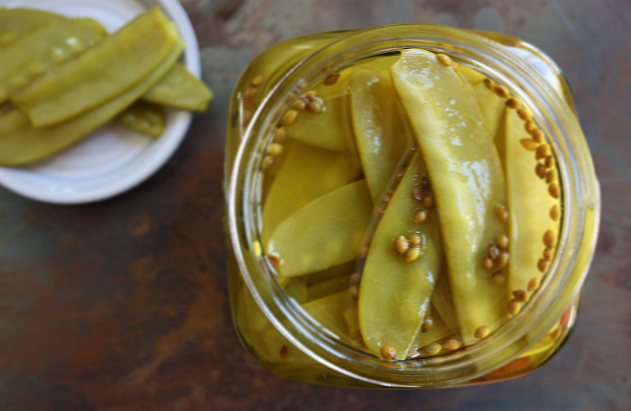
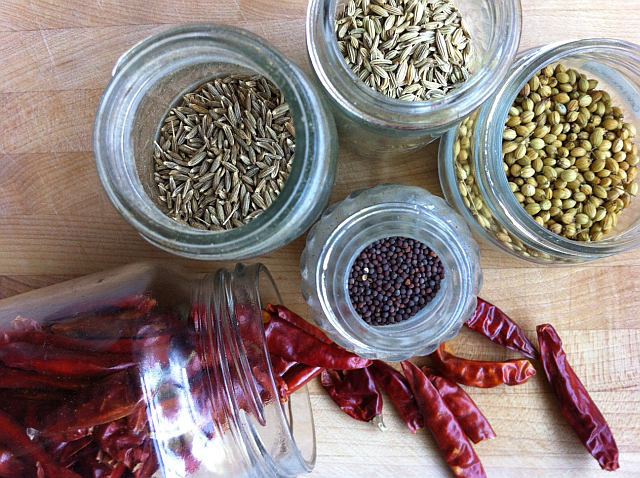
I had to do some math with the original recipe, which called for 2 ½ pounds of snow peas. Additionally, I discovered that I was out of caraway seeds for the pickling spices. I used cumin instead and decided to tilt the spices toward India a little further by using football-shaped coriander seeds, a sweet and citrusy version of their round brethren. A little turmeric helped to keep the snow peas from turning too sickly green, which is what they naturally want to do.
Without champagne vinegar on hand, I chose unseasoned rice vinegar, which has a similar mild acidity. However, I ended up adding more sugar than my original estimate because the flavor was a bit too tart for my taste buds.
The thing with The Preservation Kitchen’s recipes is that they’re clearly presented in weight, volume and percentage measurements. If you tweak things like I did, it was simply a matter of using a calculator to figure out the right amount of ingredients to use. You can guesstimate your adaptation with a fair amount of assurance! A book that inspires confident cooking is a huge boon to the cook.
After sitting overnight in the fridge (I prefer the Asian no-canning approach to pickling vegetables), the crisp tangy snow peas were ready to eat or keep for a while. What I found surprising was that the snow peas kept their snow pea-ness. They seem like a delicate vegetable but they retained their identity in the sea of brine and spice.
How to serve the pickled snow peas? The authors described their pickled snow peas as a perfect side for smoked or grilled meat. They also mentioned that pickled snow peas are great added to chicken salad or showered atop a green salad; they were great in a potato salad I made.
I could see them with ribs seasoned with Asian flavors, grilled lemongrass pork, tandoori chicken (see the Asian Market Shopper for my recipe). They’d also be a partner for charcuterie or fried snacks – foods where you need some tang to cut the richness. For dinner, I chopped them up and mixed them into fried rice.
This is an easy pickle recipe that I hope you’ll try out. Next time I buy snow peas at the Chinese market, I'll know that I can use up the entire bag.
RECIPE
Pickled Snow Peas
Use more sugar if you prefer a moderately-sour pickle.
Yield: 1 quart
Ingredients
- 1 pound snow peas
- ¾ teaspoon coriander seed
- ¾ teaspoon brown mustard seed
- ¾ teaspoon cumin or caraway seed
- ½ teaspoon fennel seed
- ¼ teaspoon black peppercorns
- 1 dried chile de arbol or other dried red pepper, torn into several pieces
- 1 ¾ cups unseasoned Japanese rice vinegar
- 1 cup water
- 1 to 2 tablespoons sugar
- 2 teaspoons kosher salt
- Scant ¼ teaspoon turmeric
Instructions
- Wash and drain the snow peas. Snap off the ends of each snow pea, peeling and discarding the stringy fiber as you work. Set aside.
- In a small saucepan, toast the coriander, mustard, cumin, fennel, peppercorns, and chile over medium-low heat, until very fragrant; a tiny bit of smoking is okay. Put into a 4 to 6-cup jar. Add the snow peas.
- Return the saucepan to the stove. Add the vinegar, water, sugar, salt, and turmeric. Bring to a rolling boil. Turn off the heat, wait for the bubbling to subside, then pour over the snow peas. Use a spoon, spatula, or ladle to gently push the snow peas down so that they’ll be submerged in the brine. They should be eventually covered.
- Let cool completely, partially covered, at room temperature. Cap and refrigerate overnight before eating.
Adapted from: The Preservation Kitchen (Ten Speed Press, 2012) by Paul Virant and Kate Leahy.
Related posts
- Daikon and carrot pickles
- Bread and butter pickles
- Thai Barbecued Baby Back Pork ribs
- Tamarind Glazed Lamb Ribs
- Grilled Vietnamese Lemongrass Pork




nike free 7.0
Although I would’ve preferred if you went into a little bit more detail, I still got the gist of what you meant. I agree with it. It might not be a popular idea, but it makes sense. Will definitely come back for more of this. Great work.Good work, wonderful blog… really enjoy it and added it into my social bookmarks. Keep up the good work
Ellen
How long CAN you keep snow pea pickles in the fridge? Will they keep for months, or should I be concerned about spoilage after a certain amount of time?