

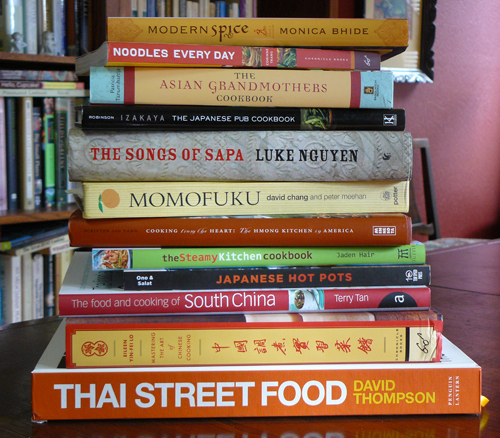
Annual cookbook round-ups mostly feature a broad range of works but I’d like to focus on Asian cookbooks as that’s why we’re all here on this site, right? I’ll briefly go over the works that I have provided jacket endorsements for -- Jaden Hair’s Steamy Kitchen Cookbook and Pat Tanumihardja’s Asian Grandmother’s Cookbook. Both of those publications are worthy for different reasons – Jaden offers a lively take on modern Asian cooking whereas Pat transports us to a cozy, homey spot in our hearts. As for my Asian Dumplings cookbook, you’ve heard plenty about it and yes, I encourage you to get your doughy hands on a copy! Now for more fun stuff . . .
Oodles of Noodles
Corinne Trang’s Noodles Every Day is a great volume to have at your side. I reviewed it earlier this year and prepared a delicious dish of silver pin (rat tail) noodles with chicken. Simple dishes like that one are great to have in your back pocket. That's the point of Trang's book -- make Asian noodles part of your daily routine.
If you have more time, try the ramen recipes from David Chang and Peter Meehan’s Momofuku. There are recipes for fresh ramen noodles, pork belly, broth, and slow-poached egg. You could open up a little neighborhood shop after working through the recipes. If not, just try the slow-poached eggs recipe, which are a splendid addition to any repertoire. Or, just read the candid text for Chang's no-hold-barred perspective on food.
Going beyond Sushi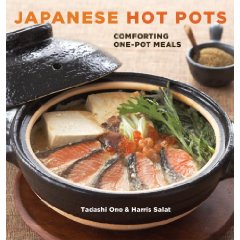 For years I decried the fact that only a few Japanese cookbooks pushed your understanding of the cuisine beyond sushi. This year, New York chef Tadashi Ono and writer Harris Salat’s Japanese Hot Pots has made great strides in conveying how affordable and accessible the cuisine of Japan is and can be. Whereas Momofuku’s fresh ramen will be a labor of love, Ono and Salat’s hand-pulled noodle hot pot will be a doable evening endeavor. There is plenty of cultural as well as practical information to guide you in preparing and enjoying your creations. Hot pots (nabe) are not fussy, precious cooking but rather the soul of Japanese cuisine.
Another work that speaks to casual Japanese dining is Mark Robinson’s Izakaya, which was released in 2008 but I got around to reading it this year. Izakaya gave me a fresh perspective on the drinking and noshing culture in Japan, and Robinson offers up many nuances and details on these small drinking establishments. Each chapter tells the story of a particular Izakay followed by their signature recipes. Robinson has lived in Japan for over 20 years and he relates the fluidity of modern Japanese society well. Feminism, World War II history, and Japan’s economic boom and bust are all woven into the work. After reading Robinson’s book, you’ll feel equipped to prepare some Japanese pub fare and to saunter into an izakaya and feel right at home.
Charming and Authoritative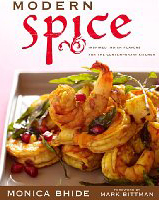 In Modern Spice, Monica Bhide charms readers with her stories of contemporary Indian life. Hers is a transnational perspective that goes from America to India and back and forth. She relays her personal experiences of meeting an Indian superstar with a giddiness that draws you right into her delectable recipes. Preparations such as kumquat and mango chutney and chile pea puffs offer bright flavors and simple techniques. There are cocktail recipes too. (Yes, some Asians have the drinking gene.) Monica has a great palate and youthful perspective on how to enjoy the flavors of her native India without compromising their integrity.
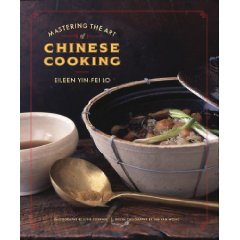 Release just a few weeks ago, Mastering the Art of Chinese Cooking by Eileen Yin-Fei Lo is the author's magnum opus. She is a veteran Chinese cookbook writer and this work, weighing in at nearly 5 pounds, is set up as a series of lessons. Lo writes with a certain 1960s tone that conjures up the voice of an old-fashioned master teacher. Readers are pupils that she leads through the intricacies of preparing classic Chinese dishes. I just received this book and plan on test driving the Peking duck during the holiday season. It will require an air pump but I’m not daunted with Lo keeping watch over my shoulder.
Wonderfully Obscure Sami Scripter and Sheng Yang’s work on Hmong-American communities, Cooking from the Heart, is a must-have for anyone interested in
Southeast Asian culture. The recipes should have been better polished in this publication, but what the book offers is highly valuable: human stories and insider’s perspectives on Hmong culture. That comprises a good amount of the text and makes it worth every penny. Not enough has been written about Hmong cooking as the Hmong language has only recently been presented in writing. Much of their history has been handed down by storytelling. Works like Cooking from the Heart do much to further understanding about Hmong-Americans.
Chinese cooking is one of the most cherished and complex cuisines, but its regional preparations have not been sufficiently written about. In The Food and Cooking of South China, Terry Tan covers Cantonese, Shantou, Hakka and Island cuisines. You probably know of Cantonese cooking but what about the others? Tan writes with brevity and I often feel like I need to be Chinese to get all the nuances. Nevertheless, I’m game for dishes such as Portuguese-Chinese egg tarts, which contain cheese. Who would have thunk? Yes, we’re talking Macau with the Sino-Portuguese connection. Tan is a prolific cookbook writer who was originally from Singapore and now is based in England.
Overseas Releases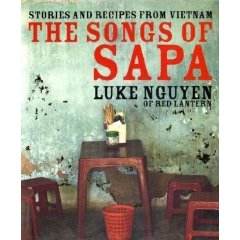 My trip to Sydney’s International Food Festival offered me a great opportunity to pick up some terrific overseas titles, one of which was Luke Nguyen’s The Songs of Sapa. I’ve not written enough about Luke, who co-owns Red Lantern restaurant with his sister, and also recently launched a well-received Australian public television series called "Luke Nguyen's Vietnam". The Songs of Sapa is the companion book to the series and all the photos were taken in Vietnam, Luke told me when we hung out together in Cabramatta, Australia's main Little Saigon located near Sydney. What’s more, he tells of his personal journeys there, meeting family and strangers, connecting through food. Luke writes with earnest, just as he speaks to you in person, so as to give you a passenger seat on his Vietnam adventure. The recipes offer a glimpse at cooking in Vietnam today. Sometimes Luke pulls in an Australian-Vietnamese adaptation but that’s just practical writing. You can’t replicate everything abroad and it’s best to savor the flavors in situ. That’s what The Songs of Sapa offers.
 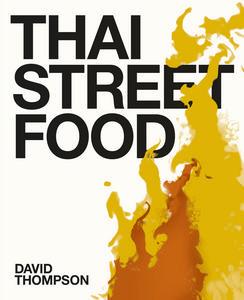 Thai Street Food by David Thompson of Michelin-starred Nahm Thai restaurant in London is only currently available in Australia and the UK; Ten Speed Press will be releasing it next fall in the US. I managed to obtain one of the few copies in Sydney while I was there. The book is physically huge, weighing over 6-½ pounds and is costly -- $100 Australian dollars. But there is invaluable information between the arty embossed cover, from giant photos of Thai street scenes to detailed recipe headnotes and Thompson’s wry wit. The recipes can be challenging to work through because the ingredient lists offer the main ingredients first instead of the ingredients in order of use. Street food can be rather complicated, and I would have preferred better organization. But with a little patience, the results are splendid. Kao mook gai, a Thai take on Indian chicken byriani rice is fabulous. I’ve not seen this book online so you’ll have to check bookstores such as Books for Cooks in Melbourne and Books for Cooks in London (they’re not related). Kinokuniya in Australia is offering the book online.
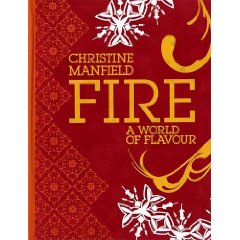 A former art instructor, Christine Manfield of Universal restaurant is among Sydney’s most celebrated chefs. I met her recently at the World of Flavors conference in Napa and tasted her food. Her flavors are big and she pays tribute to Asian traditions with respect. Many named Australian chefs have cookbooks but I sense that Manfield has written hers for the sake of educating the public. Fire is her gorgeous latest book, its cover feels like velvet wallpaper. When I got beyond petting the cover, I opened up the book and discovered an engaging collection of recipes. It’s another expensive Australian book at $100, due to a high production value and the value of the Australian dollar. However, via Amazon, I just managed to find a reasonably priced, new copy from an independent American vendor. Manfield is not well known in the States so you may have a hard time locating a copy of her book at a store.
Wow. That’s it for 2009. I’ll be cooking more from these works in 2010 and I hope that you will too! If you have picks that you'd like to recommend, go right ahead and jot them down below.

Erken rezervasyon
Thank you very much very good information about the book You have given..
Natashya
Great list! I put most of them on my wishlist. Right there with your newest book of course!
Celina
Now my husband will know what to buy for Christmas!
a tip for your peking duck if you don't want to purchase an air pump:
once the duck is glazed with Maltose. Leave the duck overnight in your kitchen counter so to make sure the skin is seperated from the meat.
Andrea Nguyen
Celina -- You are a gem. I told my husband that we'd have to borrow the neighbor's air pressure pump and he was envisioning an exploding duck!
dmreed
Andrea, I thought you might be interested to see my Asian cookbook collection at
http://dmreed.com/food-cooking-asian-cookbooks-0781kb.html
I enjoy reading cookbooks...I read them like most folks read novels...and trying out new recipes.
Please keep up the good work you are doing, it is greatly appreciated.
Andrea Nguyen
Dmreed -- thanks for the link! You've got a huge collection and it's organized too. Mine will be organized someday.
I learned about a new site today called Eat Your Books (http://www.eatyourbooks.com/) where you can access the index of many cookbooks so that you can be organized. There's a modest fee but the service is pretty cool.
dan
Here is my small but proud collection =)
http://lh5.ggpht.com/_YelznY3tulo/SydPnxDmDjI/AAAAAAAABm4/xNT_71orVgI/s800/vietbooks.jpg
Tina
andrea do you think you could write something about 7 course beef? i am curious to know more about it!
Andrea Nguyen
Dan -- your photo made my day! Thanks.
Tina -- I'll put your request on my list!
Vicnv
Excellent list Andrea. Regarding Thai Street Food by David Thompson, I got mine through http://www.cookbooks.com.au so it is now available online to folks in the US and elsewhere.
Joel
I second the Songs of Sapa Andrea. It complements the Red Lantern that the recipes are very modern Vietnamese and tend to be dishes less frequently seen like steamed fish with soya beans, bitter melon and fish ball soup, rather than the oft-seen pho, bun, mi, lemongrass pork chop on rice, etc.
Diane
My two favorite cookbooks I've bought this year (aside from yours) are Cooking from the Heart and Modern Spice, so I am thrilled to see those mentioned.
driver indir
thanks good 😉
Andrea Nguyen
Joel -- The recipes in Songs of Sapa are better written than in Red Lantern. Luke put a lot of work into the book and it's just gorgeous!
Diane -- Thanks for the validation!
acai beeren extrakt
Hello
This is really a nice collection of cook books and I am very much interested in it.This will be helpful for this Christmas.Now I can make variety in my cooking.Thank you very much for such nice list of cook books.
nhut huynh
Hi Andrea
I enjoy your site and your dumpling book very much. I like your book list too- I wondered whether you have seen my new release by Lantern (June09) "Little Vietnam". I think it would be a good addition to your list! Best wishes Nhut Huynh, Sydney.www.asianpantry.com.au
coach outlet stores
I like,that's a sign of a good blog post.*
jordan france
Green Leaf is excellent, imo.
Juicy Couture Handbags
when i was young, i have more and more money, but some times is lost. ~~~
buy from taobao
*Oh I hope you all have a blessed day
air yeezy
I love you with all my heart!!
Hampers
Any updates on new books for 2010?
chanel Purses
I was born during the ’80's have never seen the band play live. My love for the band is something that had formed through listening and singing along to their songs I never get tired of listening to. Tipong, this reunion, this 83008, means so much to me, a fan, because, probably, hopefully, this might be my only chance of seeing the greatest band play songs that define my life.
Happy new year by joy.
Christian Louboutin Outlet
That is good for us to learn something.many comments I saw almost agreed with you.Good luck in your life.
Beats by Dr Dre
Temples and statues decay, but books survive.
Beats by Dr Dre
Soon gotten, soon spent.
Meet people for real relationships
Corinne Trang’s Noodles Every Day is a great volume to have at your side. I reviewed it earlier this year and prepared a delicious dish of silver pin (rat tail) noodles with chicken. Simple dishes like that one are great to have in your back pocket. That's the point of Trang's book -- make Asian noodles part of your daily routine.
Jason Statham
It complements the Red Lantern that the recipes are very modern Vietnamese and tend to be dishes less frequently seen like steamed fish with soya beans, bitter melon and fish ball soup, rather than the oft-seen pho, bun, mi, lemongrass pork chop on rice.
marlon
I enjoy your site and your dumpling book very much. I like your book list too.