
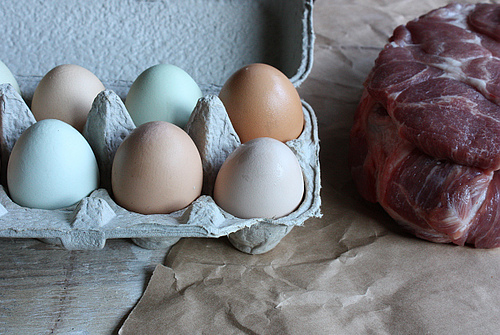
I haven't had the chance to make a new dumpling to share with you, but I have been fielding email queries from cooks interested in making Asian dumplings. Over the weekend, I received a question that you may either ponder about or have solutions to. This came from Meghan in Indiana:
I was wondering if it is possible to make dumplings, or pot stickers, without egg yolks? I am allergic to egg yolks...and pork actually. That's not a big deal though because I could always add beef or chicken, etc.. but I do need to know about the egg. I'm not allergic to egg whites and it does actually work in most recipes that I've tried. I would really appreciate it if you could let me know. Thanks!
Eggs and pork play marvelous roles in Asian cooking but can you do without them in dumplings? Yes, indeed!
After I wrote back to Meghan, I figured that I'd organize and expand my tips to her in a post. If you have the same allergy or want to avoid eggs for some reasons, these suggestions may help your adventures in dumpling making: (page number references are for the Asian Dumplings cookbook)
The general lowdown & DIY dumpling wrappers
Most Asian dumpling wrappers don't contain egg. I've seen recipes online and elsewhere that incorporate egg into the dough and that's not necessary for all dumplings, especially popular pot stickers. Just check packaged wrappers sold at a market and read the ingredient label.
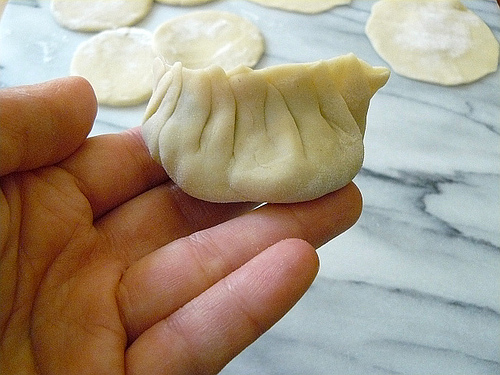
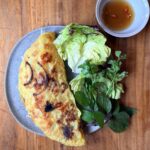
When I make dumplings at home from scratch dough, I use a basic dumpling dough (p. 22). What's in it? All-purpose flour and water. The multipurpose dough allows me to craft treats such as pan-fried pot stickers (gyoza, above) and other poached, steamed and deep-fried dumplings (think: Chinese jiaozi, Korean mandu, and Tibetan momos).
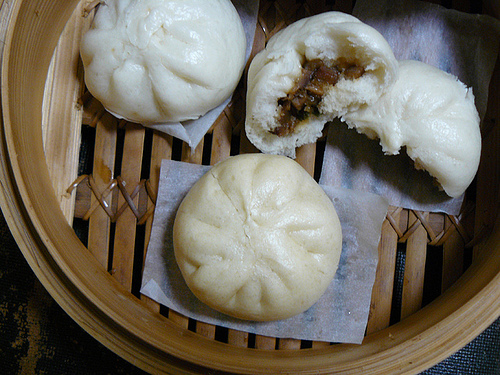
If a dumpling dough requires richness, oil or lard is often used. For example, pan-fried and steamed buns (bao, above) use an eggless leavened dough. Indian samosas and Chinese flaky pastry are enriched with lard or shortening based; there's no egg involved.
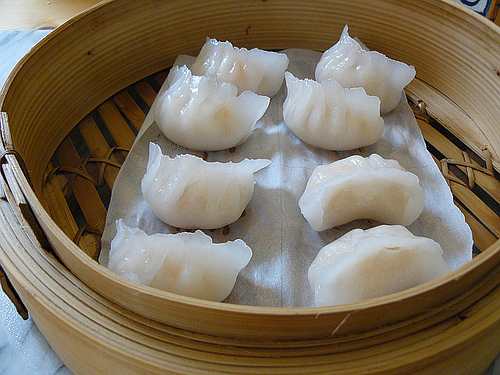
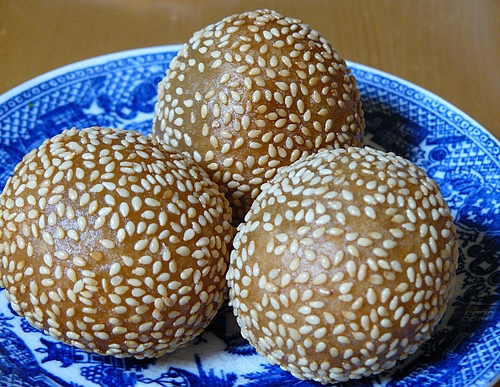
Dumplings wrapped in rice or starch-based dough (e.g., shrimp har gow and fried sesame balls, below) don't include egg in the wrappers.
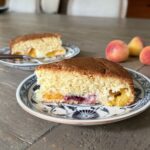
When a wrapper needs egg, you need a workaround. For example, baked stuffed buns (bao) require an egg in the dough (p. 97, see the last photo in this post). I haven't tried omitting the egg or yolk, but if I did, I'd make up the yolk with about 1 tablespoon of oil or butter; the white could be replaced with water if you're going totally eggless. For the empanada dough on page 111, I'd omit the egg yolk and add a tablespoon or oil or work in extra water to bring the dough together.
Asian Dumplings is organized into chapters based on different dough types. Check the master dough recipes to see which ones are eggless.
Buying dumpling wrappers
Most commercial dumpling wrappers for pot stickers and shiumai open faced dumplings do not have egg. However, wonton or egg roll skins may have egg in them. Read the labels carefully.
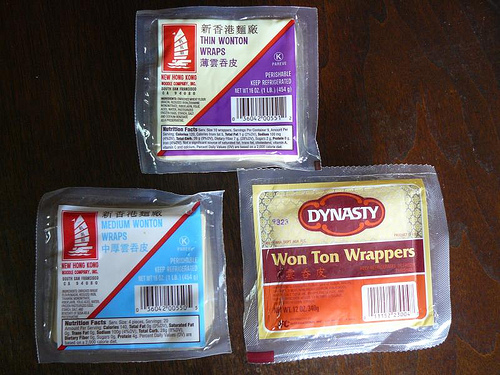
There are egg-less wonton wrappers for sale at Asian markets. They tend to look white or off-white whereas the eggy ones are yellow with egg and a touch of food coloring to boot. See wonton skin buying tips (on AsianDumplingTips.com) for details.
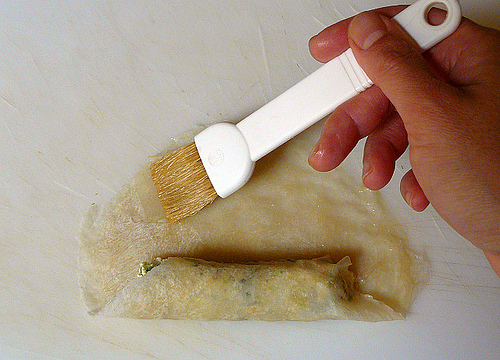
Egg-less wonton skins are easier to find than the larger egg roll skins. Given that, if you're looking for an eggless egg roll option, use Shanghai spring roll skins. They're crazy fun to make but one of the harder skins to master (p. 81, an example of homemade is below with the brush). You may want to purchase them from a Chinese or Southeast Asian market. They may be labeled lumpia skins or wrappers.
Moistening wrappers: If egg is called for to seal a dumpling, use water or a combination of flour and water (make a paste of 1 tablespoon of all-purpose flour with 2 ¼ teaspoon water).
Fillings: Eggs are used to enrich and bind filling ingredients together. In Meghan's situation, she can eat egg whites so I'd just toss the yolk or perhaps use 1 ½ egg whites. If you don't want to use egg at all, a little corn starch is your best bet. I'd add a little oil to the filling because if you use too much cornstarch, the filling could end up tight and dry.
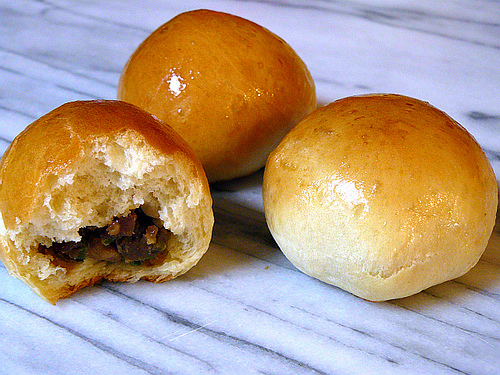
Egg washes: Try milk instead and sprinkle a little sugar on top to facilitate browning. The baked bun (bao), empanada, and spiced pineapple tart recipes (p. 97, 111, and 195) are the only ones with egg washes.
As for the pork workaround, my go-to pork substitute is chicken thigh. On the other hand, there are many tasty Asian dumplings that feature beef, chicken, seafood, tofu, and vegetables. For the steamed and baked buns (bao) above, the filling was made with char siu pork. You could fill the buns with curried chicken, vegetables or even make the charsiu with chicken thigh. There are many options.
Our bodies are wacky and sometimes we develop adverse reactions to foods. I used to be terribly lactose intolerant but don't suffer from it much these days. Who knows why we get allergies but we just have to figure out ways to navigate the food world so that we don't have to deprive ourselves too much!
If you have tips to add, do share below.
Related posts:
- Gluten-Free Asian Ingredients (Are they for you? Buying guide to GF Asian ingredients)
- Gluten-Free Asian dumpling dough (this is a series of posts, including GF pot stickers)
- Wonton Skin Buying Tips (on Asian Dumpling Tips)
- Check the recipe indices on Viet World Kitchen and Asian Dumpling Tips for dumplings to try


Scotty Harris says
Andrea, another possible egg wash substitute might be the cornstarch solution I sometimes use to glaze rye bread. A slurry of 2 tbs cornstarch and 1/4 cup cold water added to 1 cup of boiling water. From George Greenstein's Bread book.
via_ostiense says
Wonderful post, Andrea! Now I'm craving lumpia and will have to go make a batch.
Andrea Nguyen says
Scotty, that's a great idea. I imagine that the slurry thickens nicely with the boiling water. Thanks for the tip!
Eve says
I have never actually tried this myself, but I know that vegan bakers often use pureed soft tofu to replace eggs in baked goods. I imagine that might have similar binding properties to an egg in a dumpling filling.
Also, for special occasions I reckon duck meat (with all that rich fat that's under the skin) would be a really delicious substitute for pork in dumplings. Ducks aren't ever cheap but butchers and supermarkets that joint their own ducks often sell the legs at fairly reasonable prices because the demand for the breasts is higher.
Diane says
I often just make up dumpling fillings for the heck of it. Mostly to use up stuff. Over the years I've found some tasty combinations that are pork or meat free...pumpkin (or sweet potato), shitake and water chestnut; chard (or cabbage), garlic and cilantro; tofu, dried shrimp and cilantro; etc.
My substitute for pork (which sometimes I don't want) is also chicken thigh.
Scotty Harris says
Oh it does, if you don't watch it - too much. 🙂
Viba says
Hi Andrea,
Thanks for this post. It will be very usefull for me as my husband is gluten and eggs allergical.
But I've a question : how do you make the rice or starch-based dough ? Do you have a recipe for that ?
Thanks a lot
KitchenNinja says
I debone chicken quarters, add spices, a drizzle of oil & soy, and a splash of broth as needed, then pulse it in a processor. The texture is great every time 🙂
Mary Ann says
I’m looking for measurements to make a egg roll dipping sauce. Only ingredients are peaches and maraschino cherries. It’s delicious and I grew up eating a lot of these ethnic specialties from my neighbors.
I still enjoy this cuisine and I’m 68 years young and I’m Eastern European decent. A lot of diversity in our family’s recipes.
Thank you for any thoughts/measurements for this dipping sauce.
Andrea Nguyen says
I really don't know about peaches and maraschino cherries for the sauce. Maybe canned peaches whirred up with the cherries? Or, the canning juices cooked and then thickened with cornstarch? Sorry that I'm not of greater help.