



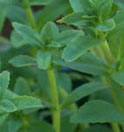
 Suddenly I'm flushed with lots of rice paddy herb (ngo om, pronounced "n-gaw om") due to the nifty new growing tip I got recently. In the Vietnamese Kitchen, the classic use for this herb is in sour fish soup with tamarind, tomato, and okra. After reading the post on how to create makeshift greenhouses for the plants, several people asked what other uses there are for the citrusy-cuminy little darling.
My suggestion is to chop up the tender sprigs and use them to finish any kind of dish where you'd normally have cumin. In a curry that employs Madras curry powder and coconut milk, I found that a bit of rice paddy herb contributed a refreshing endnote. At a Viet restaurant in San Jose, I noticed that they added ngo om at the last minute to a braised dish featuring eel and turmeric.
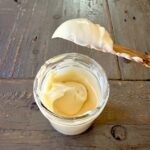
Thinking out of the Viet box, I recently experimented with adding finely chopped ngo om to guacamole, a yogurt-based salad dressing, as well as a raita (Indian yogurt-based sauce). In these cases, the herb worked just fine. I just had this thought -- that rice paddy herb would probably be nice paired with legumes too, perhaps stirred into black beans right before serving or added to a vinaigrette to season cooked white beans or lentils, which would make a great summer salad or as a bed for panseared fish or scallop. A baba ghanoush-style roasted eggplant mash would get a nice lift from rice paddy herb.
So when you're cooking Vietnamese and non-Vietnamese food, think of rice paddy herb as a refreshing substitute
for cumin (or enhancer of cumin's earthiness), a friend of turmeric, or just lovely on its own as a delicate seasoning. It's best chopped up since it's slender long stems are pretty to look at but awkward to chew. Whatever you do, DO NOT cook ngo om. Use it raw so you capture its essence well.
If you've got suggestions, share them with the rest of us!

Simon Bao says
Andrea, I like it when people think outside of the box, and find non-Vietnamese applications for traditional Vietnamese ingredients. Such as using Ngo Om in the dishes you mention above. Similar experiments and innovations are happening with non-Viet cooks using garlic chives, lemongrass, Tio To, Vietnamese "anise" basil, star anise, etc. Vietnamese cuisine is probably partly responsible for so many people now using cilantro in everything.
It's fun and interesting, and sometimes rewarding, to
Grow Tent says
@ Simon, its really interseting to have a viet being quiet creative about a non-vietnamese western ingredients.Can you put up a recipe for such mile, I will definitely give it a trial.
julis sujai says
Gardening is my life. I'm an agler, not a fighter.
Home Greenhouses says
Well, I certainly can't find rice paddy herbs anywhere locally and now one seems to be able to order it. Perhaps it's available on line... sure would like to try this as I do love cumin but an alternate is always a little more interestin. Thanks for the article
All the best,
Chris
Burton Dale says
One of the best uses for Ngo Om is to chop it finely and add it to raw yoghurt with a little Kala namak (black salt) and water. Blend with a couple of ice cubes for a relaxing drink. Rice Paddy Herb has a very soothing effect on the mind and sends stress packing.
Burton Dale
Andrea Nguyen says
Great idea, Burton! The slightly sulfurous quality of black salt totally pairs well with rice paddy herb. We can probably all use a little bit of your drink everyday. Thanks.
Cynthia Taylor says
I love citrus & cumin flavors, so after reading this I tried adding a few Ngo Om sprigs to my favorite take out Banh Mi sandwich - grilled tofu. (I was able to do this because the restaurant is right next to an Asian market.) The results was delicious! I don't know if the results would be as good with meat, but I highly suggest anyone try Rice Paddy herb on top of grilled tofu. Like the other poster, I also hope to find a source for the live plant - the store bought cluster goes bad to quickly.
Andrea Nguyen says
Great tip, Cynthia! Thanks for adding it. Rice paddy herb always gets people to go huh? Then hmm.....
Herbwoman says
I didn't know there was vietnam herbs, I learned something new.
Good info.
Hydroponics says
Why do rice paddy fields produce a lot more methane rather than CO2?
Christian Loboutin sale says
And denim doesn’t come in just blue and black anymore.
eb 5 visa says
My understanding is that when plant material breaks down in anaerobic (without oxygen) conditions (such as in a submerged paddy field), CH4 (methane) is produced rather than CO2. Indeed, not much CO2 can be produced because oxygen (say, from the atmosphere) is needed for its production.
Canada Goose says
Our destiny offers not the cup of despair, but the chalice of opportunity. So let us seize it, not in fear, but in gladness.
Discount Monster Beats says
Example is better then percept.
Red Bottom shoes sale says
We never know the worth of water till the well is dry.
Nickle says
i believe that it is a great information. thanks for submission.
Mr. Cooking Grill says
I can't wait to try this one.
marlon says
So let us seize it, not in fear, but in gladness.
Rose Mark says
Andrea,
Thanks so much for information on this herb. I've been so curious about the different SE Asian herbs sold at the Downtown Oakland Friday Farmer's Market and NOW I have an answer and suggestions on how to use it.
Michael Malone says
Rice Paddy Herb also has a Perilla / Shiso flavor !! Don't forget to substitute it or add it to your dishes to enhance it's flavor.
Michael Malone says
I forgot to mention.... this herb should never be cooked... only finely chopped and added at the end of the dish to enhance the flavor. Cooking it will diminish it's tastes.
Donna Taylor says
I love to use rice paddy herb when cooking fish dishes. I grow it both in the garden and in jars on my window sill, so I've always got a supply ready at hand.