







Powdery toasted soy flour imparts a wonderful tan color and nutty finish to foods. Called kinako, it’s a Japanese ingredient that’s used in Taiwanese kitchens too. Surprisingly, toasted soy flour is also entering high end kitchens in China. When I traveled to Chengdu last year, uber Sichuan Chef Yu Bo made his own from roasting and grinding dried soy beans. He used the powder to finish a dessert preparation in his tour de force tasting menu at Yu’s Family Kitchen.
I needed toasted soy flour today for an afternoon snack of Japanese sweet rice dumplings (shiratama dango). Unfortunately, I wasn’t near a Japanese or well-stocked Chinese market! I remembered Yu Bo telling me that he simply made his own.
I thought of making kinako myself but read online that grinding the beans had to be done slowly and carefully. Then I realized that in the United States, many health food stores carry soy flour. You can buy small quantities for next to nothing in the bulk section. The grinding had been done for me so all I needed to do was toast the flour! Bingo.
The first time out, I burnt the flour as I tried toasting too much in a skillet. It also went flying when I went to stir it. The second time, I used a small saucepan to minimize the mess, but my heat was too high at medium and I didn’t stir frequently enough. The stuff toasted unevenly. The third try was the charm.
Here’s how to make your own toasted soy flour:
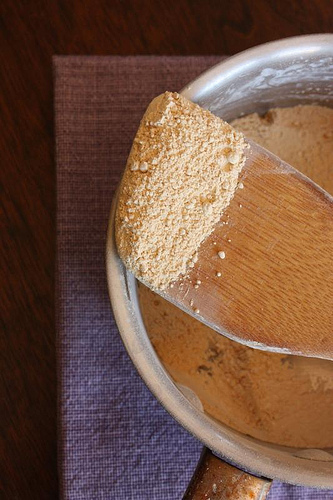
In a 1-quart saucepan, put about 3 tablespoons of soy flour. Heat it over medium-low heat, stirring occasionally for 1 minute. As the pan and flour heat up, you have to stir it more often and then constantly. Ramp up your stirring after the first minute and then keep stirring for about 5 minutes more, until very fragrant. The soy flour will give off a funny toasty, popcorn-like smell that verges on seeming burnt. Near the end, pick up the saucepan and stir the flour to control the toasting. The flour will darken quickly at this stage so monitor it carefully. You want a tan color like café au lait and delicate nutty flavor. Err on the lighter side as you can always toast it some more but you cannot go backwards.
Transfer the toasted soy flour to a small bowl and let it cool completely before using.
How does the homemade compare to storebought? Well, it's very good and the major difference is that the soy flour may not be as thoroughly toasted as the commercially produced product. On the other hand, if you need just a little, you can get by with making kinako on the fly!
Do you use kinako? Or have you made kinako yourself? What have your experiences been like?




Norio
I LOVE fried mochi dipped in kinako. Pan fry mochi in oil until it's crispy outside & gooey inside. Mix kinako with an equal amount of sugar, and add a pinch of salt.
3M respirators
I like this Japanese Ingredient that is Toasted Soy Flour.With the help of it you can go for the so many sweet and testy recipe.I like your Sharing thank for that.
Andrea Nguyen
Norio: Nice idea with the fried mochi coated in kinako! Yowza that sounds delicious.
sylvia cleary
dont wanna mean rude just generally asking is this gonna taste better or i must say normal??
cheap oakley sunglasses
A man died and was on his way to another world, either the Heaven or the hell. He saw an extremely magnificent palace half way and the owner of the palace asked him to stay and live in the palace.
Canada Goose sale
A thousand-li journey is started by taking the first step.
marlon
thought of making kinako myself but read online that grinding the beans had to be done slowly and carefully. Then I realized that in the United States, many health food stores carry soy flour.