











I’m the kind of hotel guest who takes unused bath amenities home. The mini shampoo, conditioner, body lotion, bath gel, soap, and shoe mit find their way into a special drawer in our guest bathroom. Shower caps, though, I leave behind. I’ve never been able to figure out what I could do with them -- until now.
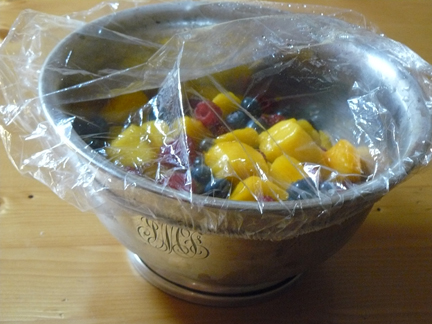
Last Monday, we hosted some friends for a garden lunch of Indian food fueled by champagne and rose. Penny R., an ultra-stylish but old-fashioned woman, walked in the door bearing a fruit salad in a monogrammed antique sterling silver bowl. Atop the bowl like a little hat was a plastic shower cap like you’d find at a hotel. The elastic band on the shower cap kept the cap on well and as Penny revealed, she reused the shower cap many times. How clever is that? The shower cap can stretch around many size bowls and since it’s made of plastic, seals in moisture well (it’s not going to get your hair wet!). Penny generously left me with her cap, which I washed and dried (stretch it over an inverted bowl or colander) for future uses. That’s a great green living idea.
Valuable Shrimp Shells
Pre-peeled shrimp give me the willies so I’m always peeling shrimp for Vietnamese dishes. If there are lots of shrimp shells, I toss them into a pot with water to cover and boil them for about 10 minutes for a quick soup broth. I thought that was reasonably clever but here’s a new tip from my mom: When peeling head-on shrimp, scrape the orange-red shrimp brains out of the shell and add it to the shrimp meat to enhance its flavor and pinky color. Our family friend Loan L., takes things a step further by digging the shells into her backyard soil to boost nutrients. Her herbs and veggies always taste extra good, she claims.
Basmati Fried Rice
A number of Vietnamese people I know bought lots of basmati rice during the rice shortage in spring 2008. Unfamiliar with this type of rice used in Indian and Middle Eastern cooking, they had no clue about its dry texture. When they cooked the rice, they realized that it wasn’t like jasmine and other long-grain Asian rice they traditionally prepared. In other words, it didn’t taste good with Vietnamese food. What do to with industrial-size stashes of basmati rice? Terrence Khuu, a professional chef in San Jose, told me that he found an amazing use for basmati rice – he uses it for fried rice. “The grains are naturally dry, and you don’t have to futz with using cold, slightly dried out rice,” he said. Last April I dined at Chinese Mirch restaurant in Manhattan and their Indian take on Chinese cooking involved making fried rice with basmati rice. Not off the mark, Terrence!
If you’ve got tips to add, do let the rest of us know!





Karen
Ahhh, this looks very familiar. I frequently use shower caps to cover bowls and pitchers! Something my mother taught me.
Sandy
Great ideas ~ thank you for sharing!
Lisa
That's funny, I've been using basmati rice for my friend rice forever! Like you say, it's already got a drier texture and no one has complained yet! LOL
Andrea Nguyen
Lisa, you were waaaaay ahead of the curve! We all just caught up.
Pia
I was taught by my Dad to grind the shrimp head and shells in a mini processor and strain the juice which i add at about the end part of cooking to keep it from curdling. may be added sooner too just keep stirring to avoid the shrimp juice from curdling. and yah, my mom saves the shrimp pulp and use it as a fertilizer for her veggie/herb garden.
Devany Vickery-Davidson
You can buy those inexpensive shower caps at Sally Beauty Supply. I use them when I am letting dough rise, they are the perfect size for my big dough bowl.
Devany, Hilo, HI
Lan
Is Basmati rice any good for rice porridge/soup? Whenever I mess up making rice from not adding enough water, I tend to use it that way.
leesean hepnova
I keep my shrimp shells too. I put them in a Ziploc bag and store them in the freezer, so whenever I want to make some shrimp broth, I can take them out at any time, put them in a pot with onion, garlic, and other vegetables and aromatics, bring to near boil, then simmer for 10-20 minutes, then cool and strain. I guess you could freeze the extra broth too.
chris
I'm with your mom on the shrimp brains. 🙂
Leaving the heads on whole shrimp can lead to the meat becoming mushy because of leaking digestive enzymes, so I usually behead them as soon as I get them home, unless I'm cooking them whole, in which case I keep them on ice.
When I make shrimp head stock I usually quickly stir-fry the heads in very hot oil for several seconds, sometimes with garlic, peppercorns, and a pinch of sugar to add some caramelised colour, until they change colour, before adding the water.
cheap jordans canada
kept the message positive even though she was leaving a job she loved. She took time to communicate with me, a vendor, and to make thoughtful remarks about me. She told me who my contacts at the company would now be, and she sasdfuggested we connect online.
Louboutin Outlet
Nor are the insights of happiness limited to what is near around you.
Unhappy, with your thoughts turned in upon your emotional woes, your vision is cut short as though by a wall.
Beats by Dr Dre
Misfortunes never come alone/single.
marlon
I frequently use shower caps to cover bowls and pitchers! Something my mother taught me.