


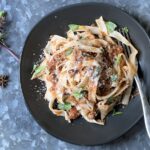
The New York Times published a funny but spot-on article on how the Chinese are rethinking the ways they translate and present their dishes in English. For example, "ants climbing trees" -- for those in the know-- is a great noodle dish. But for those who are unfamiliar with Chinese classics, it sounds like a bizarre dish. Jennifer 8. Lee wrote "Chinese Food Translations: Sweet, Sour, and Downright Odd" to highlight how the Beijing Olympics is getting the Chinese to ponder such PR/communication/marketing issues.
I often spend time wondering what to call Vietnamese dishes in English. We have no standards in English, and sometimes a dish goes by several names in Vietnamese. Even something as simple as banh mi -- I struggled to figure out the appropriate name for in English that doesn't rob it of its essence but is intriguing/approachable enough to the uninitiated. So for Into the Vietnamese Kitchen, I called it "baguette sandwich" after seeing it as "hoagie sandwich," "submarine sandwich." I looked into what exactly are hoagies and submarine sandwiches in the American culinary repertoire and decided that banh mi didn't fit.
More obscure dishes like ya ba ba got the name of "mock turtle stew of pork and plaintains." In Vietnamese, it's literally "fake turtle."
Translating Asian food terms and dishes is hard because for those of us who've eaten these foods for years, we know them in their original names. Here are ones that got me really laughing recenlty:
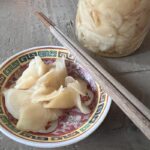
- spongy buns = Chinese yeasted bao (stuffed bun)
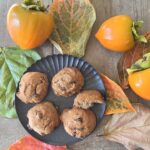
- cakey balls in syrup = Indian gulab jamun, a classic desserts
Those are sooooo wrong. Have any to add?


Robyn
Today I ate 'squeezed rice', which is a northern Thai dish of rice mixed with blood, packed into a banana leaf packet, and steamed. I suppose the 'squeezed' refers to the act of mixing the blood with the rice using one's hands.
Chris
In Saigon, I was surprised whenever I saw Chao translated as "gruel." Granted, it's a more accurate translation than porridge, but both of the connotations don't sound all that appetizing for English speakers.
Andrea Nguyen
Those are very good. Vietnamese people have com nam, pressed rice like Japanese onigiri but the direct translation would be squeezed rice!
Oh, I hate it when chao gets called gruel, as if it's for poor old people. I translate it as creamy rice soup.
But on the flip side is when coagulated pork blood is described as chocolate. Erm, not.
Joel
This is a good question. I think Chinese cuisines are unique that we tend to never use the translation by sound. For example, moussaka is written simply as moussaka as a literal translation from Hellenic characters, we would never call it "Greek cheese and vegetable bake". But we would never say "choi chau ngau yuk" or "cai chao niu rou" for "stir-fried beef with vegetables". Do we go with translation by literal meaning into English ("squeezed rice"), translation of real meaning into English
Joel
And speaking of language translation, it is interesting to consider how Southeast Asian countries' cuisines are translated into Chinese, at least in Hong Kong.
For Vietnamese cuisine, we use the translation-by-meaning approach for pho bo, so instead of "phar bao" we would say "ngau yuk tong hor" (meaning beef broad rice noodle served in soup), but ga xe phay (a type of chicken salad) is translated with sounding into ("ngs che fai" or literally in English "teeth car chopsticks" in Cantonese).
Sim
Simon Bao
Andrea, I'm with you and Chris... however one chooses to describe Chao, please don't call it Gruel. I think "Gruel" carries with it the implication that it can't possibly be delicious and satisfying. Gruel will always sound Dickensian, or be the butt of a joke, as when Bart Simpson was sent off to Kamp Krusty, where the children were fed only "Krusty Brand Imitation Gruel" -- "Nine out of ten orphans can't tell the difference."
Porridge sounds better, carries with it the implication that it c
Anonymous
we purchased package of 7 round sesame cracker in plastic 10"round box.; "banh trang me; (banh da)". these are too hard to eat "raw"? how may i prepare them to eat as snacks?? thank you, rudydot
dindBeant
2WdbD1MvyE8 ghd 6RpcT2CmyD9 http://www.artifolio.com/ghdstraightenerscheap/29397/ghd-straighteners-cheap.html
morammocumuse
rmgwt chicago bears jerseys muakq http://www.indianfashionindustry.com/uggbootsuksale08/2011/12/17/pittsburgh-steelers-jerseys-your/